
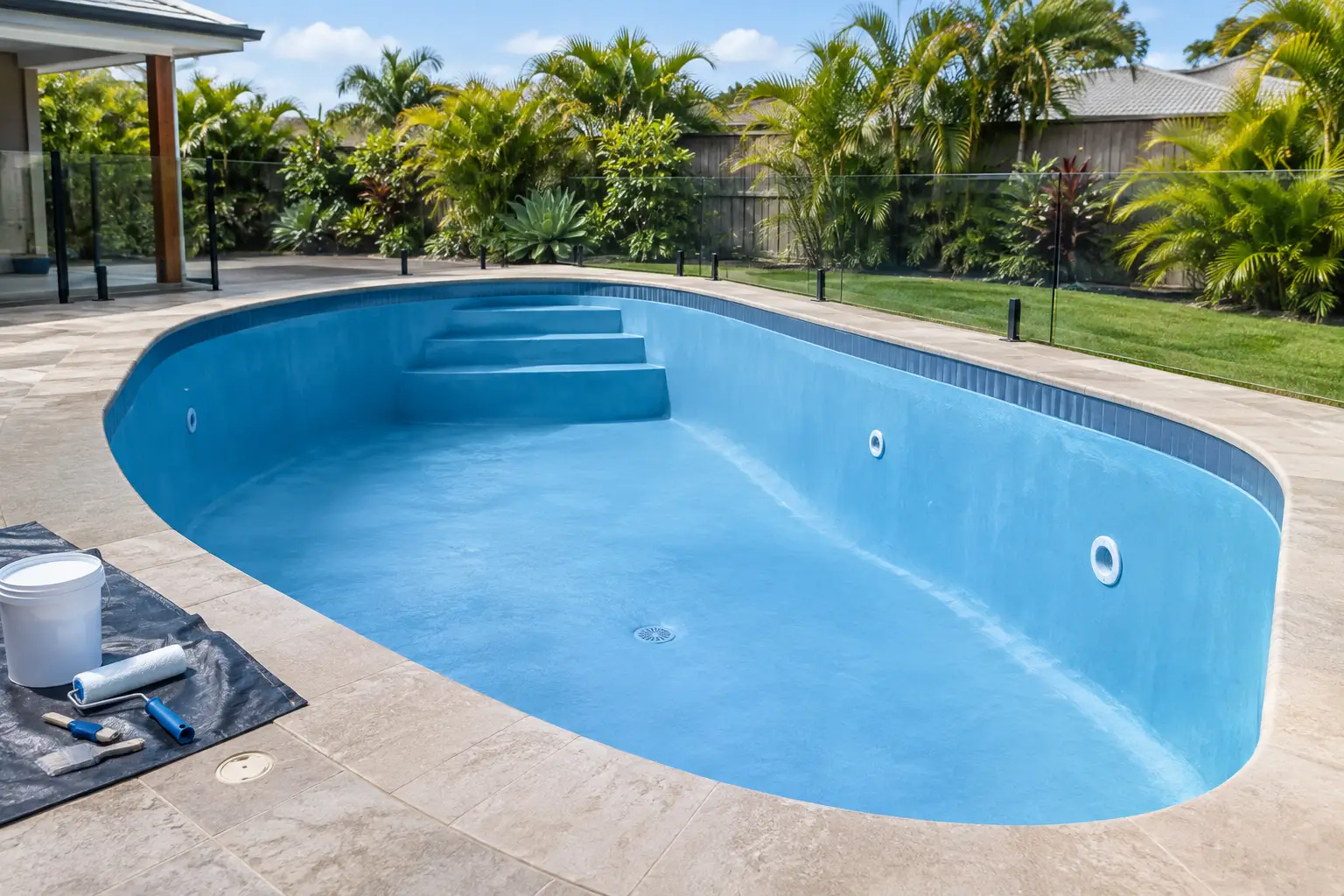
A pool paint kit review Australia search should not start with colour or the cheapest pack size. Start with the surface in front of you. A repaint can fail early when a new coating is applied over an incompatible old coating, loose paint is left behind, or the required primer is skipped. The right kit is the one that matches your pool shell, its existing coating and the preparation work you can complete properly.
For an existing concrete or fibreglass pool, a “kit” should mean a compatible coating system, not simply tins grouped together. Before ordering, confirm whether you need two-pack epoxy or chlorinated rubber pool paint, whether a primer is required, and how much material is needed for the full job.
What a good pool paint kit should help you avoid
The main value of a correctly selected kit is avoiding costly mistakes before paint reaches the pool. Pool owners commonly order a coating based on what they used years ago, what a neighbour recommends, or the finish they want. None of those answers confirms compatibility.
Peeling, flaking and blistering often come back to one of three issues: poor adhesion to the existing surface, moisture or contamination beneath the new coating, or insufficient preparation. Adding another coat over a failed surface does not fix the cause. It can simply hide it until the next coating failure.
A suitable system gives you compatible paint and, where required, the appropriate primer for the surface and coating condition. It also allows you to order enough product to apply the specified coats across the whole pool, rather than stretching material too far or stopping short halfway through.
Pool paint kit review Australia: epoxy or chlorinated rubber?
The first decision is usually between two-pack epoxy pool paint and chlorinated rubber pool paint. Neither is automatically the best choice for every repaint.
Two-pack epoxy pool paint
Two-pack epoxy is commonly chosen where a hard-wearing coating system is required and the pool surface has been prepared to suit it. It is supplied as separate components that must be mixed accurately before application. Once mixed, it has a limited working period, so planning matters. Have the surface ready, equipment organised and enough time to apply each mixed batch correctly.
Epoxy can be a sensible option for properly prepared concrete pools and suitable fibreglass applications, but it is not a universal topcoat for every previously painted pool. If the existing coating is chlorinated rubber or another unknown product, do not assume epoxy can go straight over it. Compatibility needs to be confirmed before you commit.
Chlorinated rubber pool paint
Chlorinated rubber pool paint is often considered for repainting a pool with an existing chlorinated rubber coating that is still sound and has been prepared correctly. It can be the practical choice where maintaining the existing compatible coating type makes more sense than changing systems.
That does not mean every old painted pool is ready for chlorinated rubber. If the old coating is peeling, chalky, soft, badly cracked or unidentified, the preparation and system choice need closer attention. A new topcoat cannot bond reliably to paint that is no longer firmly attached.
The practical choice
Choose based on evidence, not guesswork. Find out the pool shell material, identify the existing paint if possible, and assess whether the existing coating is sound enough to retain. If you cannot confirm what is on the pool, seek technical guidance before ordering. Sending clear photos and details of previous coatings, where known, can help narrow down the correct system.
Pool Paint Sydney supplies BG Coatings pool coating systems and can help customers work through coating type, primer requirements and quantity before they buy.
Check the pool surface before choosing a kit
A concrete pool and a fibreglass pool may both look ready for paint, but the coating system can differ. Concrete may be bare, previously epoxy coated, previously chlorinated rubber coated or carrying multiple old layers. Fibreglass may have an existing painted finish or a surface that needs specific preparation before recoating.
Start by checking for obvious failure. Look for loose edges, flaking areas, bubbling, powdery residue, staining beneath the coating and patches where previous paint has been touched up. Scrape and sand back loose or unsound material. If paint releases easily, the affected coating is not a stable base for a new finish.
Also consider the age and history of the pool. A pool that has been repainted several times can carry incompatible layers. The visible topcoat may not tell the whole story. If you are unsure, avoid selecting a kit purely from a colour chart or a broad description such as “pool paint”.
Primer is not an optional extra by default
One of the most expensive DIY errors is treating primer as either compulsory for every job or unnecessary for all of them. The correct answer depends on the substrate, the existing coating and the coating system selected.
A primer may be needed on bare or prepared concrete, on particular fibreglass surfaces, or where the chosen coating system specifies it. Using the wrong primer can be as problematic as using no primer. It can create an incompatible layer between the pool surface and topcoat.
When reviewing a pool paint kit, check that the primer is listed as compatible with both the substrate and the topcoat. Do not add a general-purpose primer from the shed because it appears similar. Pool coatings work as systems, and each layer needs to be selected accordingly.
Quantity matters more than most buyers expect
Ordering too little paint encourages thin coats, missed areas or an awkward delay while more product is arranged. Ordering far too much wastes money and can leave you with mixed or opened material that cannot be stored for a future job.
Measure the pool accurately before you order. For a typical rectangular pool, you need the length, width, average depth and the wall areas. Steps, ledges, deep ends, sloping floors and internal features all add surface area. Freeform pools should be measured carefully rather than estimated from the water volume.
Use the Pool Paint Calculator to calculate paint and primer quantities from your pool dimensions and the selected system. Then check the calculated amount against the product’s stated coverage and coat requirements on the relevant product page. Coverage changes with surface profile, preparation and application conditions, so a calculation is a planning tool, not a reason to apply coats too thinly.
Preparation decides whether the kit performs
The coating choice gets attention, but preparation does most of the hard work. Paint needs a clean, dry, sound surface. Old loose paint, dirt, oils, surface contaminants and chalking can interfere with adhesion.
Preparation should include removing failed coating, cleaning the surface as required by the coating system, repairing only the coating-ready surface issues within the product guidance, and allowing the pool shell to dry properly before application. Structural damage, major cracks or substrate defects need separate assessment before coating. Paint is not a structural repair product.
Australian weather adds another practical consideration. A warm, dry period can be useful, but direct heat, rain risk, overnight moisture and changing conditions can affect application. Check the technical instructions for the specific product before starting and plan the work around the stated application conditions. Do not rush the job because a weekend is available if the surface or weather is unsuitable.
What to check before placing an order
Before buying, make sure you can answer these questions:
- Is the pool concrete or fibreglass?
- What coating is currently on it, if any?
- Is the existing paint sound, or does it need to be removed back to a stable surface?
- Which coating system is compatible with that surface?
- Does the system require a compatible primer?
- What is the measured internal surface area, including walls, steps and ledges?
- Can the pool be prepared and painted within the product instructions and suitable weather conditions?
If one of those answers is unclear, pause before ordering. A short technical check is cheaper than buying a full kit that is wrong for the existing coating.
Buy the system, not just the paint
The best pool paint kit is not necessarily the one with the most items or the simplest label. It is the system that matches your pool, includes only the compatible products required, and provides enough material for the intended coats.
Use the Pool Paint Calculator first, then review the epoxy, chlorinated rubber and compatible primer product information for your pool type. If the old coating is unknown, peeling or layered from past repaints, get specialist guidance before selecting a new system. That extra check gives you a far better chance of starting with the right product instead of trying to correct a preventable failure later.