
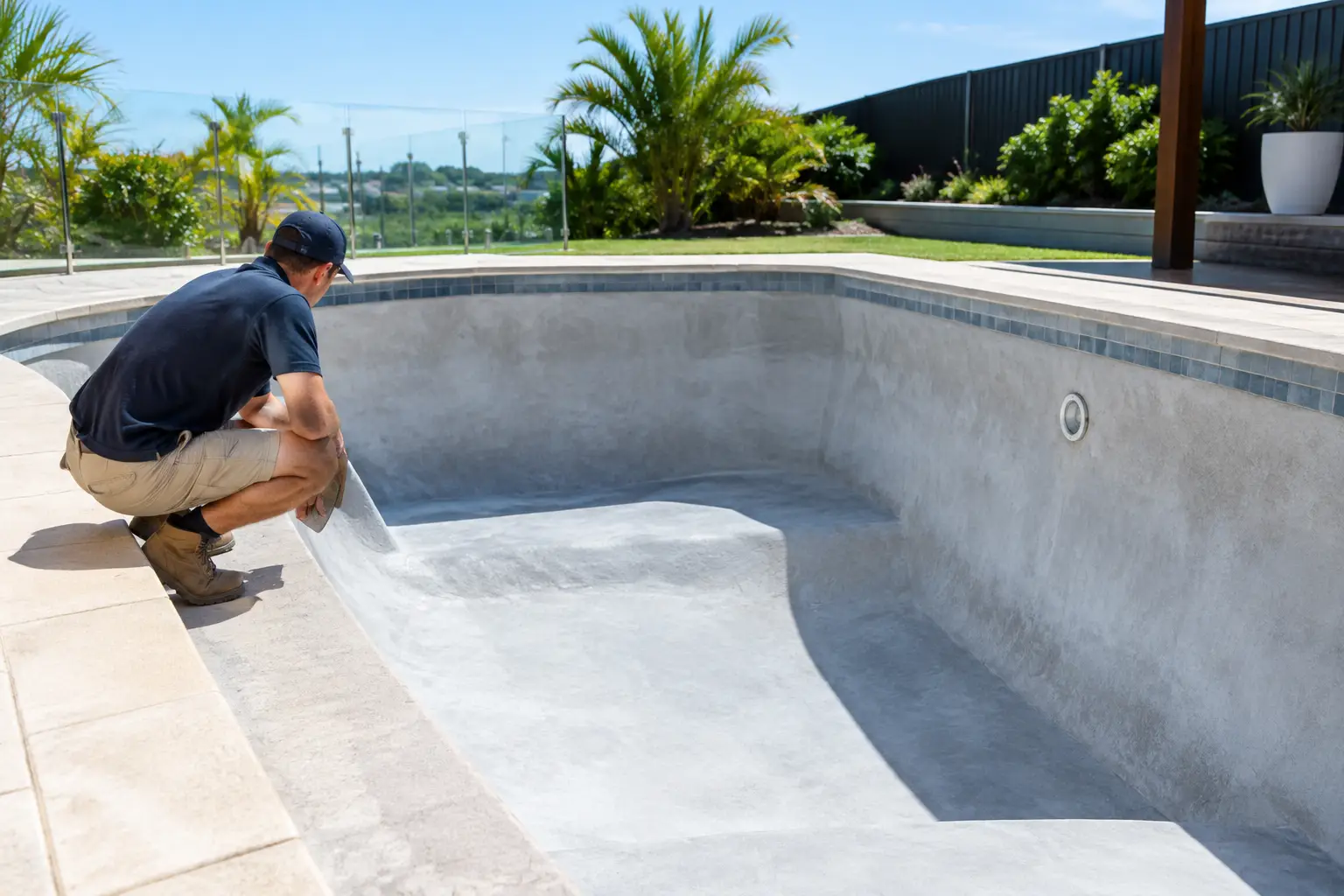
A pool coating can look fully covered and still be too thin to perform properly. This pool coating thickness guide explains why film build matters when repainting a concrete or fibreglass pool, how it affects quantity calculations, and why the correct coating system and preparation come first.
The goal is not to put on the thickest possible layer. It is to apply the specified number of even coats at the coverage rate set out for the product. Too little paint leaves a weak film. Too much paint in one pass can create its own problems, including slow drying, solvent entrapment and an uneven finish.
Why pool coating thickness matters
Pool paint is a protective coating system, not just a colour layer. Once cured, the film needs enough thickness to form a continuous barrier across the pool shell. That barrier must cover rough concrete, old sound paint and the changes in texture around steps, corners, returns and coping lines.
When the dry coating film is too thin, it may wear sooner in high-use areas and may not provide the performance expected from the system. Thin spots are common where the applicator stretches material too far, rolls aggressively over drying paint, or bases product quantity on the pool’s water capacity rather than its actual surface area.
Thickness alone will not fix poor preparation. A thick coat applied over chalky, damp, contaminated or loose material can still peel. The coating is only as reliable as the surface underneath it.
Dry film thickness versus wet film thickness
Coating thickness is commonly discussed in microns. There are two different measurements:
- Wet film thickness is the depth of paint immediately after application.
- Dry film thickness is the thickness remaining after the coating has dried and its solvents have evaporated.
The dry film thickness is what matters for the finished system. Because each product has a different solids content, two coatings applied at the same wet thickness will not necessarily produce the same dry thickness. This is why a general paint rule cannot replace the product data sheet for the pool coating you have selected.
For a two-pack epoxy pool paint or chlorinated rubber pool paint, follow the stated coverage rate, recoat window, thinning directions and recommended coat count for that specific product. Do not assume that a heavier roller load automatically gives better protection.
One heavy coat is not the same as two proper coats
A common mistake is buying enough product for one generous coat and trying to make it do the work of a complete system. Pool coatings are generally designed to be built up through separate coats, applied within the specified recoat period.
Two controlled coats help create a more consistent film across the whole pool. The first coat may absorb differently into porous concrete or reveal low-coverage areas. The following coat brings the system up more evenly. On a previously painted pool, it also helps reduce the risk of missed sections around fittings, steps and vertical walls.
Applying one overly heavy coat can leave the surface looking wet and glossy at first, but appearance is not proof of a sound film build. Follow the application instructions rather than trying to compensate for low quantity with a heavy hand.
Start with the existing pool surface
The correct thickness and coating approach depend on what is already in the pool. Before ordering, identify whether you are dealing with bare concrete, a previously painted concrete pool, or a fibreglass pool. Then determine the condition and, where possible, type of existing coating.
For bare or prepared concrete, porosity matters. A porous surface can absorb coating unevenly, which affects practical coverage and can leave insufficient film on top of the concrete if primer requirements are ignored. Use the compatible primer where the coating system calls for one. Primer is not simply extra paint. Its job is to help create a suitable base for the finish coats.
For a previously painted pool, sound, well-adhered coating may be suitable for recoating after proper cleaning and abrasion. Peeling, blistered, flaky or soft paint is different. It must not be treated as a stable base simply because some areas still look acceptable. Remove unsound material and assess the exposed surface before selecting the next system.
Fibreglass needs equally careful assessment. The surface must be clean, properly prepared and compatible with the selected coating system. Do not apply a pool coating based only on colour or because it was available from a previous job. Compatibility with the substrate and existing finish is the decision that protects the repaint.
Choosing the right pool coating thickness guide for your system
The right target is always the manufacturer’s specified system, not a universal micron figure taken from another paint product. Two-pack epoxy and chlorinated rubber coatings have different application requirements, preparation needs and compatibility considerations.
Two-pack epoxy pool paint is generally chosen where the surface condition and existing coating compatibility suit an epoxy system. It requires accurate mixing and disciplined application. Once the components are combined, work within the stated usable period and apply at the required spread rate. Trying to save mixed epoxy by spreading it beyond its specified coverage is a costly mistake.
Chlorinated rubber pool paint is a different system and should not be treated as interchangeable with epoxy. It may be the appropriate choice when recoating a compatible chlorinated rubber finish, but the existing coating must be identified first. Applying an incompatible coating can lead to lifting, wrinkling, poor adhesion or premature failure, regardless of how thick the new coat is.
If you cannot confirm the old coating type, stop before ordering. Check any previous product records, inspect the coating condition and seek product-specific technical guidance. Choosing the compatible system is more valuable than adding an extra coat of the wrong one.
Calculate quantity from surface area, not guesswork
Pool owners often underestimate paint because they calculate only the floor or use the pool’s litre capacity. Coating quantity is based on the area being painted: floor, walls, steps, ledges and other coated surfaces.
Measure the pool length, width and average depth, then include the wall areas. Curved ends, stairs and benches make a simple rectangle calculation less exact, so allow for their actual surface area rather than assuming the floor measurement covers everything. A freeform pool especially needs a careful estimate.
As a basic physical check, one litre spread over one square metre at one micron dry thickness represents one millilitre per micron. In practice, you should not use that relationship to set your purchase quantity because product solids, surface profile, waste and the specified application rate all affect the result. Use it only to understand why a larger area or thicker specified film requires more material.
The practical answer is to use the Pool Paint Calculator before ordering. Enter accurate pool dimensions, choose the relevant coating system and include compatible primer where required. Then compare the result with the product coverage information and your pool’s actual condition. Rough, porous or irregular surfaces may use material differently from a smooth, previously coated pool.
Do not order only enough to reach the theoretical minimum. Running short during a coat encourages thin application on the final walls or steps, exactly where consistency matters. At the same time, avoid buying a large surplus on the assumption that more coats always improve the outcome. Buy the correct system quantity for the recommended coat schedule.
Application habits that keep film build even
Good application is about control. Mix and prepare the coating exactly as directed, use suitable application equipment, and maintain a wet edge where practical. Work methodically in manageable sections so every area receives the intended coverage.
Pay close attention to corners, steps, vertical walls and areas around fittings. These are easy to miss or apply too lightly because they are awkward to roll. Back-rolling can help even out coverage, but repeatedly working coating that is beginning to tack can pull at the film and create lap marks.
Australian weather adds another variable. Hot, dry conditions can make coating flash off quickly, while humidity, cold conditions or rain can interfere with drying and curing. Apply only within the environmental limits stated for the product. A rushed application on an unsuitable day can undermine a well-planned coating thickness.
Signs the coating may be too thin or incorrectly applied
Uneven gloss, visible roller marks, patchy colour and areas where the old finish still telegraphs through can indicate inconsistent coverage. They do not automatically prove failure, but they are worth addressing before the pool is returned to service.
More serious warning signs include peeling, lifting, blistering or soft paint. These problems are often linked to preparation, moisture, contamination, missed primer requirements or incompatibility rather than thickness alone. Adding another coat over a failing film usually hides the problem temporarily and adds more material that can fail with it.
If a previous coating has failed, remove loose material, establish what surface remains and select a compatible primer and topcoat system. Pool Paint Sydney can help customers use the relevant product information and Pool Paint Calculator to select the correct quantity and coating approach before purchase.
A durable repaint begins with a simple discipline: identify the surface, choose a compatible system, prepare it properly, and apply each coat at its specified rate. That approach gives the finished coating the thickness it was designed to have without wasting product or gambling on an over-heavy coat.