
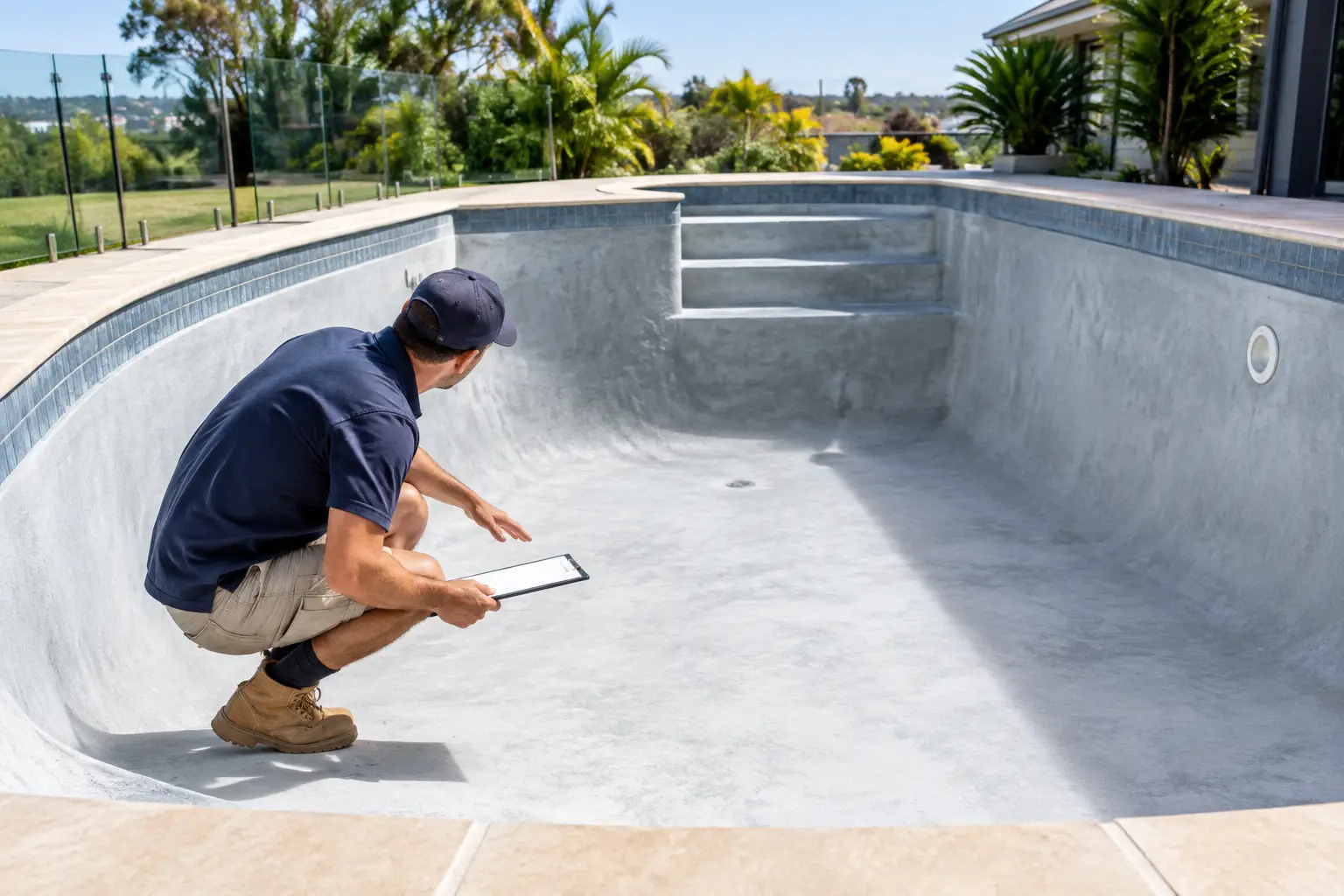
A pool coating that peels after a season is rarely a paint-quality problem alone. Pool coating durability is usually decided before the first coat goes on: by identifying the existing coating, preparing the surface properly, choosing a compatible system and applying enough material under suitable conditions.
For an ageing concrete or fibreglass pool, the aim is not simply to make it look fresh. It is to choose a coating system that can properly bond to what is already there. Get that decision wrong and even careful application can end in lifting, blistering or patchy adhesion.
What determines pool coating durability?
Three factors have the greatest effect: the existing surface or coating, preparation quality and system compatibility. Application matters too, but it cannot compensate for a surface that is loose, contaminated or coated with an incompatible product.
Australian pools are exposed to strong UV, hot surfaces and changing weather. These conditions can reveal weak adhesion quickly. A durable finish starts with sound substrate, not with an extra coat applied over a problem.
Start by identifying what is already on the pool
Before choosing paint, establish whether the pool is bare concrete, fibreglass, previously coated with epoxy, or previously coated with chlorinated rubber. This is the key decision point.
Two-pack epoxy pool paint is a high-performance option for suitable concrete and fibreglass surfaces, particularly where a properly prepared epoxy-compatible system is required. It is not a universal topcoat for every painted pool. Applying epoxy over an unknown or unsuitable existing coating can cause adhesion failure.
Chlorinated rubber pool paint is often the appropriate choice when repainting a pool that already has a sound chlorinated rubber coating. It can be the practical route for maintenance repainting, but it still relies on the old coating being firmly bonded and correctly prepared.
If you do not know what coating is on the pool, do not guess based on colour or age. Review any past product records if available. Where the coating is badly peeling, soft, chalky or inconsistent across the pool, it may need further assessment and removal of failed material before a new system can be selected.
A sound surface matters more than a thicker coat
Painting over flaking material does not seal it in. The new coating is only as secure as the layer beneath it. If the old paint is lifting from the concrete or fibreglass, the new paint will eventually lift with it.
Remove loose, peeling and poorly adhered coating until the remaining surface is sound. Pay close attention to steps, corners, the waterline area and repaired patches, where coating problems are commonly found. A quick visual check is not enough. Scrape and sand suspect areas to see whether the edge remains firmly attached.
For bare concrete, the surface needs to be clean, dry and properly prepared for the selected coating system. New or repaired concrete can present different moisture and curing issues from older concrete, so follow the relevant product information rather than treating every concrete pool the same way.
Fibreglass requires equally careful preparation. Its smooth surface can limit adhesion if it is not adequately abraded and cleaned. Any gloss, residue or unstable previous paint can stop a coating from gripping as intended.
Why pool paint peels, blisters or wears early
Most early failures trace back to one of a few preventable mistakes. The surface may have been inadequately cleaned or sanded, moisture may have been present, a primer may have been skipped where it was required, or the new paint may not have been compatible with the old coating.
Common causes include:
- Painting over loose, chalking or glossy old paint without sufficient preparation.
- Using epoxy over an incompatible coating or an unknown coating that has not been properly assessed.
- Choosing the wrong primer, or treating primer as optional when the coating system calls for it.
- Applying coats too thinly, too heavily or outside the product’s stated application conditions.
- Rushing recoating or return-to-service stages instead of following the manufacturer’s instructions.
Blistering can be particularly frustrating because the pool may appear fine at first. It is often linked to poor adhesion, trapped moisture or contamination beneath the film. Adding another coat over blisters does not solve the cause. Failed areas need to be dealt with back to a stable surface before recoating.
Choosing epoxy or chlorinated rubber pool paint
The right choice depends on the pool’s existing condition, not which product sounds tougher. This is where many repainting projects go off track.
When epoxy is the suitable system
A two-pack epoxy system is generally considered when coating a suitably prepared concrete or fibreglass pool, or when recoating a surface confirmed as compatible with epoxy. It is a system choice, not simply a topcoat choice. Surface preparation, primer selection and mixing accuracy all matter.
Epoxy requires care because it is supplied in two parts that must be mixed exactly as directed. Once mixed, it has a limited working period. Plan the job before combining components, including access, tools, weather conditions and the order in which areas will be coated.
When chlorinated rubber is the suitable system
Chlorinated rubber paint is commonly chosen for pools with an existing chlorinated rubber coating that remains sound and compatible. It is often the more straightforward maintenance option in that situation, provided the surface is properly cleaned, abraded as required and free of failed paint.
Do not switch systems just because the current coating looks worn. First establish what it is and whether it is still well bonded. A worn but sound chlorinated rubber coating may be suitable for recoating with the same type of system. A heavily failed coating needs a different preparation decision.
Primer is part of the coating system
Primer is not an add-on to buy only if there is paint left in the budget. On bare or suitably prepared surfaces where a primer is specified, it is the bonding layer that helps the topcoat perform as a system.
The correct primer depends on the substrate and selected paint. Using a primer that is not compatible with the topcoat can be as damaging as choosing the wrong pool paint. Likewise, applying a topcoat directly to a surface that requires primer can compromise adhesion from the start.
Check the official product information for the coating system you intend to use. If the pool has mixed surfaces, exposed concrete, fibreglass patches or areas where old paint has been removed, do not assume one preparation method applies everywhere.
Apply enough paint, but do not over-apply
Pool coatings need to be applied at the manufacturer’s recommended rate and in the required number of coats. Stretching product too far can leave insufficient film build. Overloading a coat can create its own application problems and may interfere with drying or recoating.
Measure the pool accurately before ordering. Include the floor, walls, steps, ledges and any other areas being coated. The Pool Paint Calculator helps estimate the paint and primer quantity needed for the pool’s dimensions, reducing the risk of running short midway through the project or buying product based on a rough guess.
For irregular shapes, break the pool into simpler sections and measure each one. It is better to spend extra time on measurements than to discover late in the job that the coating quantity was underestimated.
Check conditions before you begin
A coating system can only perform properly when applied within its stated conditions. Avoid treating weather as an afterthought. Hot Sydney and NSW summer days can affect working time, while damp conditions can affect surface readiness and coating application.
Make sure the pool is empty and the surface is dry before work starts. Follow the product directions for temperature, humidity, mixing, application, recoating and curing. These instructions are specific to the product and should take priority over general painting advice.
If the forecast does not allow enough stable time for the process, wait. Delaying a repaint is cheaper than stripping back a coating that has failed because the job was rushed.
Buy the correct system the first time
Before ordering, confirm four details: your pool surface, the existing coating type, the condition of that coating and the areas that require primer. Then use the Pool Paint Calculator to work out quantities and select the compatible BG Coatings epoxy or chlorinated rubber system for the job.
Pool Paint Sydney can help customers clarify product compatibility and quantity requirements before purchase, but the final result still comes back to careful preparation and following the product instructions. Take the time to identify the surface properly now – it is the simplest way to avoid peeling paint and give the new coating its best chance of lasting.