
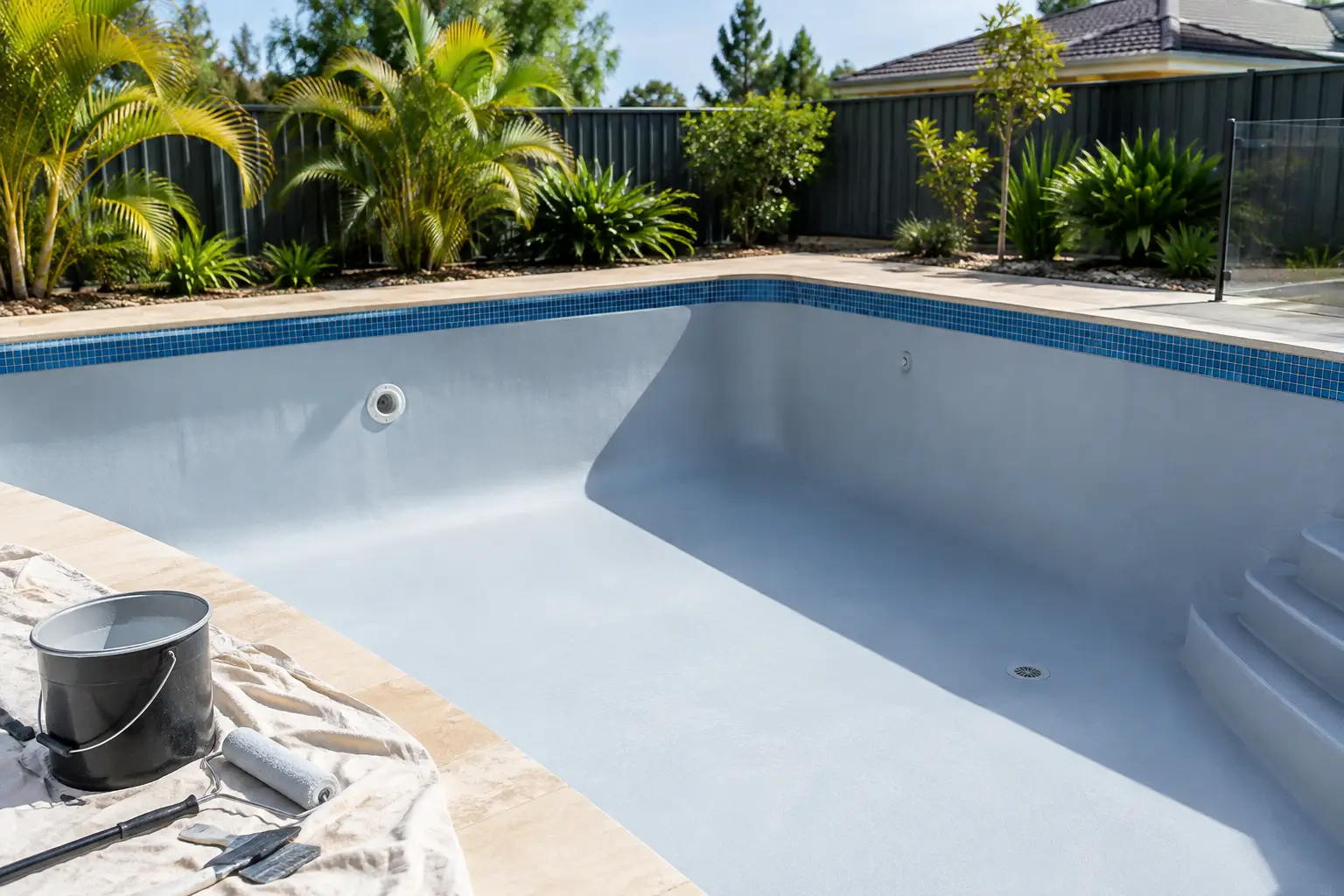
A useful chlorinated rubber paint review should answer one question before anything else: is chlorinated rubber the correct coating for the pool you have now? It can be a practical choice for a repaint, particularly where an existing chlorinated rubber coating is sound and compatible. But it is not a shortcut around peeling paint, unknown coatings or poor preparation.
For Australian pool owners and tradies, the result depends far more on identifying the old surface and preparing it properly than on choosing a paint colour. Get those two points right before ordering, and you are far less likely to deal with lifting, blistering or an early coating failure.
Chlorinated rubber pool paint: the practical review
Chlorinated rubber pool paint is a solvent-based coating system used on suitably prepared pool surfaces. Its main advantage is that it can be a sensible option when repainting a pool already coated in compatible chlorinated rubber paint. In that situation, the coating choice is straightforward: maintain a compatible system rather than introducing a new one without checking adhesion and primer requirements.
The limitation is equally important. Chlorinated rubber paint is not automatically suitable over every old pool coating. A pool may have epoxy, acrylic, an unknown previous coating, bare concrete patches or failed layers underneath a surface that initially looks acceptable. Applying a new coat without sorting this out can trap the same problem beneath the fresh finish.
Think of chlorinated rubber as a system choice, not a universal repair product. It works best when the existing coating, substrate and preparation method all point to the same system.
When chlorinated rubber is the right choice
A chlorinated rubber coating is worth considering when the pool has an existing chlorinated rubber finish that is still firmly bonded, and the planned preparation and recoating process are compatible with the product instructions. It may suit concrete pools and previously painted fibreglass pools where the full coating system has been confirmed.
It is often chosen by people who are repainting a tired but otherwise stable pool finish. The surface may be faded, chalky or worn through in small areas, but it should not be broadly peeling, bubbling or soft. Any failed paint needs to be removed back to a sound edge before recoating.
Colour choice also matters, although it should come after compatibility. A darker finish can change the appearance of the water and make surface imperfections more noticeable. A lighter pool colour can show marks and uneven preparation more readily. Choose the colour you want, but do not let colour decide the coating system.
When to stop and check first
Do not assume the coating is chlorinated rubber because it looks like pool paint. Older pools are frequently repainted more than once, and the original product may be unknown. If you cannot identify the existing coating, treat compatibility as unresolved rather than guessing.
The same caution applies where paint is peeling in sheets, where there are widespread blisters, or where sanding exposes different layers. Those signs can indicate poor adhesion between previous coats, moisture-related issues or an incompatible repaint. Adding another coat over the top may make the pool look better briefly, but it does not fix the weak layer below.
Chlorinated rubber versus epoxy pool paint
The common decision is not which paint is generally better. It is which coating is correct for this pool.
Two-pack epoxy pool paint is a different system with its own preparation, mixing and application requirements. It may be the appropriate option for a pool with a compatible epoxy coating or a substrate that has been prepared for an epoxy system. Chlorinated rubber can be the more logical choice where a sound chlorinated rubber coating is already present.
Changing systems can be possible in some situations, but it requires more than simply applying a different product. The old coating may need complete removal, or a compatible primer and specific preparation may be required. That is why a coating change should be based on the product data and the actual condition of the pool, not on a preference for one paint type.
If the old coating is known, match the new system to it where product guidance supports that approach. If it is unknown, get the coating identified before buying. This is one of the cheapest checks in the whole project.
Surface preparation decides the result
Most pool paint failures start before the first coat is opened. Paint does not correct loose layers, contamination, unsound patches or a surface that has not been keyed properly.
Start by inspecting every area, not just the worst section. Pay close attention to steps, waterline areas, corners, around fittings and any previous repairs. Scrape and sand back loose or lifting material until only firmly bonded coating remains. Feather the edges so they do not show as harsh ridges through the new finish.
The pool surface then needs to be clean, dry and free from contaminants that can interfere with adhesion. Any preparation method should follow the coating system instructions for the substrate and existing finish. Concrete and fibreglass do not behave the same way, and a previously painted surface is not the same as bare material.
Australian conditions add another consideration. A pool shell can heat up quickly in direct sun, while overnight moisture, rain or a humid spell can delay preparation and application. Plan the work around suitable dry conditions and allow the surface to dry fully after washing or other preparation. Rushing because the weekend is nearly over is a common way to compromise a coating job.
Is primer required?
Primer is not an optional extra to decide on at checkout. Whether it is required depends on what is underneath the coating.
Bare concrete, exposed patches, fibreglass and a change of coating system may have different primer requirements. A primer is selected to suit both the surface and the topcoat. Using an incompatible primer, or skipping one where it is specified, can cause adhesion problems that are difficult to correct once the pool is recoated.
For a straightforward repaint over a sound compatible coating, the requirements may differ from a pool with substantial bare areas. Check the relevant chlorinated rubber product and primer information before ordering. If the pool has mixed surfaces after preparation, calculate and order for the actual system needed, not just the original plan.
Coverage and quantity: avoid ordering blind
Running out of paint halfway through a coat creates avoidable problems, but ordering excessive product is no better. Pool dimensions, depth, steps, ledges and the number of coats all affect the quantity required.
Measure the internal length, width and average depth as accurately as possible. Include step areas, benches and any large ledges rather than treating the pool as a simple rectangle. Then use the Pool Paint Calculator to estimate the coating and primer quantity for the selected system.
Coverage figures are useful planning tools, not a reason to stretch product beyond the recommended application rate. A rough, porous or heavily prepared surface can use more material than a smooth, previously coated pool. Applying too thinly to make a tin go further can leave an uneven finish and may reduce the protection the system is designed to provide.
Common mistakes this review should prevent
The first mistake is painting over a failed coating because removing it feels like extra work. Loose paint will not become sound just because it has another layer on top.
The second is assuming all pool paints are interchangeable. Epoxy, chlorinated rubber, primers and old coatings need to be assessed as a compatible system.
The third is treating bare patches as though they are the same as an intact painted surface. Once preparation exposes concrete or fibreglass, primer requirements can change.
The fourth is buying based only on pool volume or a rough guess. Paint is applied to internal surface area, not the litres of water the pool holds. Measure carefully and use the calculator before you purchase.
A clear buying decision
Choose chlorinated rubber pool paint when it is compatible with the existing coating and the surface can be prepared to the required standard. It is a practical repainting option, not a cure for an unidentified or unstable coating history.
Before ordering, confirm the existing finish, inspect for failed paint, identify any bare concrete or fibreglass, and check whether a compatible primer is required. Then use the Pool Paint Calculator and select the chlorinated rubber coating system that matches the information you have gathered.
If there is one step not to skip, it is confirming what is already on the pool. That small piece of groundwork helps you buy the correct system the first time and gives the new coating the best chance of staying where it belongs.