
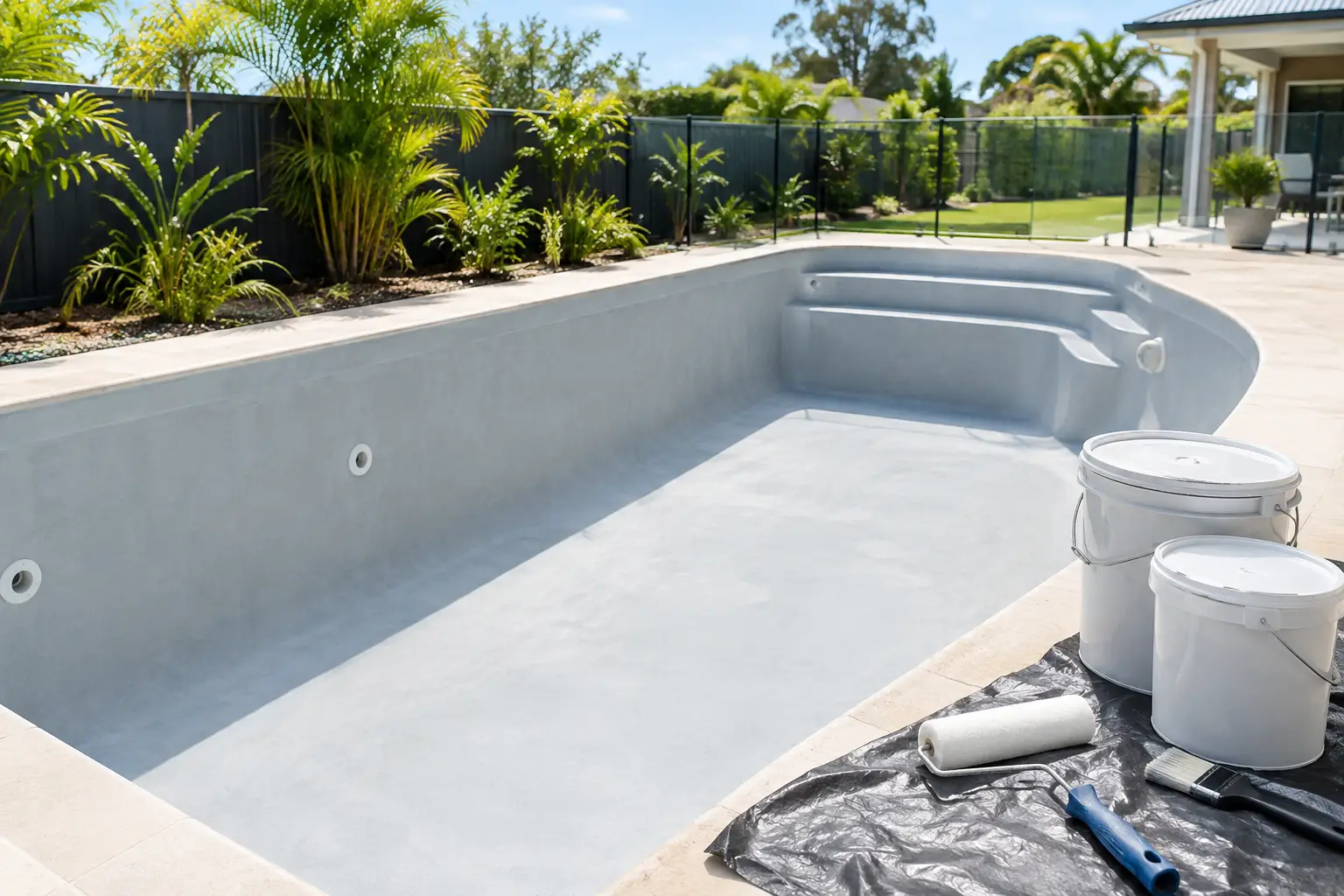
A pool can look ready for fresh paint while hiding the exact problem that causes the next coating to peel. Two pack paint is often the right choice for an existing concrete or fibreglass pool, but it is not a universal fix. The existing coating, the condition of the surface and the primer system all need to line up before you order.
For pool owners and tradies repainting a worn, faded or failed finish, the goal is simple: choose a compatible coating system, prepare the surface properly and apply enough material for proper film build. Skipping any of those steps can turn a straightforward repaint into an expensive strip-back job.
What is two pack paint for swimming pools?
Two pack pool paint is generally a two-component epoxy coating. One component is the base resin and the other is the hardener. They are mixed together in the manufacturer’s specified ratio immediately before application.
Once mixed, the coating begins a chemical curing process. That is different from a single-pack coating that mainly dries as solvents evaporate. This is why two pack epoxy is commonly selected for pools where a hard-wearing, high-performance coating system is required.
The trade-off is that epoxy demands more discipline. You cannot mix an arbitrary amount, change the mixing ratio or leave mixed paint sitting until the next day. Surface preparation also matters more than it does with a quick cosmetic repaint. If the substrate is unsound, damp, contaminated or coated in an incompatible paint, the new epoxy coating can fail with it.
When two pack epoxy paint is the right choice
Two pack epoxy pool paint can suit properly prepared concrete pools and fibreglass pools, provided the existing surface and coating have been assessed first. It is often considered where the old finish is badly weathered, where a more substantial coating system is needed, or where the pool is being taken back to a sound compatible surface.
The key word is compatible. A concrete pool with a previous epoxy coating may be a good candidate for another epoxy system after sound preparation. A fibreglass pool may also suit a two-pack system, but the surface must be properly prepared and any primer requirement must be followed.
It is not enough to choose epoxy because it sounds tougher. The best pool paint is the one that suits what is already on the pool and the condition of the substrate underneath. If the old coating is chlorinated rubber, unknown, peeling or layered from several past repaints, determine the correct preparation and compatible system before purchasing.
Do not paint over a failing coating
A fresh topcoat cannot repair a coating that has already lost adhesion. If paint is peeling, blistering, flaking or lifting around cracks and fittings, remove all loose and unsound material first. The edges of sound remaining paint also need to be feathered so they do not show through or create weak points beneath the new coating.
Peeling is usually a preparation or compatibility problem, not simply a lack-of-paint problem. Common causes include applying over chalky old paint, inadequate sanding, contamination, moisture in the surface, incorrect primer use or using a coating system that does not suit the old finish.
If large areas are failing, assess whether spot preparation is realistic. In some cases, a more complete removal process is necessary to reach a stable base. This takes more work upfront, but it is better than applying premium two pack paint over a surface that is already letting go.
Two pack paint vs chlorinated rubber pool paint
The practical choice usually comes down to the existing coating and the level of preparation you are prepared to complete.
Two-pack epoxy is a chemically cured coating system. It requires accurate mixing, attention to workable time after mixing and careful adherence to the product instructions. It can be an excellent option where the surface is correctly prepared and the system is suitable for the pool.
Chlorinated rubber pool paint is a different coating type and is often chosen for repainting pools already finished in compatible chlorinated rubber paint. It is not simply a cheaper substitute for epoxy, nor is epoxy automatically an upgrade over it. Changing coating types without checking compatibility can lead to softening, lifting, poor adhesion or early failure.
If you know the pool was previously coated with a particular product type, use that information. If you do not know, do not guess from colour alone. A coating that looks like epoxy may not be epoxy, and a pool can have several different coatings from previous repainting work. Review the product information, inspect the surface and seek technical guidance before changing systems.
Primer is part of the system, not an optional extra
Primer requirements depend on the pool surface, existing coating and the coating system selected. Bare or extensively prepared concrete may need a compatible primer to help establish the correct bond. Fibreglass and previously painted surfaces have different preparation requirements again.
Using the wrong primer can be as damaging as using the wrong topcoat. It may not bond properly to the substrate, or it may not be compatible with the coating applied over it. Equally, applying paint directly to a surface that needs priming can leave the finished system vulnerable to adhesion failure.
Before ordering, confirm three things: whether the pool is concrete or fibreglass, whether sound existing paint will remain, and whether the chosen two-pack epoxy system specifies a primer for that situation. Pool Paint Sydney supplies compatible BG Coatings pool paint and primer systems, so the primer and topcoat can be selected as one system rather than pieced together from unrelated products.
Surface preparation decides the result
Most premature coating failures begin before the first coat is applied. A pool surface must be clean, dry, sound and correctly profiled for the coating system. This means removing loose paint, sanding or mechanically preparing glossy surfaces as required, and dealing with dirt, chalking and contaminants that can interfere with adhesion.
Concrete needs particular attention. Any weak, powdery or damaged surface should be addressed before coating. Paint will follow the surface beneath it, so it cannot correct structural defects, failing render or unstable concrete. Those issues need appropriate repair before a coating system is considered.
For fibreglass, preparation must create a suitable surface without unnecessarily damaging the substrate. Follow the relevant product instructions for cleaning, abrasion and primer use. Do not treat fibreglass like concrete, and do not assume a method used on a house-painting job is suitable for a pool coating.
Australian weather also affects planning. Avoid applying coatings in unsuitable conditions, including when rain, excessive humidity, cold surfaces or extreme heat may affect application or curing. Check the technical data for the specific product and plan the work around realistic weather conditions, rather than rushing because the pool has been emptied.
How much two pack pool paint do you need?
Ordering too little paint is a common mistake. It can interrupt the job, create batch issues and leave insufficient material to apply the recommended number of coats. Ordering far too much is avoidable when the pool is measured correctly.
Measure the internal length, width and average depth, then include the floor, walls, steps, ledges and other coated areas. A simple length by width measurement only gives the floor area, which can significantly understate the amount required for a deep pool with walls and steps.
Use the Pool Paint Calculator before ordering both topcoat and primer. Enter accurate pool dimensions and review the calculated area against the coverage information for your chosen product. Coverage varies with surface texture, porosity, application method and the required coat system, so calculations should be treated as a purchasing guide, not a reason to stretch material too far.
If the pool has unusual steps, a spa section, a deep end or large ledges, allow for them properly. A quick sketch with measurements is often enough to clarify the total area before you buy.
A practical buying checklist
Before choosing a two-pack epoxy system, identify the pool shell material, inspect the current coating and decide how much of it will remain after preparation. Then confirm whether the old coating is compatible, whether a primer is required and how much material the complete system needs.
Read the relevant product information before mixing or applying anything. Follow the specified mix ratio, recoat requirements, application method and safety directions. Do not improvise with thinners, primers or leftover paint from another project.
If you are unsure whether the old finish is epoxy, chlorinated rubber or something else, resolve that question before ordering. The correct system is far less costly than applying the wrong product and having to remove it later. Start with the Pool Paint Calculator, then select the compatible two-pack epoxy paint and primer system for the surface you actually have – not the surface you hope is underneath.