
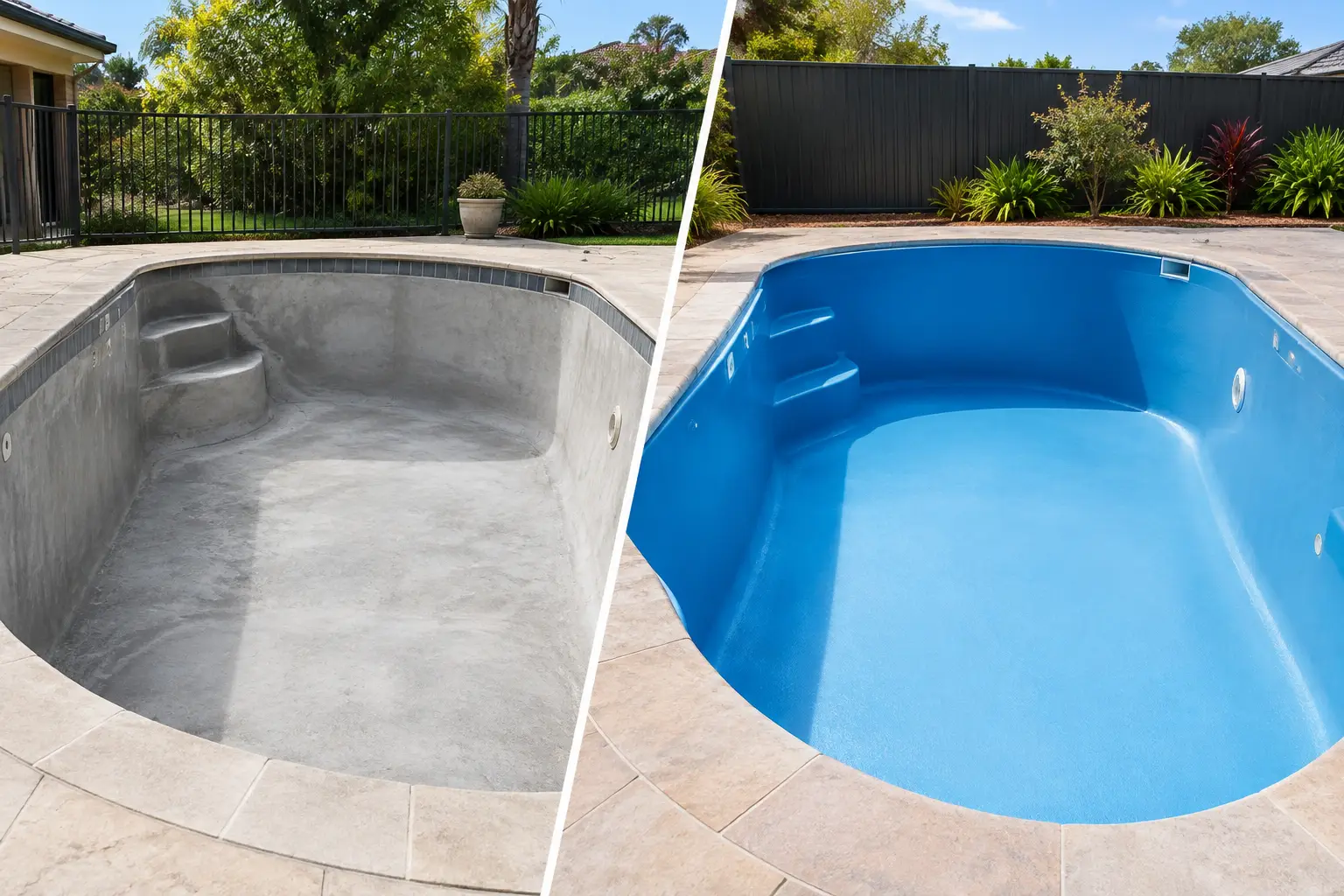
A pool can look equally tired whether it is concrete or fibreglass, but the repainting approach is not interchangeable. Concrete versus fibreglass pool paint comes down to the surface beneath the coating, the paint already on it and the preparation needed to give the new system a sound base.
Choosing by colour or price alone is how repainting jobs end up peeling, blistering or wearing unevenly. Start by identifying the pool shell and existing coating. Then choose a compatible epoxy or chlorinated rubber system, along with a primer only where the surface and coating system require it.
Why concrete and fibreglass need different paint systems
Concrete is a mineral surface. It is porous, may have old paint embedded in its profile and can show signs of moisture-related coating failure if preparation is rushed. Before repainting, the surface needs to be clean, dry, sound and properly prepared for the coating system selected.
Fibreglass is different. Its gelcoat or previous painted surface is smooth and non-porous compared with concrete. It also has some natural movement, so adhesion depends heavily on thorough cleaning, correct abrasion and using a coating system suitable for fibreglass. Paint applied over a glossy, poorly keyed fibreglass surface has little to grip.
This does not mean one pool type always needs one specific product. The existing coating matters just as much. A concrete pool previously painted with chlorinated rubber should not automatically be recoated with epoxy, and a fibreglass pool with an unknown coating history needs investigation before a full order is placed.
Start with the existing coating, not the pool shell
The most common expensive mistake is treating an existing painted pool as though it were bare concrete or bare fibreglass. The new paint must be compatible with what remains on the pool.
If the existing paint is firmly bonded and its type is known, selecting a compatible recoating system is much more straightforward. If paint is peeling, softening, chalking heavily or lifting in sheets, the failed material must be dealt with before recoating. New paint cannot fix a weak layer underneath it.
Epoxy coatings and chlorinated rubber coatings are different systems. They should not be mixed casually. In broad terms, two-pack epoxy is chosen where a tougher, higher-build coating system is appropriate and the surface preparation supports it. Chlorinated rubber is commonly used for repainting compatible chlorinated rubber surfaces. The correct choice depends on the existing coating, substrate condition and product instructions.
If you cannot identify the old paint, do not guess from colour, age or appearance. A small test area and the relevant technical guidance can help establish whether the planned coating is suitable. This step takes far less time than removing a new coating that has failed because it was incompatible.
When the pool is bare or fully stripped
A bare concrete pool and a bare fibreglass pool still require different preparation and may have different primer requirements. Concrete needs attention to surface condition and porosity. Fibreglass needs a clean, evenly abraded surface free from contaminants and loose or degraded gelcoat material.
Primer is not a universal extra coat to add automatically. It is part of a system. Use the compatible primer when the selected coating system and surface condition call for it, following the product data. Using the wrong primer, or applying paint direct where a primer is required, can compromise adhesion.
Concrete pool repainting: what usually causes failure
Concrete pools often fail because the preparation stopped too early. The surface may look dry and ready from a distance while still carrying loose paint, dust, chalky residue, contamination or poorly bonded patches.
Pay close attention to areas where paint has lifted. If the old coating comes away easily at the edges, it is not a sound foundation. Remove failed material back to a firm edge, prepare the surrounding surface consistently and address the reason it failed before choosing the new paint.
Common causes include poor adhesion to an inadequately prepared surface, applying an incompatible coating over the old paint, or missing the correct primer requirement. Rough repairs and uneven profiles can also show through a fresh finish, so assess the substrate before ordering paint rather than expecting the coating to solve structural or surface defects.
For a concrete pool, a two-pack epoxy system may be appropriate where the substrate is properly prepared and the existing coating situation allows it. A compatible chlorinated rubber system may be the better path where it is being used to recoat a sound chlorinated rubber surface. The product system must match the pool, not the other way around.
Fibreglass pool repainting: adhesion is the main issue
Fibreglass pool paint failures are often traced back to a glossy or contaminated surface. Fibreglass can appear clean but still carry residues that interfere with adhesion. It must be prepared exactly as required for the chosen coating, including cleaning and sanding or abrasion to create a suitable key.
Do not assume fibreglass only needs a light scuff before any pool paint can be applied. The existing gelcoat, previous paint layers and any areas of delamination all need inspection. Loose paint or unstable gelcoat must not be coated over.
A compatible epoxy coating system is often considered for fibreglass, provided the preparation and primer requirements are met. However, previous paint may change the recommendation. If the pool has already been painted with chlorinated rubber or the coating history is uncertain, confirm compatibility before moving ahead.
The practical rule is simple: sound, correctly prepared fibreglass supports a durable coating system; glossy, contaminated or failing fibreglass does not. Spend the time on preparation before opening the tins.
Epoxy or chlorinated rubber: choose based on compatibility
Both coating types have a place in pool repainting, but neither is a shortcut around preparation.
Two-pack epoxy is a system with a specific mixing and application process. It is commonly selected for suitable prepared concrete and fibreglass surfaces because it forms a substantial protective coating. It requires accurate mixing, correct application conditions and adherence to the product instructions. Treat it as a complete system, including the specified primer where needed.
Chlorinated rubber pool paint is generally the logical choice when recoating an existing chlorinated rubber finish that is sound and properly prepared. It is not a default substitute for epoxy, and it should not be selected simply because it seems easier to apply.
Before buying, answer three questions: What is the pool shell made from? What coating is currently on it? Is that existing coating sound enough to retain? Those answers narrow the product choice quickly and reduce the risk of ordering an incompatible system.
Work out paint and primer quantities before ordering
Running short can create avoidable problems, particularly if you cannot maintain a consistent application process across the pool. Ordering far too much is also unnecessary. Measure the pool carefully and use the Pool Paint Calculator to estimate the paint and primer required for your dimensions and selected system.
Include the floor, walls, steps, ledges and other painted areas in the calculation. Do not rely on a rough estimate based only on the pool’s length and width. Shapes, depth changes and steps can add meaningful surface area.
Coverage is affected by surface profile, existing texture, the product selected and the number of coats required. Check the official product information for the chosen BG Coatings system and use the calculator as part of the ordering process. If the pool has unusual features or extensive prepared repair areas, allow for that when confirming quantities.
A practical decision path before you buy
First, identify whether the pool is concrete or fibreglass. Next, inspect the current finish and determine whether it is epoxy, chlorinated rubber, another coating or unknown. Check for peeling, blistering, chalking, soft spots and loose edges. These are preparation issues to resolve, not areas to simply paint over.
Then select a compatible coating system and any required primer. Read the product instructions before starting surface preparation, because the preparation method and recoating steps need to suit the exact product. Finally, measure the pool and use the Pool Paint Calculator before placing the order.
If you are deciding between products, provide the pool surface type, details of the existing coating and clear information about its condition when seeking technical guidance. That gives you a far better answer than asking for the “best pool paint” in general.
A repaint can produce a clean, long-lasting finish when the system matches the surface and the preparation is done properly. Choose the coating after you know what is on the pool, use the compatible primer where required, and calculate the full quantity before the job begins.