
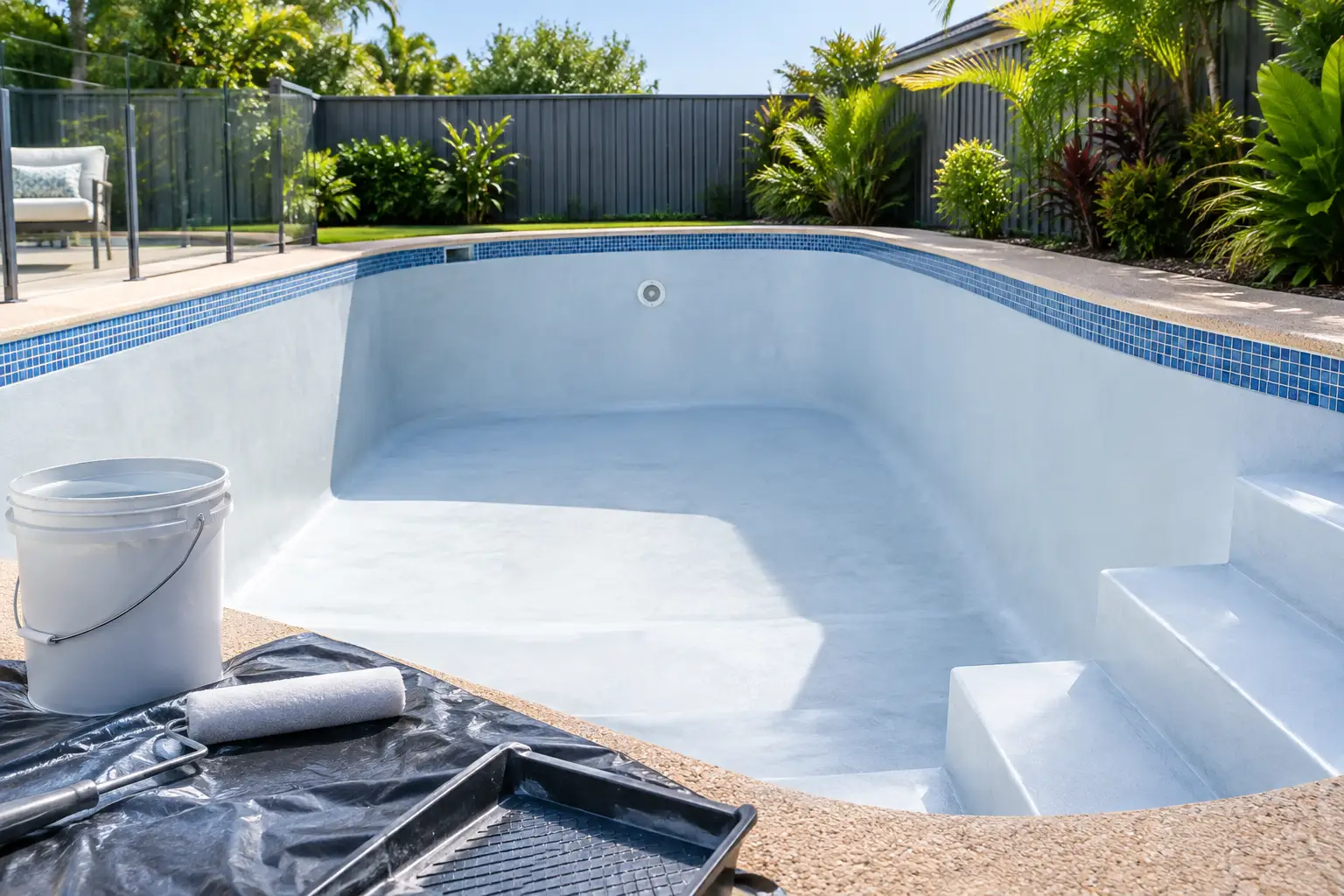
A pool that looks patchy, chalky or badly peeled rarely needs guesswork. It needs the correct coating system, proper preparation and enough product to apply every specified coat. A pool paint calculator gives you a practical starting point, but the result is only useful when your measurements, surface type and existing coating are right.
Ordering too little can leave you short before the final coat. Ordering far too much wastes money and can lead to using an unsuitable product simply because it is on hand. Before adding paint to your cart, measure the pool properly and identify what is already on the surface.
What a pool paint calculator should calculate
The calculator should estimate the total internal area of the pool – not just the waterline footprint. That means the floor, walls, steps, benches, ledges and any other painted areas. It then applies the coverage rate and the required number of coats for the selected pool coating system.
For a straightforward rectangular pool, the total usually includes the floor area plus all four walls. A sloping deep end, wide entry steps, curved corners or a large sun shelf can add more area than people expect. Kidney-shaped, freeform and fibreglass pools need the same care. Measure the widest and longest points, then allow for the features that the basic shape does not capture.
The calculator result is an estimate for planning an order. It does not replace the product’s technical information. Coverage varies with surface profile, coating type, application method and the condition of the substrate. Rough or previously painted concrete can use more material than a smooth surface. Do not stretch the product further than its specified coverage to make a tin go further. Applying too thinly is a common cause of poor hiding and premature coating problems.
Measure the whole surface, not just the pool length and width
Start with the internal dimensions in metres. Measure the maximum length and width, the shallow-end and deep-end depths, and the height of each wall. If the pool has steps, measure the tread and riser surfaces. Record ledges and benches separately so they are not missed.
For a rectangular pool with vertical walls, the calculation is broadly:
Floor area + wall area + steps and features = total paint area
The floor area is length multiplied by width. Wall area is the perimeter multiplied by the wall height, allowing for a sloping floor where relevant. This is a useful check, but use the Pool Paint Calculator rather than relying on a rough estimate alone.
A pool with a deep-end slope needs more thought. The floor is longer than the horizontal distance from shallow to deep end, so a simple length-times-width calculation can understate the true area. Curved pools also need a sensible allowance. If your measurements are uncertain, it is better to clarify them before ordering than assume a standard rectangle will be close enough.
Include steps, benches and water features
Steps are often overlooked because each individual surface seems small. Add the horizontal treads and vertical risers. The same applies to underwater benches, swim-outs, ledges and decorative internal features that will receive paint.
These areas matter for more than quantity. Steps and ledges are high-contact surfaces, so they need the same correct preparation and coating thickness as the rest of the pool. Skipping them in the calculation can leave the job incomplete or tempt you to apply the remaining paint too thinly.
Choose the coating system before relying on the quantity result
The right quantity depends on the right paint. The most expensive mistake is not buying an extra tin. It is applying an incompatible coating over the existing surface.
Two-pack epoxy pool paint and chlorinated rubber pool paint are different systems. They have different preparation requirements, compatible primers and recoat procedures. The existing finish is the starting point for deciding what can be applied.
If the pool is already painted, determine whether the old coating is epoxy, chlorinated rubber or another product before selecting a new system. Do not assume a coating is epoxy because it feels hard, or chlorinated rubber because it is older. If you cannot identify it confidently, seek product-specific guidance before ordering.
For bare concrete, sound prepared concrete, fibreglass or a previously coated surface, primer requirements can differ. A primer is not an optional extra to add after calculating paint. It is part of the system where the selected coating and substrate require it. The primer quantity must be calculated separately using its own coverage information.
Pool Paint Sydney provides calculator and product information to help match the quantity with the selected BG Coatings system. Check the relevant epoxy, chlorinated rubber and primer product pages before making the final selection.
When primer needs its own calculation
Primer is commonly missed because people focus on the visible topcoat colour. But where a compatible primer is required, it prepares the surface for the chosen coating system. Leaving it out or substituting an unsuitable primer can contribute to adhesion failure, peeling or uneven performance.
Calculate primer over the area that will actually be primed. This may be the entire pool, or it may be limited to bare patches and repairs where the product instructions allow that approach. Do not automatically assume that leftover topcoat can act as a primer, and do not use a general-purpose primer in a pool coating system unless it is specifically compatible.
Primer and topcoat have different coverage rates. A paint calculator result for topcoat does not automatically tell you how much primer to buy. Enter the same measured surface area into the relevant primer calculation and follow the system guidance for the selected product.
Why quantity estimates can be wrong
Most incorrect orders come from a few predictable errors. The first is measuring the pool opening rather than the entire interior. The second is forgetting that two or more coats require more product than one coat. The third is choosing paint before identifying the old coating.
Surface condition also changes the result. Sound, smooth fibreglass and rough, porous concrete do not take paint in the same way. A pool with extensive peeling needs all unsound coating removed and the remaining surface prepared correctly before it can be measured and coated. Painting over loose or poorly adhered material does not fix the failure underneath.
Australian weather adds another practical consideration. Heat, wind and humidity can affect how workable a coating is and how a project should be planned. Follow the product instructions for suitable application conditions and do not rush preparation to beat a forecast. The quantity calculation should be settled before the job begins, so you have the complete compatible system ready when conditions are suitable.
Use the calculator after preparation planning
A calculator is most useful once you know the scope of the job. Inspect the empty pool, identify loose or failed coating, confirm the existing surface and decide which areas will be coated. Then measure every internal section and select the coating system.
Before placing an order, check these details:
- the pool’s full internal area, including walls, floor, steps and ledges
- the existing coating type or substrate
- the specified number of coats for the product selected
- whether a compatible primer is required
- the product coverage and preparation instructions
This small amount of planning prevents the two problems that cause the most frustration: stopping halfway through because there is not enough material, or coating the pool with a system that does not suit what is already there.
Get a quantity you can order with confidence
Use the Pool Paint Calculator as the first check, then compare the result with the selected product’s coverage information. If the pool is an unusual shape, has substantial steps, has a sloped floor, or the old coating is unknown, get clarification before purchasing. Accurate dimensions and a confirmed coating system make the calculator far more reliable.
The right order is not simply the lowest number of tins. It is the correct amount of compatible primer and pool paint for a properly prepared surface, applied at the required coverage. Take the time to measure once, identify the existing coating and choose the system that fits the pool – it is the simplest way to avoid an expensive repainting mistake.