
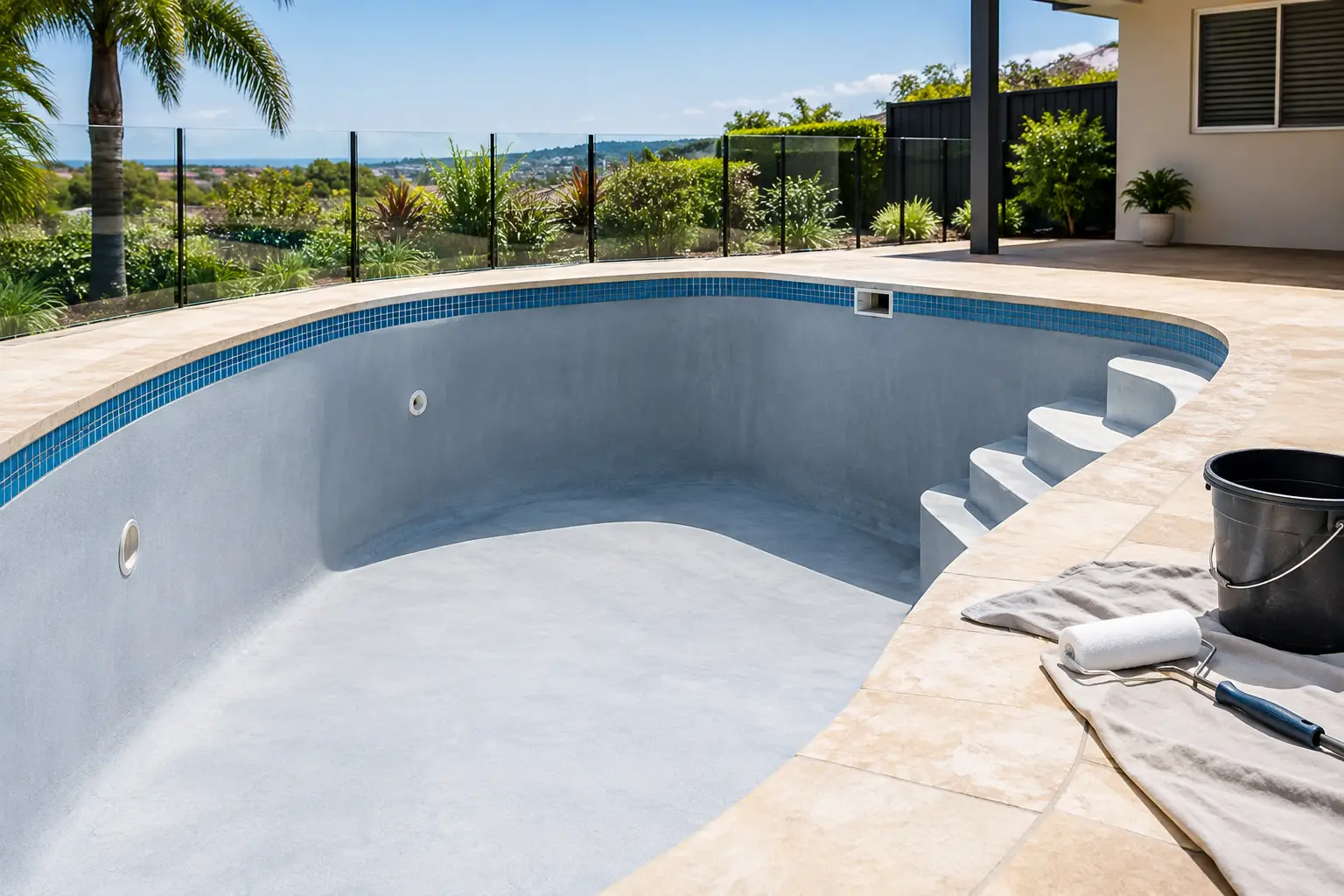
Surface wear resistant pool paint is not simply the hardest coating on the shelf. For a pool repaint to hold up, the paint must suit the pool surface, the existing coating and the preparation work underneath it. A premium coating applied over loose paint, contamination or an incompatible finish can still peel, blister or wear through early.
If your pool paint is scuffing, fading in high-use areas, or showing bare patches around steps and ledges, the answer may be a more suitable coating system. It may also be a preparation issue. Getting that distinction right before ordering is how you avoid buying the wrong paint twice.
What makes pool paint resistant to surface wear?
Surface wear is the gradual loss of the coating film from use, abrasion and ongoing exposure in the pool environment. It often appears first on entry steps, shallow ledges, swim-outs and other areas that receive frequent foot traffic. In some cases, it is confused with peeling, but the two failures are different.
Wear generally means the coating is thinning or being abraded from the surface. Peeling means the coating has lost adhesion and is lifting away. Both can leave a pool looking tired, but they require different questions before you choose a replacement system.
A wear-resistant result depends on three things working together: the coating type, the condition and compatibility of the surface below it, and applying the product at the specified coverage rate. Applying paint too thinly can reduce the protective film where the pool gets the most use. Applying a new coating over unsound old paint means the new finish is only as strong as the failing layer beneath it.
The correct approach is not to choose paint based on a general claim of durability. Start by identifying whether your pool is concrete or fibreglass, then establish what is currently on it and whether that coating is sound enough to remain.
Choosing surface wear resistant pool paint for your pool
For most repainting projects, the main decision is between a two-pack epoxy pool coating and chlorinated rubber pool paint. Both are specialist pool-coating systems, but they are not interchangeable.
Two-pack epoxy pool paint
Two-pack epoxy is often selected where a hard, durable finish and good resistance to regular use are priorities. It is a serious coating system that requires careful mixing, correct preparation and attention to the product instructions. It is commonly considered for properly prepared concrete pools and for suitable fibreglass applications where the full system is compatible.
Its strength is also why preparation matters so much. The substrate needs to be clean, dry, stable and correctly prepared. Any weak existing coating, chalky surface or contamination can compromise adhesion. Epoxy is not a shortcut for hiding poor preparation or a deteriorating previous paint job.
If you are repainting over an existing epoxy coating that is sound, an epoxy system may be the logical option. Do not assume this from appearance alone. Old pool coatings can look similar once weathered, and an incorrect assumption about the existing finish can cause an expensive compatibility problem.
Chlorinated rubber pool paint
Chlorinated rubber pool paint is a practical choice for pools that already have a compatible chlorinated rubber coating. It is also used for suitable pool repainting situations where its properties and recoat compatibility match the project requirements.
The key point is compatibility. Do not apply a chlorinated rubber system over an unknown or incompatible existing coating simply because it seems easier to use. Likewise, do not assume every painted concrete pool should receive epoxy. The existing coating, surface condition and manufacturer guidance should determine the system.
Where the old paint is badly peeling, cracking, soft, powdery or blistered, applying a fresh topcoat over it is unlikely to solve the issue. Remove unsound material and assess the exposed surface before selecting the primer and coating system.
The real cause of premature wear and peeling
Paint failures are often blamed on the topcoat, but the fault usually starts earlier. Before buying any surface wear resistant pool paint, inspect the pool when it is empty and dry. Pay close attention to steps, corners, waterline areas, patches and places where a previous coating has lifted.
Common causes include:
- Applying a coating over loose, poorly adhered or incompatible paint.
- Inadequate cleaning and preparation, leaving chalking, residue, dirt or other contaminants on the surface.
- Missing the required primer, or using a primer that does not suit the substrate or coating system.
- Applying insufficient product, which can leave a thin film in high-wear areas.
- Coating a damp surface or working in unsuitable weather conditions.
These issues can look alike after the pool has been refilled. Blisters and sheets of lifting paint usually point to an adhesion or moisture-related problem. Smooth thinning on steps may indicate abrasion, inadequate film build, or both. If you cannot confidently identify the original coating, treat it as an unknown rather than guessing.
Concrete and fibreglass need different checks
Concrete pools may have bare cementitious surfaces, old painted surfaces or previous repair areas. Bare or exposed concrete often needs specific preparation and a compatible primer before the topcoat. The concrete must be sound and properly prepared according to the relevant product data, not merely swept clean.
Fibreglass needs an equally careful approach. A fibreglass shell can have an existing painted coating, an aged gelcoat or previous repairs. The surface must be stable, clean and correctly prepared for the selected system. Using a coating intended for another surface without checking compatibility can lead to adhesion failure.
For either pool type, patches deserve extra attention. A patch may have different porosity or a different existing product underneath, which can affect primer requirements and the final appearance. If you are changing coating type, or dealing with an unknown painted surface, check the technical information for the proposed system before proceeding.
Preparation is where wear resistance is won or lost
A coating only performs as well as the surface it is bonded to. Start by removing all loose or flaking paint. Feather sound edges so there is no sharp lip beneath the new coating, then prepare the remaining surface as required for the selected system.
Cleaning is not a cosmetic step. A surface can look clean while still carrying chalky residue or other contamination that interferes with adhesion. Follow the product-specific preparation process, allow for proper drying, and do not paint until the surface condition meets the system requirements.
Primer is not automatically required on every repaint, but it should never be treated as optional where the coating system specifies it. The correct primer can help manage prepared bare areas and create the required base for the topcoat. The wrong primer, or no primer where one is required, can undermine the whole job.
Australian conditions add another layer of judgement. Sydney and NSW projects often need to be planned around heat, rain, humidity and overnight moisture. Avoid rushing the application because a weather window is closing. Follow the product instructions for application conditions and recoat timing rather than relying on a general painting rule.
Order enough paint to achieve the specified film
Ordering too little paint is a common way to end up with a thin, short-lived finish. Pool dimensions alone are not always enough, because steps, ledges, swim-outs and deep ends add surface area. The number of coats and the product’s stated coverage rate also matter.
Use the Pool Paint Calculator before ordering. Enter accurate internal measurements and include all painted features. Then check the result against the relevant product page and technical information, particularly if the pool has extensive steps, unusual shapes or large patched areas.
Do not stretch the final tin to make it cover more than the stated rate. That can reduce film thickness precisely where a surface needs protection. If the calculator result is close to a pack-size boundary, confirm the quantity before starting so the coating system can be applied consistently.
A practical path to the right coating system
First, identify the pool surface and the condition of the existing paint. Next, determine whether the old coating is sound and what type it is, using records where available and the relevant product guidance. Then select either the compatible epoxy or chlorinated rubber system, including any required primer.
Pool Paint Sydney provides product information, coating options and a Pool Paint Calculator to help customers choose quantities before they order. If the previous coating is unknown, the surface has widespread failure, or you are unsure whether primer is required, seek product-specific technical guidance before committing to a system.
The most durable-looking pool finish starts with a simple decision: prepare the actual surface in front of you, then buy the coating system that is designed to bond to it.