
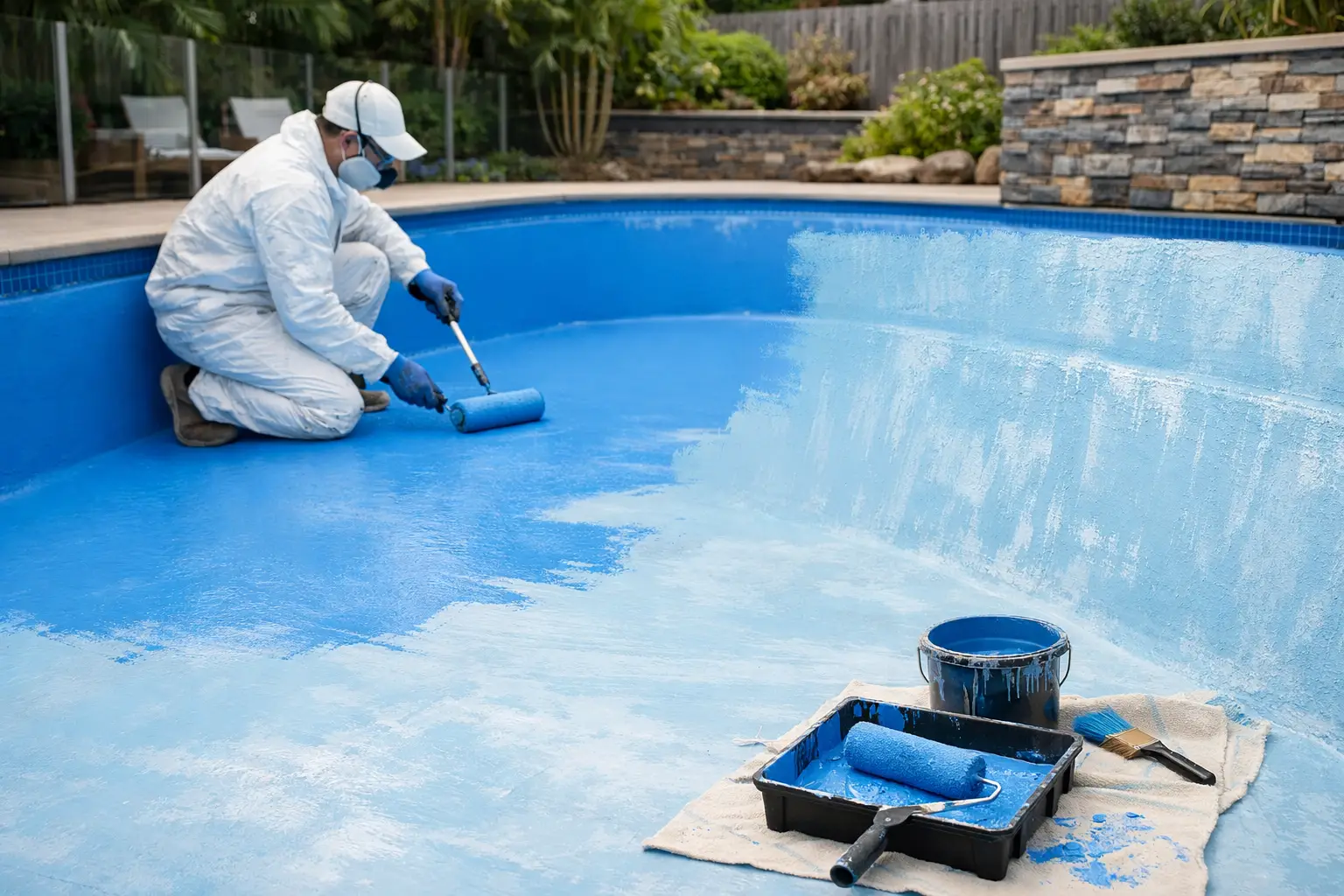
A streaky finish is usually visible before the pool is refilled – and it is frustrating because the cause is often not the paint itself. If you want to know how to avoid pool paint streaks, focus on four things: surface preparation, selecting a compatible coating system, mixing correctly and maintaining a consistent wet edge during application.
Pool coatings are not like ordinary exterior paint. They are applied over concrete, fibreglass or an existing pool coating that may have unknown history, patchy adhesion or different absorption across the surface. A rushed application can leave lap marks, colour variation, thin roller lines or glossy and dull patches that stand out once the pool is filled.
Why pool paint streaks happen
Most streaks come from uneven film thickness. This happens when one area receives more paint than another, a roller starts to dry out, or a previously painted edge begins to tack off before the next section is coated. The problem is more noticeable with darker colours and in pools with broad walls, steps and floors that receive direct sunlight.
Streaking can also be caused by poor mixing. Pigments and other components can settle, particularly when a tin has been sitting before use. With two-pack epoxy pool paint, incorrect mixing or failing to allow the product to stand for the period specified in its technical information can create an inconsistent finish and may affect coating performance.
The existing surface matters just as much. Bare, porous concrete can absorb paint unevenly if it has not been prepared and primed as required. Old coatings may have areas that are sound beside areas that are chalky, worn or poorly bonded. Applying new paint over that inconsistent base often produces a finish that looks uneven, even when the roller work is good.
Start with the correct pool paint system
Before choosing a roller or planning application, identify the pool surface and the existing coating. This is the first step in avoiding costly mistakes.
For a previously painted concrete pool, determine whether the existing coating is epoxy, chlorinated rubber or another product before selecting a repaint system. Applying an incompatible paint over the old coating can lead to peeling, softening or adhesion failure. Streaks may be the least serious result.
Two-pack epoxy pool paint is commonly selected where an epoxy-compatible system is suitable and the surface has been prepared properly. It is a different system to chlorinated rubber pool paint, with specific mixing, application and recoat requirements. Chlorinated rubber is generally used where it is compatible with the existing coating and project requirements.
Fibreglass pools need their own preparation approach. The surface must be sound, clean and abraded as required so the coating can bond correctly. Do not assume a paint suitable for concrete is automatically suitable for a fibreglass pool, or that a primer used on one surface is appropriate for another.
If you cannot identify the old paint, do not guess based on colour or appearance alone. Review the coating history where possible and seek product-specific technical guidance before ordering. Choosing the correct coating system first is the practical way to avoid a streaky result and a larger repainting problem later.
Prepare for an even surface, not just a clean-looking one
A pool can look clean and still be unsuitable for coating. Loose paint, chalking, surface contaminants, weak patches and glossy areas all affect how paint flows and bonds.
Remove failed or loose coating until only sound material remains. Feather the edges between bare areas and remaining paint so the new coating does not bridge abrupt ridges. If you skip this step, the roller can deposit extra paint along those edges, creating visible bands.
Concrete surfaces must be prepared in line with the selected coating system. Where a compatible primer is required, apply it evenly and allow the specified preparation and recoat conditions. Primer is not simply an optional extra for bare or variable concrete. It helps create a more consistent base, which reduces uneven absorption and helps the topcoat lay out more evenly.
On fibreglass, poor abrasion can leave slick sections that accept paint differently to the surrounding surface. Use the preparation method specified for the selected product, then remove all sanding residue before coating. Dust left in corners, on steps or around fittings can interfere with the finish.
Pay close attention to repairs and bare patches. These areas often absorb more paint than surrounding coated sections. Treat them according to the coating system requirements rather than trying to hide them with a heavier topcoat.
Check the weather before you open the tins
Sydney and NSW conditions can change quickly, especially during warmer months. Direct sun, hot concrete, wind and rising temperatures can make pool paint flash off too quickly. When paint dries at the roller edge before the next pass overlaps it, lap marks and streaks become far more likely.
Plan the work around the product’s stated application conditions. Check the technical data for suitable air and surface temperatures, humidity limits, rain exposure and recoat windows. Surface temperature is especially relevant because a pool shell in full sun can be much hotter than the air around it.
Where practical, work in sections that stay manageable in the available conditions. Start with areas that will receive sun first, or adjust the sequence to keep the application edge workable. Avoid stretching the job through unsuitable weather simply to finish a coat. A short delay is cheaper than recoating a visibly streaked pool.
Mix thoroughly and only prepare what you can apply
Stir single-pack pool paint thoroughly before application and stir again as directed during use. Do not rely on a quick shake or a few turns with a stick. Settled pigment can cause shade variation from one section to the next.
For two-pack epoxy, follow the product instructions precisely for mix ratio, mixing time, induction period if specified, thinning and usable working time. Mix the components completely, including material from the sides and bottom of the mixing container. An incompletely mixed batch can show colour or gloss variation.
Do not mix more two-pack product than you can apply within its stated usable time. As mixed paint begins to change, it may not flow or level in the same way as fresh material. Trying to use material beyond its working time is a common route to roller drag, patchiness and visible application marks.
Keep batches consistent. If more than one batch will be needed for a coat, use the same measured process each time. For larger jobs, planned batch mixing helps prevent one wall or floor section looking slightly different from the next.
Use a roller technique that prevents lap marks
Use the roller cover and application method recommended for the coating. A roller that is too short can leave poor coverage over a textured surface, while an unsuitable nap can carry too much paint and leave heavy lines. Product instructions should always take priority.
Load the roller evenly, then begin with a controlled pass. Work in small, workable sections and maintain a wet edge. This means overlapping the next area while the preceding edge is still wet enough to blend. Do not paint one full wall in narrow vertical strips, stop for an extended break, then return to join a partly dried edge.
Apply paint at a consistent spread rate. Pressing hard to force a nearly dry roller across the surface leaves thin, rough-looking tracks. Reload before the roller starts to drag. On the other hand, repeatedly rolling over a section that has started to tack can pull the coating and create a patchy finish.
Finish each section with light, consistent passes in one direction where the product instructions allow. The goal is to level the coating, not keep working it. Cutting in around steps, corners and fittings should be done in manageable lengths so those edges can be rolled into while wet.
Do not try to fix streaks by applying a heavy coat
When the first coat looks uneven, the temptation is to load on extra paint immediately. That can make the problem worse. Heavy application may create sags, extended drying or inconsistent thickness, particularly on walls and steps.
Instead, allow the coat to dry and assess it under even light. Some apparent variation can change as the coating dries, but obvious roller lines, missed coverage or patchiness should be addressed within the product’s specified recoat process. Apply the next coat at the recommended spread rate, not as a rescue coat.
A second coat is part of the specified system where required. It should provide consistent coverage because the first coat was prepared and applied properly, not because it is being asked to disguise preparation faults or incompatible materials.
Calculate quantities before application starts
Running short halfway through a wall or floor is one of the easiest ways to create an uneven finish. You may have to stop at an awkward point, wait for more product, then restart against a dried edge. Ordering far too much can also lead to unnecessary waste, particularly with two-pack products.
Use the Pool Paint Calculator before purchasing to estimate the paint and primer quantity for your pool dimensions and selected system. Then check the listed coverage guidance for the specific product and allow for the pool’s condition. Rough concrete, repairs and heavily textured surfaces can require more material than a smooth, previously coated shell.
Have all product, compatible primer, mixing containers, roller covers and application tools ready before starting. A well-organised job gives you the best chance of keeping a wet edge and applying each coat evenly.
For a durable, even-looking result, buy the correct epoxy or chlorinated rubber system for the existing surface, follow its product information closely and use the Pool Paint Calculator before you begin. If the current coating is uncertain or the surface has failed in places, get clarification before ordering rather than trying to solve it with extra paint.