
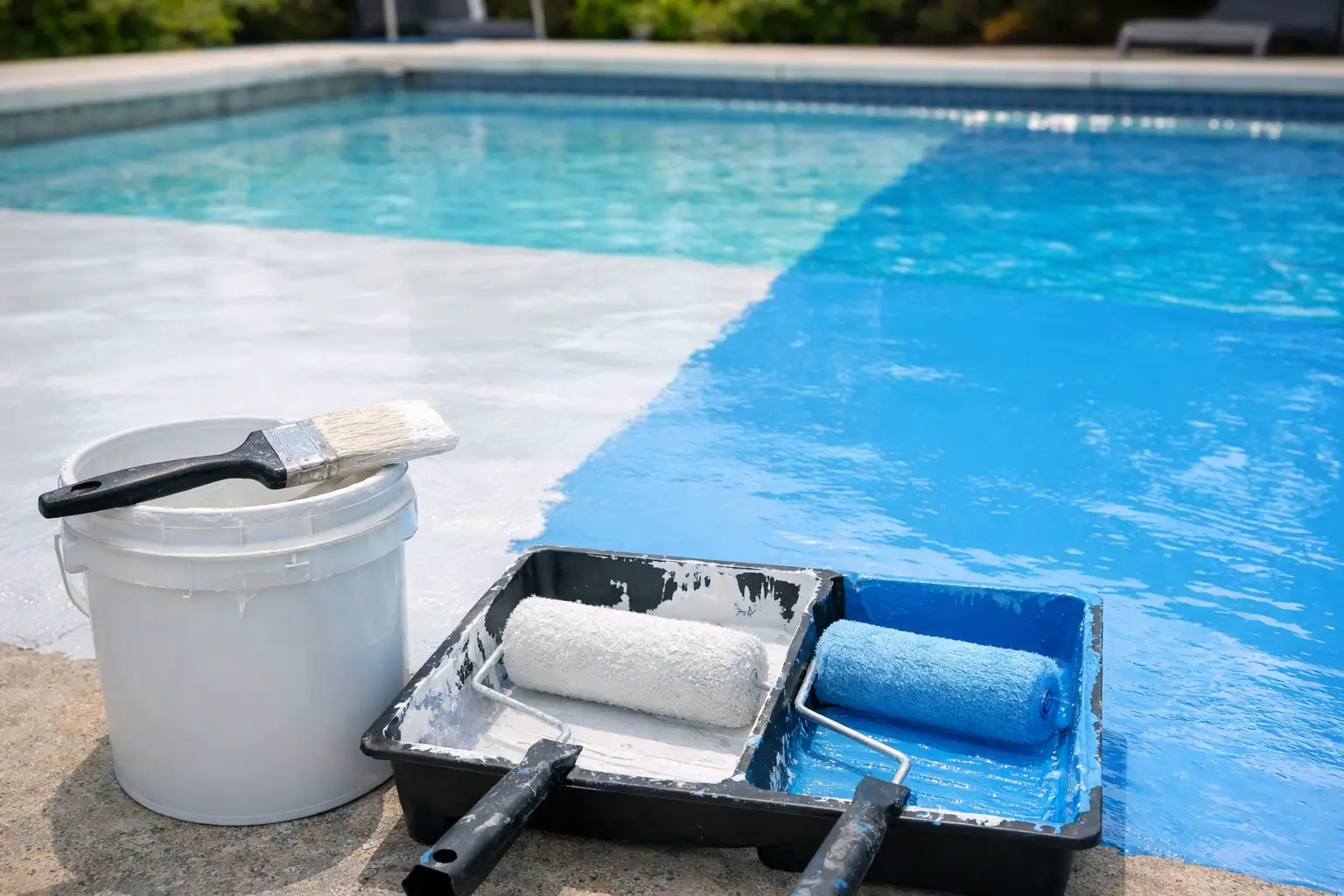
If you are asking whether primer needed before pool paint, the short answer is this: sometimes yes, sometimes no. It depends on the pool surface, what coating is already on it, and which pool paint system you are using. Getting this wrong is one of the easiest ways to end up with peeling, patchy adhesion, or a repaint job that fails well before it should.
Most pool paint problems do not start with the topcoat. They start underneath it. If the surface is chalky, porous, previously painted with the wrong product, or simply not prepared properly, adding paint straight over the top will not fix anything. In some cases a primer is essential. In others, it is unnecessary and can even create compatibility issues.
When is primer needed before pool paint?
Primer is usually needed when the surface needs help with adhesion, sealing, or bonding between old and new coatings. That often applies to bare concrete, repaired areas, and some difficult repaint situations where the substrate is uneven or porous.
If you are using a proper epoxy pool paint system, the answer depends on both the substrate and the manufacturer’s specification. A quality epoxy coating is not the same as a general-purpose paint from the hardware shop. Pool coatings deal with constant water immersion, pool chemicals, UV, and movement through seasonal temperature changes. That means the primer, if required, must be part of a system designed for swimming pools.
As a practical rule, primer may be needed in these situations:
- bare or very porous concrete
- freshly repaired concrete patches
- surfaces with inconsistent absorption
- pools where the previous coating has been removed back to substrate
- fibreglass pools needing a bonding layer before recoating, depending on the product system
If the pool already has a sound, compatible epoxy coating and you have prepared it correctly, you may not need a separate primer at all.
When primer is not needed before pool paint
A lot of pool owners assume primer is always the safe option. It is not. If the existing surface is stable, compatible, and properly sanded or etched as required, adding a primer that is not part of the coating system can cause more trouble than it solves.
This is especially common when people use a leftover primer from another job or buy a generic masonry primer. Pool painting is not the place to improvise. A coating that looks fine when dry can fail once the pool is filled and left under water pressure for weeks.
If you are recoating an existing epoxy-painted pool and the old coating is still well bonded, the correct process is often thorough cleaning, mechanical preparation, repair work where needed, and direct application of the next compatible epoxy coat. No extra primer.
That saves time and money, but only if the surface is genuinely sound. If the old coating is flaking, soft, blistered, or unknown, do not paint over it and hope for the best.
Bare concrete pools usually need more attention
Concrete is where most of the primer confusion starts. Some concrete pools are dense and already well sealed. Others are rough, dusty, porous, or have patch repairs that soak up coating at different rates. That is why there is no one-size-fits-all answer.
For a new or stripped-back concrete pool, the real question is not just whether primer is needed before pool paint. The question is whether the surface is ready to accept an epoxy system properly. That means checking for laitance, moisture issues, old residues, and weak surface material.
If the concrete is too porous, the first coat can disappear into the substrate and leave you short on film build. That weakens the system and affects long-term performance. In these cases, a suitable primer or sealer coat can help create a more even, bonded surface before the top coats go on.
Australian conditions make this even more relevant. Pools exposed to strong sun, heat, and long dry periods can look ready on the surface but still have preparation issues underneath. Rushing into paint without dealing with that usually shows up later as peeling around steps, shallow ends, or repaired areas.
New concrete needs curing time
If the pool shell or render is newly done, it needs proper curing before any coating system goes on. Paint applied too early can trap moisture or react badly with the alkalinity of fresh cement. That is not a primer problem. That is a timing problem.
Even the best epoxy system cannot compensate for concrete that is not ready.
What about fibreglass pools?
Fibreglass pools are different. The surface is smoother, less porous, and more sensitive to product compatibility. In many fibreglass repaint jobs, adhesion comes down to thorough degreasing, sanding, and using the correct epoxy coating system. Some systems require a primer or tie coat. Others are designed to go over a properly prepared surface without one.
This is where product choice matters. A concrete pool product and a fibreglass pool product are not automatically interchangeable. If you use the wrong coating, or skip a primer that is specifically required for fibreglass, the finish can delaminate.
If your fibreglass pool is chalky, faded, or has localised repairs, treat that as a warning sign to check the full system before buying paint. It is better to confirm the right coating sequence upfront than to repaint twice.
The biggest mistake: using the wrong primer
The main issue is not just whether to prime. It is using a primer that does not belong with the pool paint.
A pool is a permanently wet environment. Many primers sold for concrete, exterior walls, or general marine use are simply not made for full-time submersion in chemically treated water. They may seem fine during application, then soften, blister, or lose bond after the pool is filled.
If a primer is required, it should be one that is compatible with the specific epoxy pool coating you plan to use. The safest approach is to treat the primer, base coat, and topcoat as one complete system, not separate products picked from different brands.
How to tell if your pool needs primer
Start with the condition of the substrate, not the paint tin. Look at what the pool is made from, whether it has been painted before, and if the existing coating is still sound.
If the pool is bare concrete, heavily repaired, or uneven in porosity, primer may be the right move. If it is an existing epoxy-coated pool in good condition, it may not be needed. If the old paint type is unknown, you need to identify that before choosing anything.
A simple decision path looks like this.
If the pool has loose or failing paint, remove the failed material and assess what is underneath. If you reach bare concrete or patchy substrate, a primer or sealer coat may be required. If the old epoxy remains firm and compatible, surface preparation may be enough before recoating.
If you are unsure, that is exactly the point to get technical advice before ordering. Guessing is what causes costly mistakes.
Primer needed before pool paint – and what to do next
If you want long-lasting results, do not start by asking what paint colour to choose. Start by identifying the substrate and buying the correct coating system for that surface.
For concrete pools, choose an epoxy pool paint system designed for concrete and check whether the surface condition calls for a primer or sealer coat. For fibreglass pools, use an epoxy system made for fibreglass and follow the specified preparation and bonding steps.
The right approach is simple:
- identify the pool surface
- check whether the pool has been painted before
- confirm coating compatibility
- prepare the surface properly
- use the full recommended system, including primer only if required
That is how you avoid peeling, patchiness, and premature failure.
If you are ready to repaint and want to buy the correct system the first time, the best next step is to match the product to the pool surface and current coating condition. Pool Paint Sydney helps customers work through exactly that problem every day, especially when a pool has failed before or the prep situation is unclear.
A primer can be the right move, but only when the surface actually needs it. The job lasts longer when every layer has a reason for being there.