
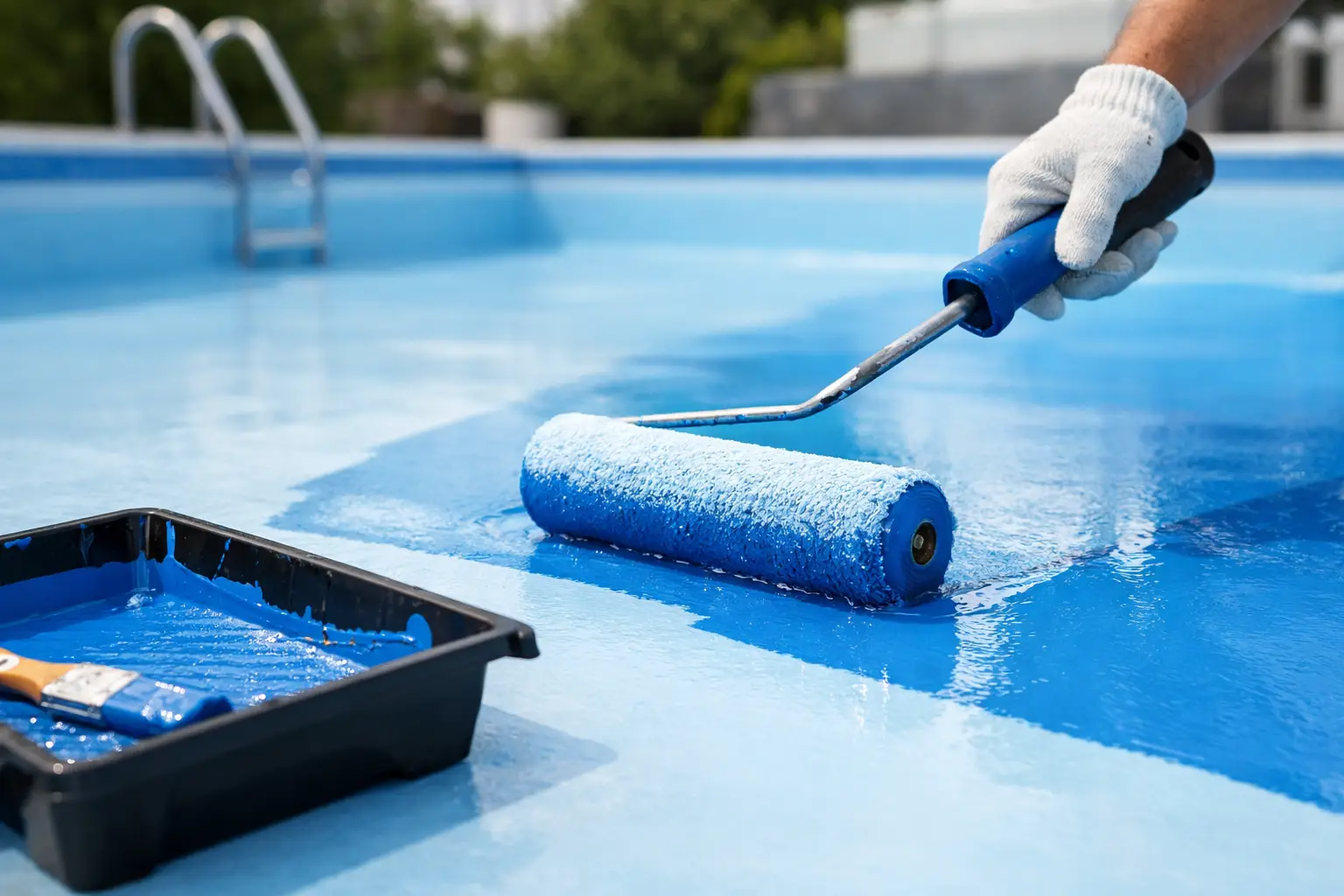
A pool can look ruined fast when epoxy goes on with roller marks, thin patches or missed recoat times. If you are looking up how to roll epoxy pool paint, the job is not just about pushing paint around – it is about getting even film build, proper adhesion and a finish that lasts in Australian conditions.
Rolling epoxy pool paint is usually the final visible step, but the result is decided much earlier. If the surface is damp, chalky, dusty or coated with the wrong old paint, even good application will still fail. If the prep is right and the product is right for the pool surface, rolling epoxy is straightforward and gives a tough, clean finish on both concrete and some correctly prepared fibreglass pools.
How to roll epoxy pool paint without causing failure
The biggest mistake is treating epoxy pool paint like standard house paint. It is not. Epoxy has a limited pot life, specific recoat timing and needs to be applied at the correct spread rate. Roll it too thin and you lose durability. Roll it too heavy and you can get sagging, solvent entrapment or slow cure.
Before you open the tins, confirm three things. First, make sure the existing coating is compatible with epoxy. Second, make sure the surface is completely prepared. Third, make sure the weather suits the job. In Sydney and across Australia, warm days can help cure times, but high surface temperatures or late-day condensation can create problems just as quickly.
Start with the right surface
Epoxy pool paint works best when it is applied over properly prepared concrete or over a sound, compatible epoxy coating. If the old surface is peeling, blistering or unknown, do not roll straight over it and hope for the best. That is how repaint jobs fail within a season.
Concrete pools need to be clean, dry, stable and free of contaminants. Any grease, sunscreen residue, calcium build-up, loose paint or chalking has to be removed first. If the surface is bare concrete, it may also need acid etching or mechanical preparation depending on its condition. If the pool has been patched, those repairs need to be cured and sanded flush before painting.
For fibreglass pools, the surface needs even more care. Epoxy can work, but only if the shell is correctly sanded, cleaned and free from wax, gloss and failing gelcoat. If the substrate is not stable, the best roller technique in the world will not save it.
Use the correct roller and tools
A good result depends on using tools that suit epoxy, not whatever is left in the shed. A quality solvent-resistant roller cover with a short to medium nap is usually the safest option for pool coatings. That gives you control and helps lay the paint off evenly without leaving a heavy texture.
You will also need a roller frame, extension pole, mixing paddle, clean bucket and brush for cutting in around fittings and tight corners. Do not use fluffy cheap roller covers that shed into the coating. Bits of lint stuck in curing epoxy are hard to fix and very obvious underwater.
Mixing matters as much as rolling
Epoxy pool paint is normally a two-pack system, which means the base and hardener must be mixed in the correct ratio. Guessing does not work. Under-mixing or altering the ratio can leave soft spots, gloss variation or cure failure.
Mix each component first, then combine them exactly as directed and mix thoroughly. Once mixed, the clock starts. In warm Australian weather, pot life can shorten quickly, so only mix what you can apply within the stated working time. If the product starts to thicken in the tray or bucket, do not try to stretch it further. That usually leads to drag marks and uneven finish.
Work in sections, not at random
The simplest way to get a consistent result is to break the pool into sections. Start in a logical area and work your way out so you are not leaning over fresh coating or boxing yourself into a corner.
Most painters start with walls, steps, around returns and fittings, then move to the floor. Cut in first with a brush where the roller cannot reach, but keep that brushed area tight. Wide brushed sections often stand out against rolled areas once the coating cures.
When rolling, load the roller evenly and apply the epoxy in a controlled section. Spread it out, then lay it off in one direction to reduce heavy lines. Keep a wet edge as you move along. If you stop and restart after the edge has begun to tack off, you can get lap marks.
How to get even coverage when you roll epoxy pool paint
Coverage rate is not a rough guide. It matters. If a product is meant to cover a certain number of square metres per litre, stay close to that rate. Going further to save paint is a false economy. The coating ends up too thin, wears faster and is more likely to fail.
A simple way to stay on track is to calculate the pool area properly before you begin and make sure you have enough paint for the full system, including all coats. This is one of the most common DIY mistakes. People buy enough for one generous coat when the system requires two full coats at the correct spread rate.
If you notice the roller is skipping, dragging or leaving dry patches, stop and check the cause. It may be heat, poor loading, surface porosity or mixed paint starting to go off. Do not keep forcing it. A rough second coat over a bad first coat rarely fixes the problem.
Watch temperature and timing
Epoxy is sensitive to application conditions. If the surface is too hot, the paint can flash off too quickly and become hard to roll smoothly. If moisture is present from overnight dew, recent washing or poor drying, adhesion can suffer.
That is why timing matters. Early morning can be too damp. Mid-afternoon in full sun can be too hot. The best window is usually when the surface is dry, the temperature is stable and you have enough daylight to complete the coat properly.
Also pay attention to recoat windows. Leave it too long and the next coat may not bond correctly without sanding. Go too early and you can trap solvents or mark the first coat. Always follow the product directions rather than guessing based on touch dry time.
Common rolling mistakes that waste money
Most epoxy pool paint problems are not caused by the paint itself. They come from the wrong system, poor prep or rushed application.
The most common issues are applying over loose or incompatible old paint, using too little paint, rolling in bad weather, mixing too much product at once and ignoring cure times before refilling the pool. Refilling too early is a costly mistake. Even if the surface feels dry, epoxy still needs full cure time before immersion.
Another mistake is trying to patch one visible area only. Fresh epoxy often looks different from weathered coating, and spot repairs can stand out badly. If the existing finish is tired across the whole pool, a full repaint usually gives the better result and longer service life.
Choosing the right epoxy system first
If you are ready to buy, the first decision is not roller size – it is whether epoxy is the correct system for your pool. For many concrete pools and suitable repaint jobs, epoxy is the right choice because it gives strong chemical resistance, good durability and a harder-wearing finish than cheaper alternatives.
But it still has to match the surface. If you are painting over a previous coating, identify what is already there before ordering. If you are unsure, get advice first rather than buying the wrong product and creating an adhesion problem.
This is where a specialist supplier makes the job easier. Pool Paint Sydney helps customers choose the correct epoxy pool paint system, work out quantities and avoid the prep and application mistakes that lead to peeling or early failure.
What a good rolled finish should look like
A properly rolled epoxy coat should look even in colour and sheen, with no obvious thin areas, puddling or heavy rope marks. Once cured and filled, it should feel hard, clean and consistent underfoot.
Do not chase perfection while the paint is still wet. Epoxy often levels as it cures. The goal is even coverage at the right film build, not overworking the surface until it starts to drag. Over-rolling usually creates more texture, not less.
If you want the best result, buy enough paint, use the correct two-pack system, prepare the pool properly and roll each coat with patience instead of speed. A pool repaint is expensive to redo, but very manageable when the product and process are right from the start.
If you are not sure which epoxy pool paint suits your concrete or fibreglass pool, get that sorted before you start rolling. The cleanest finish usually comes from making the right product decision first.