
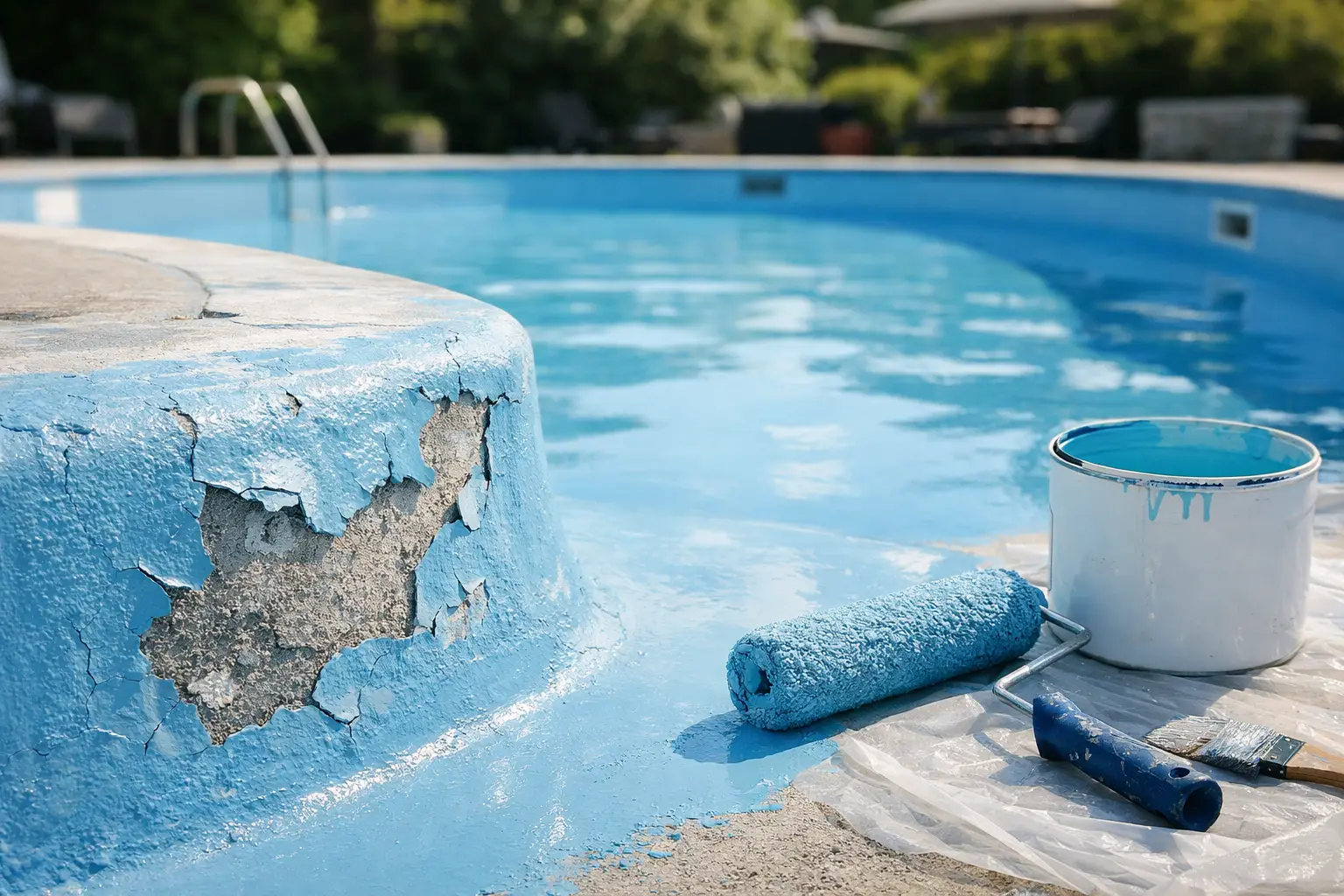
You usually notice epoxy pool paint curing issues when the job should be getting easier, not harder. The paint still feels tacky after days, leaves marks under a shoe, looks patchy, or softens when water hits it. That is the point where many pool owners assume the paint is faulty. In most cases, it is not the coating itself. It is the surface, the timing, the mix, or the weather.
If you are repainting a concrete or fibreglass pool, curing problems are expensive because they rarely stay cosmetic. A coating that does not cure properly is far more likely to blister, peel, stain, chalk early, or fail outright. Getting the right epoxy pool paint matters, but getting the conditions and preparation right matters just as much.
What epoxy pool paint curing issues actually look like
Not every bad-looking finish is a curing problem. Epoxy pool paint curing issues usually show up as soft paint, lingering tackiness, gloss differences between sections, wrinkling, solvent smell that hangs around too long, or poor hardness after the expected dry time. Sometimes the paint appears dry on top but remains soft underneath. That is a common sign the coating has not fully cured through the film.
In a pool, this becomes obvious fast. Vacuum heads can mark the surface, foot traffic leaves scuffs, and refilling too early can cause whitening, blistering or loss of adhesion. If the finish still feels rubbery or gums up when lightly scratched, the curing process has not completed properly.
Why epoxy pool paint has curing problems
Most failures come back to four things – moisture, temperature, mixing, and film build. There are other causes, but these are the ones that ruin most DIY and trade jobs.
Moisture in the substrate
Concrete holds moisture for longer than many people expect, especially after washing, acid etching, rain, or cool weather. If moisture is still in the slab when epoxy goes on, curing can slow down or the bond can fail. In Sydney and other humid parts of Australia, this catches people out all the time. A pool can look dry on the surface and still contain enough moisture to create problems.
This is one reason fresh concrete must be fully cured before painting, and older concrete must be properly dried after prep. If the shell has any hydrostatic pressure issues or damp coming through from behind, epoxy is not going to fix that.
Temperature and weather conditions
Epoxy is less forgiving than people think. If it is too cold, the reaction slows down and cure times stretch out. If it is too hot, pot life drops and the paint can start reacting before it has levelled properly. High humidity can also interfere with the finish and with through-cure.
Australian conditions make timing critical. A hot summer afternoon, a cool overnight drop, or unexpected moisture from dew can all affect the result. Painting in the wrong part of the day is one of the easiest ways to create curing issues without realising it.
Incorrect mixing
Two-pack epoxy only works when the base and hardener are mixed exactly as directed. Guessing ratios, partial mixing without measuring properly, or not mixing for long enough can leave sections under-catalysed. Those areas may stay soft, tacky or weak even if the rest of the pool looks acceptable.
This is especially common when people try to stretch product, split kits incorrectly, or rush the job because weather is turning. If you are using epoxy pool paint, accurate mixing is not optional.
Applying the paint too thick
More paint does not mean more protection. Over-applying epoxy can trap solvents and delay cure, especially on cool days or over less porous surfaces like fibreglass or previously coated areas. The top may skin over while the lower layer remains soft.
Thick films are also more likely to wrinkle, sag, and cure unevenly. If you want a long-lasting finish, correct coverage rates matter. This is one reason it pays to buy the right quantity rather than trying to make one coat do the work of two.
Surface preparation problems that affect curing
A lot of curing complaints are really prep failures. If the surface still has grease, calcium, chalky old paint, sunscreen residue, leaf stain build-up, or fine dust, the epoxy may not bond or cure consistently. On fibreglass pools, poor sanding or contamination can create the same result.
Old pool coatings are another major factor. If the existing paint is unknown, incompatible, loose, or partly degraded, putting fresh epoxy over the top can lead to soft spots, lifting edges or delayed failure. That is not always visible on day one. Sometimes the coating seems fine until refill.
The practical point is simple: if the surface is not sound, clean and properly profiled, even a premium epoxy system can struggle.
How to avoid epoxy pool paint curing issues
The safest approach is to treat curing as part of the whole system, not just the wait time after painting. Product choice, prep, weather, application rate and refill timing all work together.
Start by choosing the right epoxy pool paint for the pool surface. Concrete and fibreglass pools can both be coated successfully, but they do not behave the same way. Then make sure the substrate is fully prepared and dry. Follow the specified mixing ratio exactly, mix each kit thoroughly, and only apply within the recommended temperature range.
It also helps to work in manageable sections and avoid the hottest or dampest part of the day. Do not chase coverage by laying it on heavy. Use the correct spread rate and allow the full cure window before refill. If rain, overnight condensation or cool change is likely, wait. Delaying the job is cheaper than redoing it.
What to do if the paint is still tacky or soft
If the coating is only slightly slow because conditions were cool, extra curing time may solve it. Epoxy reactions can take longer in marginal weather. But if the paint is still tacky after the expected window, or some areas are hard while others remain soft, assume there is an underlying issue.
First, stop the refill. Water will not fix a curing problem and usually makes it worse. Check whether the issue is isolated to one batch or one section. Localised soft patches often point to poor mixing. Widespread tackiness is more likely to involve weather, over-application or substrate moisture.
If the coating has clearly failed to cure, the fix is usually not another coat straight over the top. In many cases the soft material needs to be removed, the surface allowed to dry properly, and the pool recoated with the correct epoxy system. That is why getting technical advice before repainting is worth it.
When the problem is the wrong product, not the cure
Sometimes people describe any paint failure as a curing issue when the real problem is product mismatch. For example, putting epoxy over a poorly bonded old acrylic coating, or using a coating not suited to the existing surface, can create lifting, softening and adhesion loss that looks like bad cure.
This matters when buying. If you are not sure what is already on the pool, identify that first. Choosing the correct system the first time is one of the best ways to avoid wasted labour and material.
For buyers ready to repaint, this is where specialist advice makes a difference. A proper epoxy pool coating system, matched to the pool surface and applied at the right coverage, gives far better durability than trying to patch over uncertainty.
Buying the right epoxy system for a pool repaint
If your main goal is to avoid costly mistakes, focus on three things before you buy: compatibility with the pool surface, realistic coverage for the full job, and clear application guidance. Do not buy on price alone. Cheap paint that fails to cure or bond properly is never cheaper once you factor in prep, labour and rework.
Pool Paint Sydney supplies epoxy pool paint systems designed for Australian conditions, with practical support on product choice, quantity, and application. That matters if you are dealing with a full pool repaint, an older concrete shell, or a fibreglass pool where prep and compatibility need to be right.
If you are unsure why a previous coating stayed soft, peeled, or marked easily, get advice before ordering. It is much easier to prevent epoxy pool paint curing issues than to strip out a failed job after refill.
A pool paint job usually goes wrong long before the roller comes out. Slow down at the prep and planning stage, buy the correct epoxy system, and give the coating the conditions it needs to cure properly.