
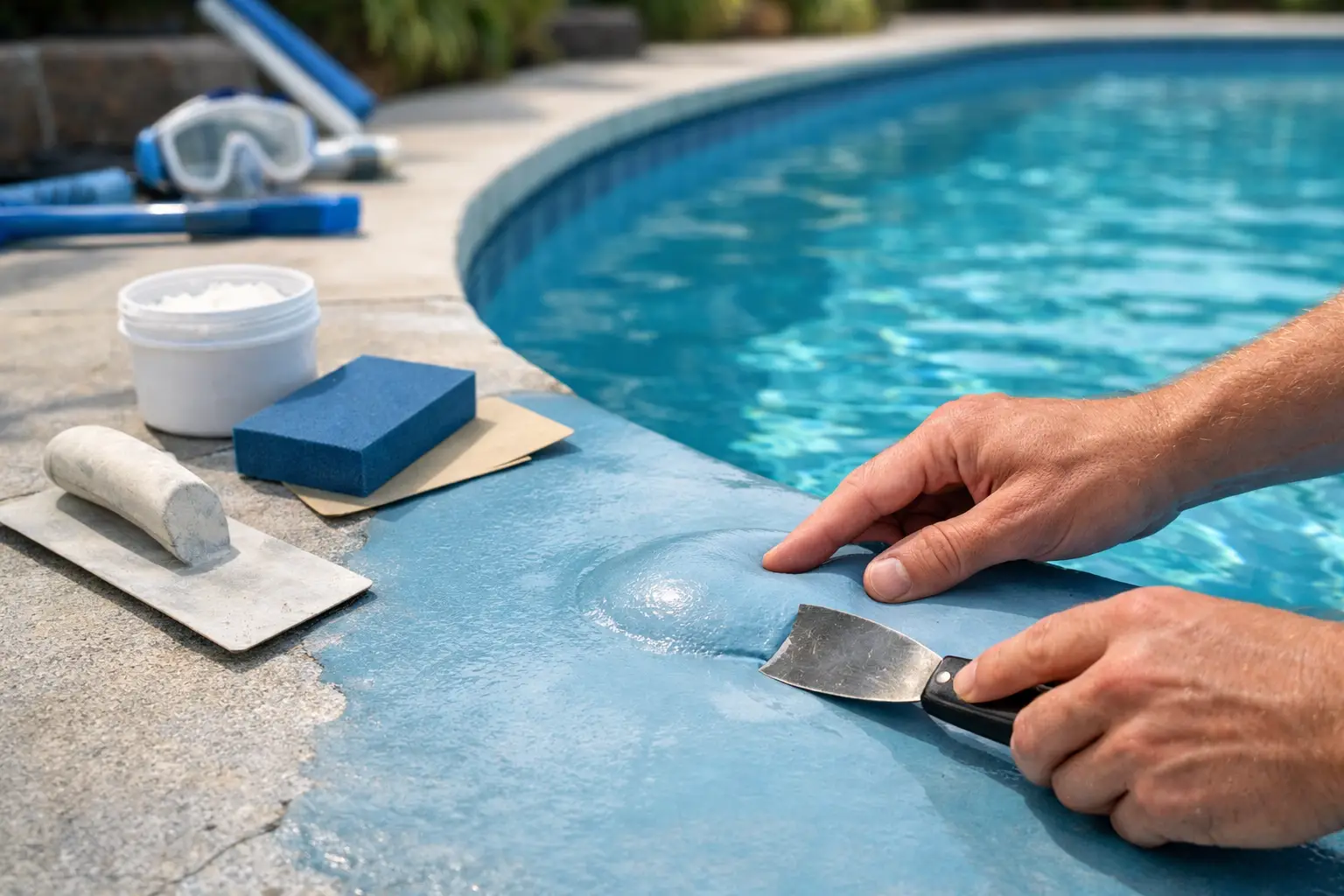
Pool blistering usually shows up after you thought the hard part was over. The pool is painted, it looks fine from a distance, then you notice bubbles, raised patches, or soft spots under the coating. If you are searching for how to fix pool blistering, the main thing to know is this – blisters are rarely just a surface problem. They usually point to moisture, poor adhesion, bad prep, or the wrong coating system underneath.
If you only sand the top and paint over it, the problem often comes back. The right repair depends on what caused the blistering in the first place, how widespread it is, and whether the existing coating is worth saving.
What pool blistering actually means
Pool blistering is when the paint film lifts away from the surface and forms bubbles or domed areas. Sometimes they are small and hard. Sometimes they are larger, soft, and easy to break open. On concrete pools, this often happens when moisture pressure pushes up beneath the coating. On fibreglass pools, it can also be linked to poor adhesion between the old surface and the new paint system.
Blistering is different from simple flaking. Flaking usually means the coating has already lost adhesion and broken away. Blistering is often the stage before that.
If you break one open, you may find moisture, chalky residue, or loose paint underneath. That tells you the bond has failed.
Why blistering happens in painted pools
Most cases come back to one of a few common issues. The first is moisture trapped in the substrate or pushing through from behind the coating. This is very common in older concrete pools, especially if the pool was painted before it had fully dried, or if there is hydrostatic pressure in the shell.
The second is poor surface preparation. If the old coating was not removed properly, or the surface was not etched, cleaned, and dried as required, the new paint may stick at first but fail later.
The third is product mismatch. Not every pool paint bonds well over every previous coating. If a chlorinated rubber, acrylic, or unknown paint was coated with the wrong system, blistering can happen even if the application looked fine on day one.
The fourth is application error. Painting in the wrong weather, applying coats too thick, recoat timing mistakes, or painting onto a damp surface can all trap solvents or moisture and lead to blisters.
In Australia, heat and UV make these problems show faster. A pool surface can get hot quickly, especially in Sydney and other sunny areas, so recoat windows and drying conditions matter.
How to fix pool blistering without making it worse
Before you buy more paint, work out whether you are dealing with a localised repair or a full repaint. That decision saves money and stops you repeating the same failure.
Step 1: Check how widespread the problem is
Walk the entire pool and tap around blistered areas. If the coating sounds hollow or lifts easily beyond the visible blisters, the failure is broader than it looks. If blistering is isolated to a few patches and the surrounding coating is still sound, a spot repair may be enough.
If more than a small section is affected, or if the coating is old and failing in multiple zones, full removal and recoating is usually the better option.
Step 2: Identify the existing coating if possible
This matters more than most DIY painters realise. If you do not know what paint is already on the pool, your repair options narrow. Applying epoxy over an incompatible or unstable coating can create another failure.
If the pool has been painted several times over the years and the coating history is unclear, assume nothing. In that case, stripping back to a stable surface is often the safest path.
Step 3: Remove all failed coating
Every blistered area needs to be scraped, sanded, or ground back until you reach sound, firmly bonded material. Do not stop at the edge of the visible bubble. Keep going until the surrounding paint is properly adhered.
If the edges continue lifting easily, that is a sign the failure extends further. On badly affected pools, patch repairs become false economy because you spend hours chasing loose coating and still end up with an unreliable base.
Step 4: Check the substrate underneath
Once the failed paint is removed, inspect the surface below. On concrete, look for dampness, laitance, contamination, or soft, weak areas. On fibreglass, check for gloss, waxy residue, or previous coatings that have not keyed properly.
If moisture is present, do not rush the repaint. Paint applied over a damp surface is one of the fastest ways to bring the blistering back.
Step 5: Prepare the surface properly
This is where most long-term repairs are won or lost. Concrete should be clean, sound, and mechanically keyed or etched as required by the coating system. Fibreglass needs thorough cleaning and abrasion so the new coating has something to bite into.
Any dust, grease, chalking, sunscreen residue, calcium build-up, or old loose paint must be removed. A coating can only stick to what is underneath. If that layer is weak, the new paint will fail with it.
How to fix pool blistering on concrete pools
Concrete pools are the most common case where epoxy is the right long-term fix, but only when the surface is stable and dry enough to coat.
If blistering was caused by moisture pressure from behind the concrete, repainting alone may not solve it. You need to assess whether groundwater or shell moisture is contributing. In some cases, draining conditions, recent rain, or poor drying time after washing are the trigger rather than a permanent moisture issue.
Where the concrete is dry and sound, remove the failed coating, prepare the surface fully, and use a suitable epoxy pool paint system designed for submerged use. Epoxy gives far better chemical resistance and durability than lower-grade alternatives, which is why it is usually the best choice for serious repaints.
If the pool has widespread failure and an unknown paint history, a full strip and repaint with epoxy is often the cleanest solution.
How to fix pool blistering on fibreglass pools
Fibreglass needs a slightly different approach. Blistering can come from poor adhesion, contamination, or painting over a glossy surface that was not sanded enough. It can also be confused with fibreglass osmosis issues, which sit below the coating rather than within the paint film.
If the blistering is only in the paint layer, the repair is usually to remove all loose coating, sand the surrounding area thoroughly, clean it properly, and apply the correct coating system for fibreglass pools. If the substrate itself is blistering, that is a structural repair issue first and a painting issue second.
That is why product choice matters. A pool coating for concrete is not automatically right for fibreglass, and vice versa.
When a spot repair works and when it doesn’t
A localised repair can work if the blistering is limited, the rest of the coating is firmly bonded, and you know the existing paint system is compatible with the repair coating. That usually means a newer pool, a recent coating job with a known product, and a clearly isolated issue.
A full repaint is the better choice when blistering appears in multiple areas, when the old paint is thick and layered, when the coating type is unknown, or when the pool already has peeling, chalking, or widespread wear. It costs more upfront, but it avoids patching over a failing base.
This is one of those jobs where cheap repairs often become expensive repairs.
Choosing the right paint after blistering
Once blistering has happened, it makes sense to move to a system that gives you the best chance of a lasting result. For most concrete and many fibreglass repaint projects, that means a high-performance epoxy pool coating rather than a lower-durability paint.
The key is not just buying epoxy. It is buying the correct epoxy system for your pool surface and existing condition. You need to know whether the pool is concrete or fibreglass, what coating is currently on it, how much needs to be removed, and how many square metres you are covering.
Getting that wrong leads to the same problems people are trying to avoid – poor adhesion, wasted product, and repainting again far too soon.
If you are buying paint for a repair or full repaint, choose a specialist supplier that can help match the coating system to the pool, not just sell a tin.
Mistakes to avoid when fixing pool blistering
The biggest mistake is painting over blisters without removing the failed coating. The second is assuming every blistered pool just needs more prep, when sometimes the actual issue is moisture or product incompatibility.
Another common mistake is underestimating how much paint is needed after surface removal and patching. A rough or repaired surface can use more product than expected, so coverage rates should be checked carefully before ordering.
Finally, do not ignore weather. Hot days, cool nights, high humidity, and recent rain all affect coating performance. Australian conditions can be ideal for drying, but they can also catch out DIY painters who rush the job.
The practical next step
If you want to fix blistering properly, start by finding out whether the coating failure is local or widespread, then match the repair method to the pool surface and the existing paint condition. If the pool needs a full repaint, a proper epoxy system is usually the smarter long-term buy.
Pool Paint Sydney helps pool owners, DIY renovators, and tradies choose the right epoxy coating system for concrete and fibreglass pools, so you can avoid costly mistakes and buy the correct system the first time.
A blistered pool can still be turned around, but only if you treat the cause, not just the bubble on top.