
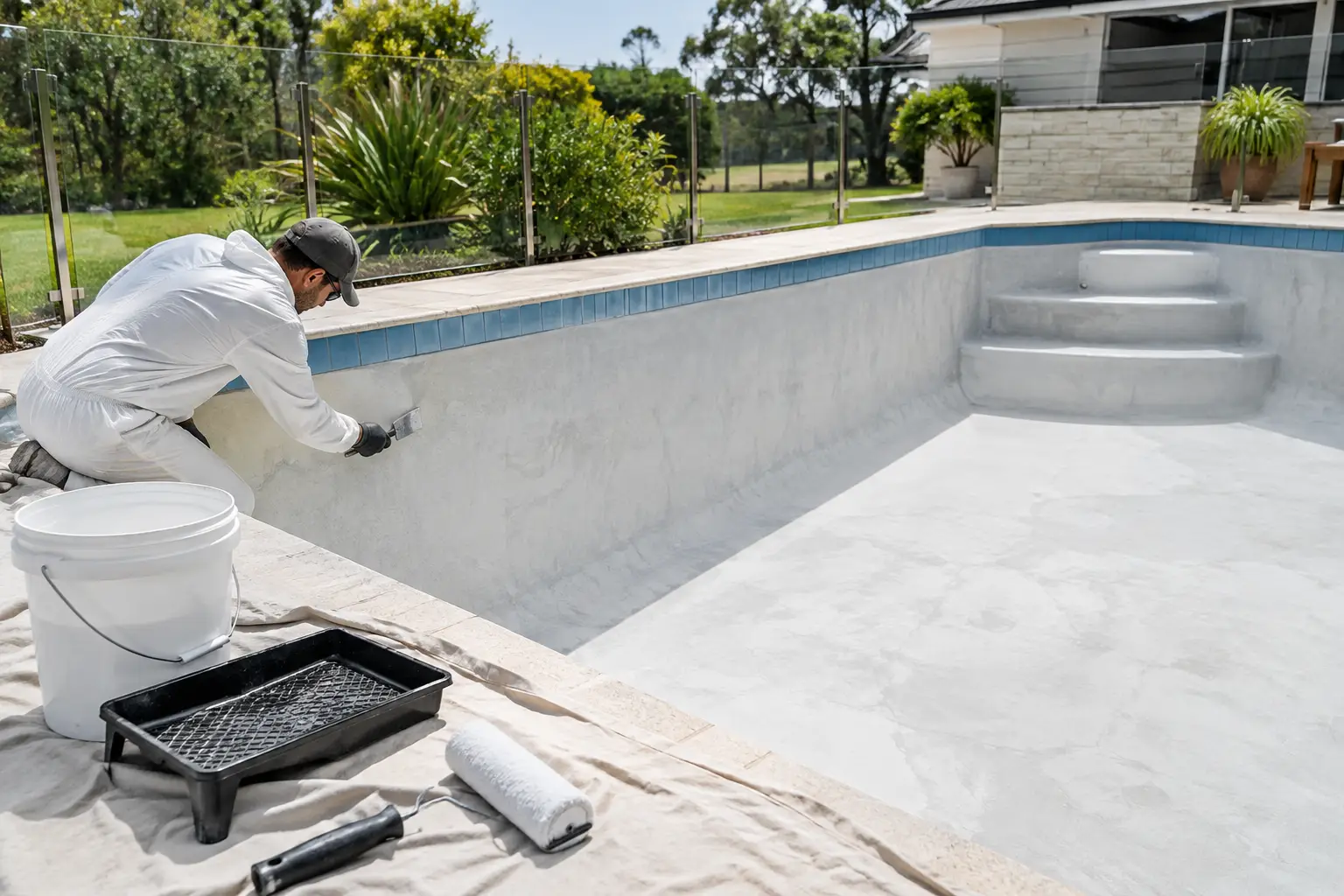
A pool coating can look straightforward in the tin, but the safety requirements change as soon as you open it, mix it or begin surface preparation. Pool paint safety data gives you the information needed to handle each product properly, particularly when using two-pack epoxy coatings, primers and solvents.
For a repainting job, the Safety Data Sheet (SDS) is not paperwork to ignore until something goes wrong. It tells you what is in the product, which personal protective equipment (PPE) is required, how to manage ventilation, what to do with a spill and how to store or dispose of leftover material. Read it alongside the product label and Technical Data Sheet before ordering or starting work.
Why pool paint safety data matters
Most pool-paint failures come back to coating compatibility or poor surface preparation. Safety mistakes can be just as costly. The wrong gloves may break down when exposed to solvent. A poorly ventilated enclosed pool area can concentrate vapours. Mixing more two-pack product than you can apply within its usable working time creates unnecessary waste and a disposal problem.
Safety information is also product-specific. You cannot assume that PPE, mixing ratios or handling advice for one pool paint will suit another. Chlorinated rubber pool paint, two-pack epoxy paint, primers, cleaners and thinners may all have different requirements. Always use the SDS supplied for the exact product and current formulation you have purchased.
This matters especially when repainting an older concrete or fibreglass pool. The coating system must be selected for the existing surface and coating type first. Once you have confirmed the right system, follow the relevant product safety information through preparation, mixing, application and clean-up.
Start with the correct coating system
Choosing the wrong paint creates more than an adhesion risk. It can mean unnecessary exposure to products that will later need to be removed. Before opening any tin, identify whether the pool is concrete or fibreglass and establish what coating is currently on the surface, if possible.
Two-pack epoxy pool paint is commonly chosen where a compatible epoxy system is appropriate and a durable coating build is required. It involves mixing separate components at the stated ratio, so accurate measuring, suitable PPE and controlled application conditions matter. Do not guess the ratio or alter it to make the paint seem easier to apply.
Chlorinated rubber pool paint is a different system with different compatibility and preparation requirements. It is not a substitute for epoxy simply because both are used on pools. Applying an incompatible coating can lead to softening, lifting, blistering or peeling. If the old coating cannot be identified with confidence, stop before ordering and seek product-specific guidance rather than relying on appearance alone.
Primers are equally important. A primer is not automatically required for every repaint, but where the selected coating system specifies one, it is part of the system. Skipping it to save time or using an unrelated primer can compromise adhesion and introduce avoidable handling risks.
Read the SDS before preparation begins
Preparation often involves as much product handling as painting. Existing coating may need to be sanded or mechanically abraded, and surfaces must be clean, dry and prepared as directed for the new system. Review the SDS and Technical Data Sheet before this stage so you know what PPE and work controls are needed.
Pay close attention to these areas:
- Hazard identification: This explains the product’s primary hazards, including whether vapours, skin contact or eye contact require particular precautions.
- PPE: Check the recommended gloves, eye protection, protective clothing and respiratory protection. A basic dust mask is not automatically suitable for paint vapours or solvent work.
- Ventilation: Pool interiors, plant-adjacent areas and enclosed yards can restrict airflow. Follow the product instructions for ventilation and avoid working where vapours may build up.
- First aid and spill response: Know the stated action before you begin, not after a splash or spill occurs.
- Storage and disposal: Keep products in their original labelled containers, secure them from children and pets, and follow local requirements and SDS instructions for unwanted material.
Do not treat sanding dust as harmless simply because the pool is empty. Old coatings can create dust during removal or abrading. Use the preparation method and protective measures specified for the job, keep the work area controlled and clean up carefully rather than sweeping dust into surrounding areas.
Safe handling for two-pack epoxy pool paint
Two-pack epoxy requires a more disciplined approach because the base and curing component are handled separately before mixing. Read the instructions for both components. The mixture becomes a chemical product in its own right, with a limited usable application time after mixing.
Set up your work area before combining the components. Have clean measuring equipment, mixing tools, rollers and trays ready. Wear the recommended PPE from the beginning, because splashes can occur while opening tins and scraping material from container walls.
Only mix the amount you can realistically apply within the stated working time. This is not only better for coating quality. It avoids a partly cured quantity being left in a bucket, where it is harder and less safe to manage. Never return mixed material to an original component tin, and never improvise with a different hardener or thinner.
If conditions are hot, as they often are in Sydney and across NSW during repainting season, work planning becomes more important. Heat can affect application behaviour and working time. Follow the product documentation on suitable conditions and do not try to compensate with unapproved additives or excessive thinning.
Solvents, thinners and clean-up need the same care
Thinners and cleaning solvents are often treated as an afterthought. They should not be. Use only the thinner or cleaner approved for the specific coating system and only in the manner stated by the manufacturer. A solvent that seems similar may affect application, coating performance or safety controls.
Keep all ignition sources away from products where the SDS identifies flammability. That includes cigarettes, grinders, sparks, pilot flames and unsuitable electrical equipment. Do not decant products into unlabelled drink bottles, food containers or any container that could be mistaken for something else.
For brushes, rollers and trays, follow the stated clean-up method. Used rags and contaminated materials must be handled in line with the SDS and local disposal requirements. Do not wash coating residue into drains, garden beds or the pool.
Calculate quantities before opening product
Ordering too little paint can interrupt the job and make it difficult to maintain a consistent coating process. Ordering far too much can leave you with unused product that needs proper storage and eventual disposal. The practical fix is to calculate the pool area and planned coating system before purchase.
Use the Pool Paint Calculator to estimate the amount of pool paint and, where required, primer for your pool dimensions. Then check the selected product’s coverage information and number of coats against the official product documentation. Coverage varies with surface profile, porosity, application method and the condition of the existing surface, so treat calculator results as a planning tool, not a reason to stretch material too far.
Applying too thinly to make product go further is a false economy. It can leave an uneven film and reduce the likelihood of a durable result. Buy the correct system and quantity the first time, then keep unopened product stored as directed until it is needed.
A practical safety check before you paint
Before work starts, confirm that the pool is empty, the surface is dry and prepared to the coating instructions, and the existing coating has been properly identified. Check you have the right primer, paint, approved thinner if one is specified, PPE and clean mixing equipment.
Keep the label, SDS and Technical Data Sheet accessible at the work area. If there is uncertainty about coating compatibility, primer requirements or the amount required, resolve it before mixing. Pool Paint Sydney can help customers match a suitable coating system and use the calculator to plan quantities, but the final application must always follow the product documentation for that specific system.
A careful safety check does not slow down a pool repaint. It prevents the kind of mistake that leaves you with wasted paint, a failed coating or a job that has to stop halfway through. Read the data first, choose compatible products, and set up properly before the first coat goes on.