
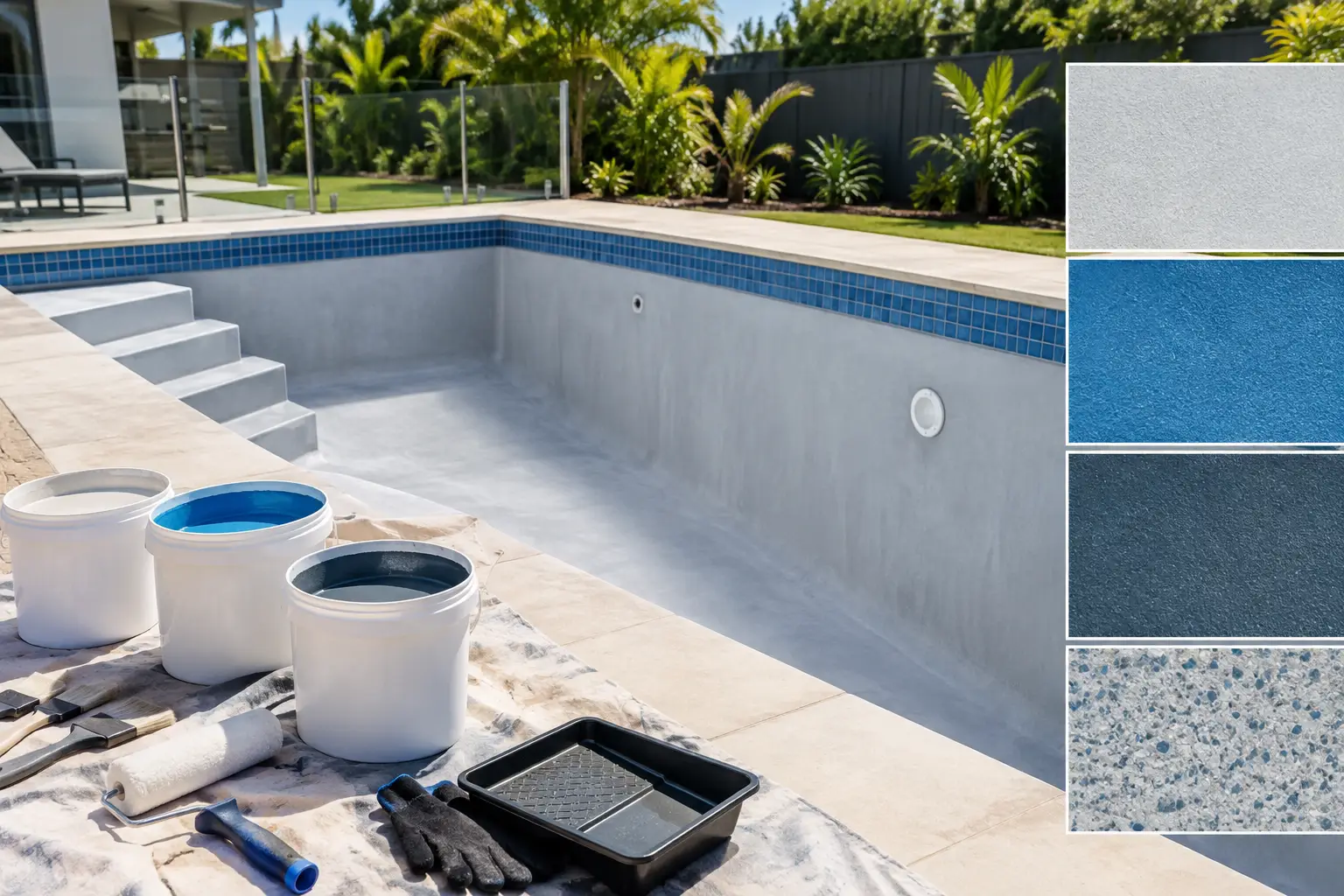
A coating system comparison matters most when the old finish is peeling, chalky, blistered or simply worn through. The wrong replacement paint can fail even when it is applied neatly. For a successful pool repaint, the new coating must suit the pool surface, the existing coating and the preparation work completed before application.
For most Australian concrete and fibreglass pools, the decision comes down to a two-pack epoxy system or a chlorinated rubber system. Neither is automatically the better choice. The correct one depends on what is already on the pool and whether the substrate is sound enough to support the new coating.
Start with the Existing Surface and Coating
Before choosing a colour or calculating litres, identify two things: whether the pool is concrete or fibreglass, and what coating is currently on it. This is where many repainting jobs go wrong.
A pool may have an older epoxy finish, chlorinated rubber paint, acrylic coating or an unknown combination of previous applications. Applying a new system over an incompatible coating can lead to lifting, wrinkling, poor adhesion or early peeling. A fresh coat cannot fix a weak layer underneath it.
If the existing paint is mostly sound, its type strongly influences which coating system is suitable. If the coating is badly peeling, soft, loose or delaminating, remove all failed material before proceeding. Painting over it only hides the problem briefly.
For an unknown coating, do not guess based on colour, age or appearance alone. Check any previous product records where available and review the product information for the proposed system. If identification is still uncertain, get specialist technical advice before ordering. This step can prevent buying incompatible paint and having to strip it back later.
Coating System Comparison: Epoxy vs Chlorinated Rubber
Two-pack epoxy pool paint
Two-pack epoxy is a high-performance coating system made by mixing the paint base with its hardener before application. Once mixed, it has a limited working time, so preparation, equipment and application planning need to be organised before opening the tins.
Epoxy is commonly selected for concrete pools and suitable fibreglass surfaces where a durable, chemically resistant finish is required and the preparation can be completed properly. It is also often the logical choice when recoating a compatible existing epoxy system.
The trade-off is that epoxy is less forgiving of poor preparation. The surface must be clean, dry, sound and correctly profiled as required by the product instructions. Contamination, moisture, loose paint and skipped primer steps can all compromise adhesion. A two-pack system also requires accurate mixing and careful attention to the stated recoat and curing instructions.
Choose a two-pack epoxy system when the existing coating is confirmed as compatible, or when the old finish has been removed and the bare substrate has been prepared for epoxy. It is a practical choice for owners and tradies who want to use a more demanding system and are prepared to follow every stage properly.
Chlorinated rubber pool paint
Chlorinated rubber pool paint is a different coating chemistry and is often used for repainting compatible chlorinated rubber finishes. It is a practical option where the existing coating has been positively identified as chlorinated rubber and remains well bonded after cleaning and preparation.
Its key advantage is compatibility within the same coating family. If a pool has a sound chlorinated rubber coating, recoating with the appropriate chlorinated rubber product can avoid the risks involved in changing systems.
That does not mean it can be applied over any old pool paint. It should not be treated as a universal topcoat for epoxy, acrylic or unknown finishes. The condition of the existing film still matters. Any loose, chalking or failed paint needs to be dealt with first, otherwise the new finish will only be attached to an unstable surface.
Choose chlorinated rubber when it matches a confirmed, sound chlorinated rubber coating and the product information supports the proposed application. If you are changing from an old system to a different chemistry, seek guidance on removal, preparation and primer requirements rather than assuming a direct overcoat will work.
When Primer Is Required
Primer is not an optional extra added to every order. It is part of the coating system when the surface or product instructions call for it. Using the wrong primer, or skipping a required primer, is a common cause of coating failure.
Bare concrete is porous and may require a compatible primer to help the coating bond consistently. Fibreglass needs particular care because its surface condition, existing finish and level of gloss can affect adhesion. A previously painted surface may not require primer if it is sound and the selected coating is approved for direct recoating, but this must be confirmed for that specific system.
Use the primer designed for the chosen BG Coatings system, not a general-purpose paint primer left over from another job. Compatibility matters between the substrate, primer and topcoat. One product cannot compensate for poor cleaning, unsound paint or an unsuitable coating choice.
Preparation Decides Whether the Coating Stays On
Peeling is often blamed on the paint, but the cause is commonly underneath it. Old coatings can fail because the surface was not cleaned thoroughly, gloss was not removed where required, loose paint was left in place, moisture was present, or an incompatible product was applied.
Start by inspecting the entire empty pool, not only the obvious problem areas. Pay close attention to steps, corners, waterline sections and repairs to previous coatings. These areas often reveal whether failure is isolated or widespread.
A sound preparation process generally involves removing failed material, cleaning away dirt and surface contamination, preparing the surface in line with the product instructions, allowing it to dry fully, and applying any required compatible primer. Do not rush the drying stage after washing or preparation. Coating a damp surface can create adhesion problems that may not appear until after the pool is returned to use.
Australian weather also affects application planning. Avoid applying a coating when rain, heavy dew, excessive heat or unsuitable surface conditions could interfere with drying and curing. Check the current product data before starting and plan the work around the local forecast, particularly in Sydney and coastal NSW where weather can change quickly.
Calculate Paint for the Full System, Not Just the Topcoat
Ordering too little paint can leave you unable to complete the required coats without a delay. Ordering based only on the pool’s water volume is also inaccurate. Paint quantity is determined by the actual surface area being coated, including the floor, walls, steps, ledges and other painted sections.
Use the Pool Paint Calculator before purchasing. Enter accurate pool measurements and select the relevant coating system so you can estimate the paint and primer required for the job. Measure carefully, especially on freeform pools, sloping floors and large step areas. If measurements are uncertain, allow time to recheck them before ordering.
The calculator is a planning tool, not a reason to reduce the number of coats or spread product further than its stated coverage. Coverage varies with the substrate profile, surface condition and system requirements. Follow the product information for coat numbers, mixing, application method and recoat timing.
A Quick Decision Path
If the existing coating is confirmed as sound chlorinated rubber, select a compatible chlorinated rubber repaint system. If it is a compatible epoxy coating, or the pool has been prepared back to an appropriate bare surface, assess the suitable two-pack epoxy system and any required primer.
If the old coating is unknown, badly failing or made up of several previous products, stop before ordering paint. Confirm the existing surface and coating condition first. This is usually cheaper and faster than trying to recover from lifting paint after application.
Pool Paint Sydney supplies BG Coatings epoxy, chlorinated rubber and compatible primer systems for Australian pool repaints. Review the relevant coating system and primer product pages alongside the Pool Paint Calculator, then match your order to the surface you actually have – not the surface you hope is underneath.
The best result starts with an honest assessment. Identify the old coating, remove what has failed, choose a compatible system and buy enough product to apply it as specified. That is how you avoid the expensive cycle of repainting the same pool twice.