
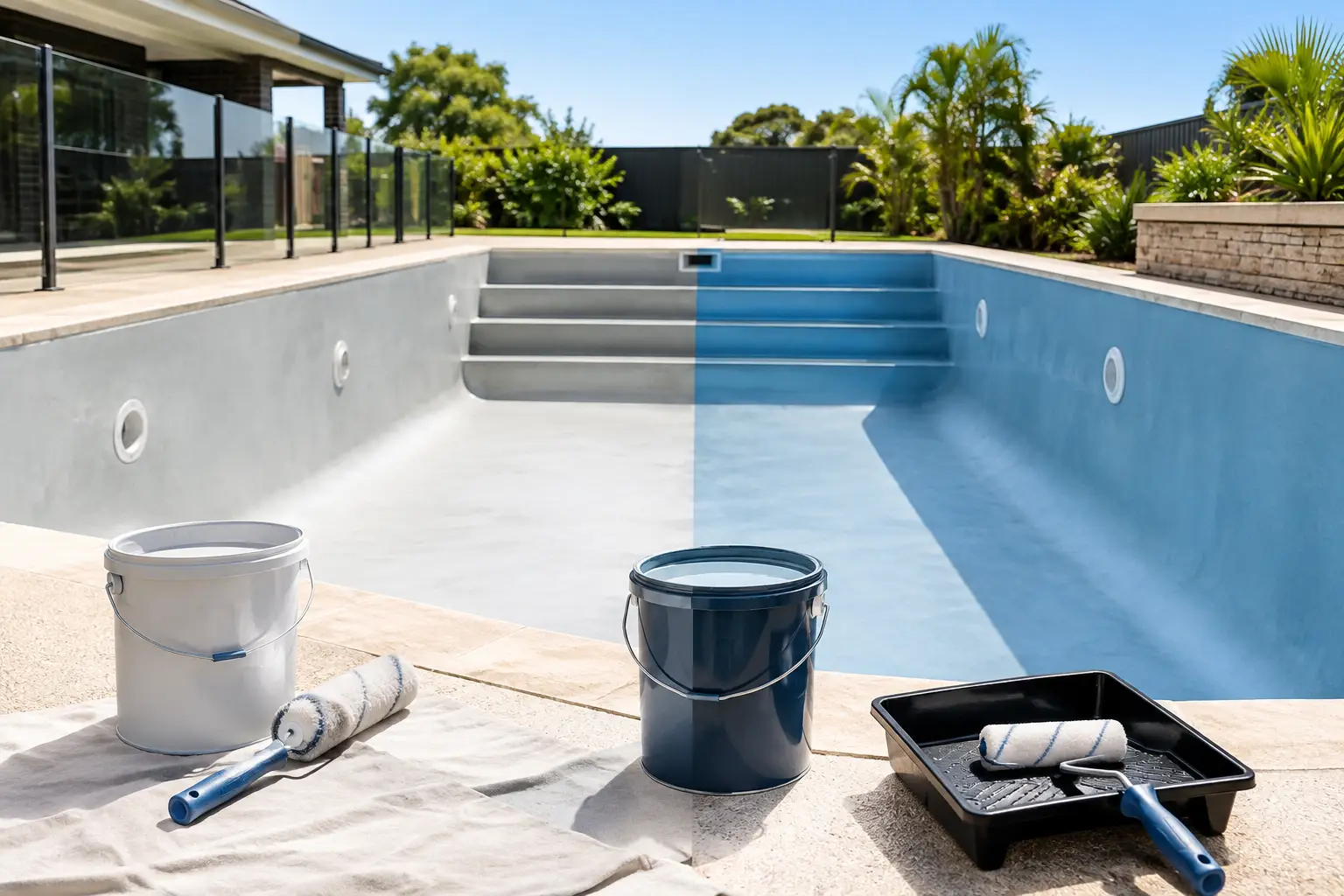
A pool coating rarely fails because the owner picked the wrong colour. It fails because the chosen pool paint types do not suit the surface underneath, the old coating was not identified, or preparation was rushed. Before ordering paint, work out what is on the pool now, what condition it is in and whether bare concrete or fibreglass has been exposed.
For most Australian pool repainting projects, the decision comes down to two coating systems: two-pack epoxy pool paint and chlorinated rubber pool paint. Both have a place. Neither is a universal fix for every pool.
The two main pool paint types
Two-pack epoxy pool paint
Two-pack epoxy is a high-performance coating system made by mixing a base component with a hardener before application. It is commonly chosen for properly prepared concrete pools and suitable fibreglass pool surfaces where an epoxy-compatible system is required.
Its main advantage is that it forms a hard, durable coating when applied over a sound, correctly prepared surface. It is often the right choice when an old epoxy finish has been fully assessed and the pool is being recoated with a compatible epoxy system. It can also suit bare concrete, provided the concrete is dry, clean, sound and prepared in line with the product instructions.
The trade-off is preparation. Epoxy is not forgiving of loose paint, chalky surfaces, moisture issues or contamination. If the existing coating is peeling, do not assume a fresh epoxy coat will hold it down. Remove failed material until you reach a firm edge or sound substrate, then prepare and prime the exposed areas as required.
Two-pack products also have a defined working time after mixing. Plan the job before combining the components, including your roller, brushes, masking and application sequence. Mixing more than can be applied within the specified pot life wastes product and can lead to an uneven finish.
Chlorinated rubber pool paint
Chlorinated rubber pool paint is a single-pack coating traditionally used on many painted swimming pools. It is often the practical choice when recoating an existing chlorinated rubber surface that is still sound and has been prepared correctly.
It is simpler to handle than a two-pack system because there is no hardener to mix. That does not mean it can be applied over any old pool paint. Compatibility still matters. Applying chlorinated rubber over an unknown or incompatible coating can cause softening, lifting, wrinkling or early failure.
If your pool has been coated with chlorinated rubber before, using the same compatible system is usually the safer path than changing systems without proper preparation. If you want to move from chlorinated rubber to epoxy, the existing coating generally needs to be removed or dealt with according to the relevant coating-system advice. Painting epoxy over old rubber paint simply because epoxy sounds tougher is a common and expensive mistake.
How to identify the existing coating before you buy
The existing paint determines the safe recoating options. A pool may look painted, but appearances alone do not tell you whether it is epoxy, chlorinated rubber or another finish.
Start with records. Check previous invoices, leftover tins, contractor paperwork or photos from the last repaint. If there is no record, inspect a small inconspicuous area and seek technical guidance before choosing a system. A simple solvent test may assist in identifying some older coatings, but it should be done only in accordance with the coating manufacturer’s advice and with appropriate safety precautions.
You also need to assess whether the old finish is sound. Look for peeling edges, bubbling, flaking, chalking, cracks in the coating and areas where bare concrete or fibreglass is visible. A coating that releases under firm scraping is not a stable foundation for another coat.
When the coating is unknown, do not order based on colour or what a neighbour used. Confirm the existing surface first. Pool Paint Sydney can help customers work through coating type, surface condition, primer requirements and product selection before they order.
Choosing paint for concrete pools
Concrete pools need more than a coat of paint to look good for a season. The substrate must be clean, dry and structurally sound. Paint will not repair cracks, hollow areas, loose render or other substrate defects. Those issues need to be resolved before coating work begins.
For bare or substantially stripped concrete, a compatible primer may be needed as part of the selected system. Primer is not an optional extra added for reassurance. Its job is to help create the correct bond between the prepared concrete and the topcoat. Using the wrong primer, or skipping a required primer, can leave the coating vulnerable to peeling.
Concrete that has previously been painted should be treated according to the existing coating type. Sound epoxy generally points towards an epoxy-compatible recoating system. Sound chlorinated rubber generally points towards chlorinated rubber. If the previous coating is failing across large areas, partial patching and painting over the top is rarely the economical shortcut it seems.
Choosing paint for fibreglass pools
Fibreglass requires careful assessment because the surface may be gelcoat, a previous paint coating or an older repair area. The pool must be empty and properly prepared before any coating is considered. Do not treat fibreglass like bare concrete and do not use a primer system intended only for masonry.
A fibreglass pool with a sound existing epoxy coating may be suitable for an epoxy-compatible repaint, subject to the product information and correct surface preparation. Where there is an unknown coating, flaking paint or a doubtful substrate, confirm the system before buying. Adhesion problems on fibreglass are often caused by an incompatible product choice or insufficient sanding and cleaning, not by the paint colour or roller used.
Primer: when it is required and when it is not
Primer requirements depend on the pool surface, the existing coating and the coating system selected. Bare concrete and exposed repaired areas often need a compatible primer. Previously painted surfaces may require a different preparation method rather than a full primer coat, provided the old finish is sound and compatible.
Do not use a general-purpose building primer in a swimming pool. It is not designed as part of a pool coating system and can become the weak layer that causes the whole finish to release.
The practical approach is straightforward: identify the substrate, identify the existing paint, remove loose or failed coating, then match the specified primer and topcoat system. Read the technical data and application instructions for the exact BG Coatings product you are using, rather than relying on advice intended for a different product or surface.
Preparation is what prevents peeling
Peeling is normally a preparation or compatibility problem. The new coat is only as secure as the layer beneath it.
Before coating, the pool surface needs to be thoroughly cleaned, degreased where required, rinsed and allowed to dry in accordance with product instructions. Glossy existing paint needs the specified mechanical preparation so the new coat can grip. Loose coating must be removed, not rolled over. Dust must be cleaned away before painting.
Weather matters in Sydney and across NSW. Hot conditions can shorten working time and make application harder, while damp weather, rain, cold surfaces or moisture in the substrate can interfere with coating performance. Check the product’s stated application conditions and choose a suitable weather window. Do not rush the job because a weekend is available.
Apply the recommended number of coats at the specified spread rate. Stretching paint too far to make the quantity last can leave an inadequate film build. Applying too heavily can create other problems, particularly if the coating cannot dry or cure as intended between coats.
Calculate quantity before choosing a colour
Ordering the correct amount is part of selecting the right system. Measure the pool length, width and average depth, then include walls, steps, ledges and any other painted areas. A rough floor-only calculation often leaves customers short once vertical surfaces are included.
Use the Pool Paint Calculator before ordering both topcoat and primer. It helps estimate the amount needed for your pool dimensions and the selected coating system. Then check the product coverage guidance and number of coats required for your specific project. If the pool has extensive bare patches, repaired areas or a rough surface, account for the extra material those conditions may require.
Colour should come after compatibility, preparation and quantity have been sorted. A fresh blue finish will not solve a failed coating underneath it.
A practical way to choose the correct system
If the existing coating is sound chlorinated rubber, choose a compatible chlorinated rubber recoating system. If it is sound epoxy, select an epoxy-compatible system. For bare concrete or exposed substrate, confirm whether the relevant primer is required before applying the chosen topcoat. For fibreglass, check that both preparation and coating system are suitable for the existing finish.
If you cannot confidently identify what is on the pool, pause before purchasing. Take clear photos of the surface condition, note any old product information you have and get specialist guidance. The right product page, compatible primer and calculator result are useful only after the coating decision is correct.
A careful assessment now is cheaper than stripping a newly failed finish later. Choose the coating system that matches your pool, prepare it properly and order the quantity needed to complete the job without cutting corners.