
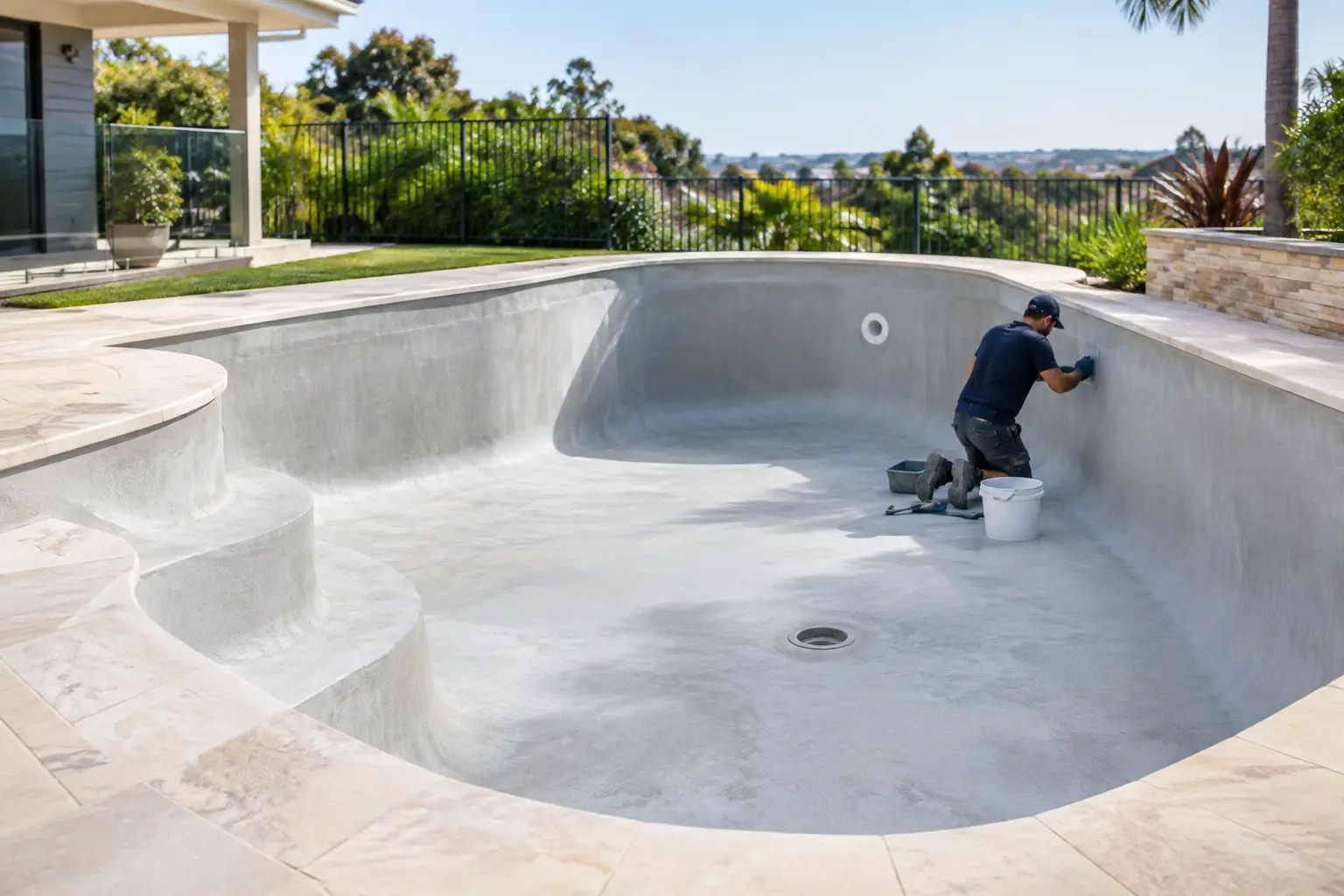
A useful epoxy coating review should do more than call epoxy pool paint tough or long-lasting. The real question is whether it is the right system for your pool’s surface, its existing coating and the preparation work you can complete properly. Get one of those wrong and even a quality two-pack coating can peel, blister or fail early.
For many concrete pool repaints, epoxy is a strong option. It creates a hard, chemical-resistant finish when applied over a properly prepared compatible surface. But it is not a universal answer for every ageing pool. Before ordering, identify what is currently on the pool, inspect the condition of the substrate and confirm whether a compatible primer is required.
What epoxy pool coating is designed to do
Two-pack epoxy pool paint is a coating system made by mixing a base component with a curing agent before application. Once mixed and cured in the right conditions, it forms a firm protective film suited to concrete pool surfaces and selected compatible existing epoxy coatings.
That makes it a sensible choice for a bare concrete pool that has been correctly prepared, or a pool with an existing epoxy finish that remains sound and compatible. It is often chosen when an owner wants to move away from repeated short-term touch-ups and apply a more substantial coating system.
The trade-off is that epoxy demands more from the preparation and application process. It is not the product to apply over loose old paint, an unknown coating or a damp surface and hope for the best. The coating can only adhere as well as the layer underneath it.
Epoxy coating review: where it performs well
Epoxy performs best when the pool surface is stable, clean, dry and correctly profiled for coating. For a concrete pool with old epoxy paint that is still well bonded, repainting with a compatible epoxy system can be a practical route. The existing coating should be thoroughly cleaned, sanded or abraded as required, and checked for areas of poor adhesion before new paint is applied.
Bare concrete is another common epoxy application. Concrete needs time to dry after any washing or preparation, and it must be free from contaminants, dust, laitance and loose material. A compatible primer may be needed depending on the surface condition and coating system. Primer is not an optional shortcut or an automatic requirement in every situation. Its role is to help the selected system bond to the surface where the manufacturer specifies it.
Epoxy is also worth considering where the pool has widespread fading, wear or previous coating breakdown but the underlying concrete remains suitable for repainting. The key point is that paint cannot repair structural cracks, failed render or a deteriorated substrate. Those issues need to be assessed and rectified before coating work begins.
The main reason epoxy coatings fail
Most epoxy coating failures are not caused by the paint itself. They start with a surface problem, a compatibility problem or an application problem.
Peeling usually means the new coating has bonded to a weak layer rather than to a stable prepared surface. For example, applying epoxy over flaking old paint may leave the fresh coating looking good initially, but it will release when the old layer lets go. Painting over chalky residue, oils, dust or moisture creates a similar risk.
Blistering can occur when moisture is trapped in or behind the coating, or when the surface was not properly dry before application. Sydney and NSW weather can complicate timing, particularly after rain, during humid periods or when cool conditions slow drying. Do not plan a coating project around a fixed weekend if the surface and weather conditions are unsuitable.
Incorrect mixing is another avoidable issue. Two-pack products must be measured, mixed and used according to the product instructions. Guessing ratios, failing to mix thoroughly or using material outside its stated working time can affect the finish and curing process.
Check the existing coating before choosing epoxy
The coating already on the pool is one of the most important parts of the decision. If it is known to be epoxy and is sound, a compatible epoxy repaint may be appropriate after correct preparation. If it is chlorinated rubber, acrylic, unknown paint or a mix of past repairs, do not assume epoxy can be applied directly over it.
A pool can look uniformly painted while having several different coatings underneath. This is common on older pools that have been repainted at different times. If you cannot identify the existing product with confidence, take a cautious approach. Check the technical information for the intended coating system and seek specialist guidance before ordering.
In some cases, chlorinated rubber pool paint is the more suitable repaint option, particularly where an existing chlorinated rubber coating is sound and the owner needs to stay within a compatible system. Switching systems may require complete removal of the old coating, which can substantially change the preparation work involved.
A quick condition check
Before settling on an epoxy system, inspect the empty, dry pool closely. Look for peeling edges, bubbles, cracking paint, powdery residue, soft areas and patches where previous repairs are visible. Scrape-test suspect spots carefully. If paint comes away easily, it is not a reliable base for another coating.
Also look beyond the paint film. Concrete that is damp, friable, contaminated or visibly damaged is not ready for coating. A new epoxy finish will not hide moisture problems or stabilise an unsound surface.
Preparation is where the result is decided
Surface preparation is the least glamorous part of repainting, but it determines whether the coating has a proper surface to grip. Allow enough time for it. Rushing through cleaning and sanding to start painting sooner is a costly mistake.
Remove loose or failed paint completely. Clean the surface using the preparation method specified for the coating system, then rinse and allow it to dry fully. Abrade existing sound coatings where required so the new layer has a suitable profile. Vacuum or remove sanding dust before priming or painting.
Be methodical around steps, corners, returns, fittings and waterline areas. These are often where old paint is thickest, preparation is skipped and coating failure starts. If there are areas with uncertain adhesion, deal with them before applying the first coat.
The same rule applies to primer. Use a compatible primer only where the coating system calls for it and apply it to the prepared surface within the stated recoat window. Using the wrong primer, or using a primer as a fix for poor preparation, can create another compatibility issue rather than solve one.
Quantity and film build matter
Ordering too little paint can lead to thin coats, inconsistent coverage and an interrupted application. Ordering far too much adds unnecessary cost. Measure the pool carefully and calculate the total internal surface area, including the floor, walls, steps and any ledges.
Use the Pool Paint Calculator before buying epoxy paint or primer. Enter accurate pool dimensions and follow the coverage guidance for the selected system. Coverage figures are estimates based on normal surface conditions. Rough concrete, heavily textured areas and repair patches may require more material than a smooth, previously coated pool.
Do not stretch the product beyond the recommended application rate just to make it reach. A coating system is designed to be applied at the specified number of coats and spread rate. Thin application may leave an uneven finish and reduce the protection the system is intended to provide.
When epoxy is not the right choice
An epoxy coating may not be the best option when the existing paint is incompatible, the surface is too uncertain to prepare reliably, or the pool has an established chlorinated rubber coating that is better recoated with a compatible chlorinated rubber system.
It may also be the wrong time to proceed if the pool cannot be kept dry throughout preparation and application, or if weather conditions are outside the product requirements. Waiting for suitable conditions is frustrating, but repainting into poor conditions can waste both materials and labour.
If you are deciding between epoxy and chlorinated rubber, start with the existing coating type rather than the finish you prefer. Compatibility and preparation come first. Colour, quantity and product selection follow once the coating system is confirmed.
Choosing the correct epoxy system
For a concrete pool with a known compatible substrate, select a two-pack epoxy pool coating designed for that purpose and follow its product instructions exactly. Check whether the surface needs a compatible primer, calculate paint and primer quantities before ordering, and choose a colour suited to the pool’s condition and your preferred finish.
Pool Paint Sydney supplies BG Coatings pool paint systems and practical information to help customers choose the correct coating system before purchase. If the old coating is unknown, photos and clear details about the pool surface, previous paint and failed areas can help clarify the next step before you commit to a product.
The best epoxy coating result is rarely about finding the strongest-sounding paint. It comes from identifying the existing surface honestly, preparing it properly and buying the compatible system in the correct quantity the first time.