
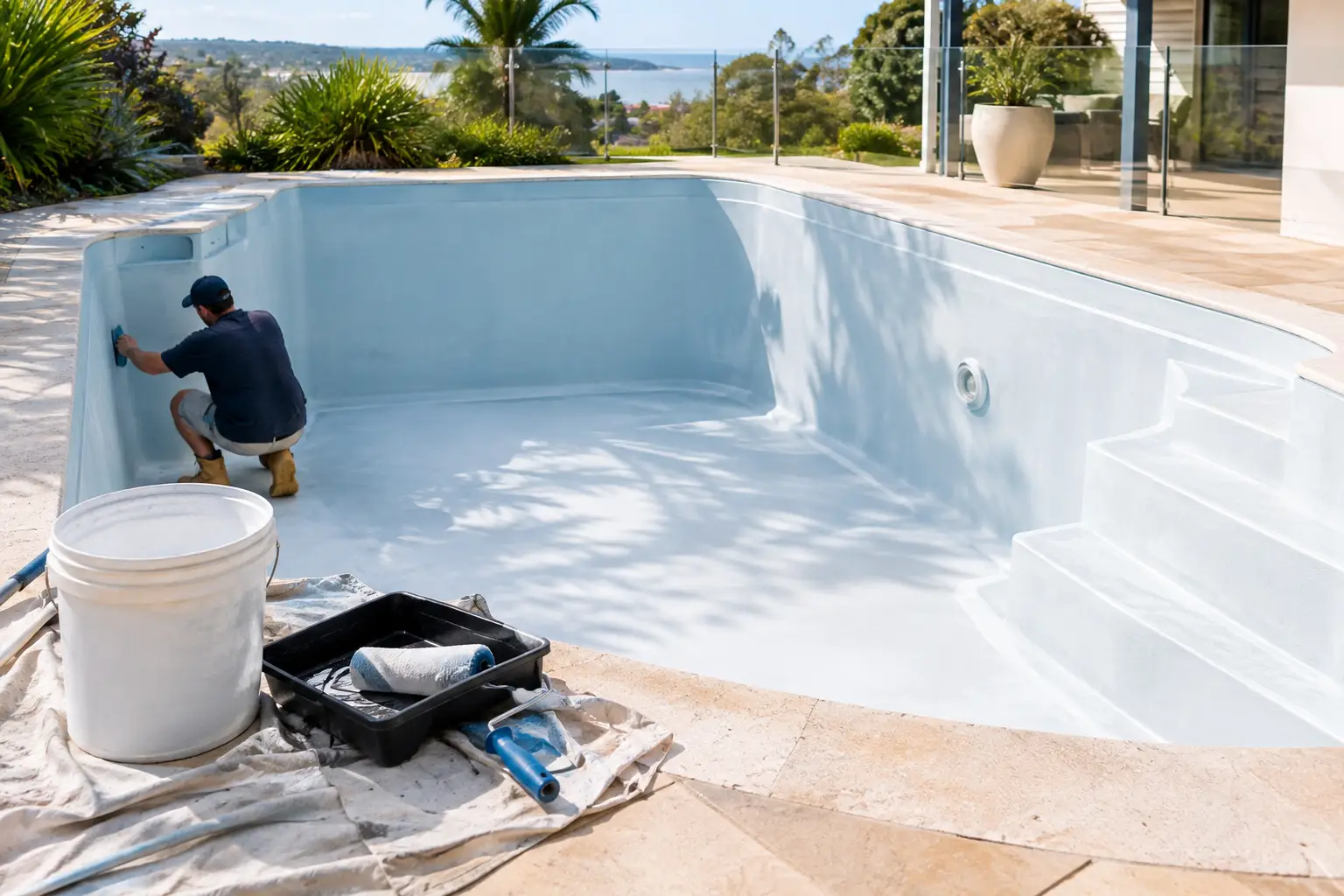
A useful fibreglass pool paint review should not start with a claim that one tin suits every pool. The right coating depends on what is currently on the shell, whether the original fibreglass gelcoat is exposed, and why the previous finish has failed. Get any of those points wrong and even a quality coating can peel, blister or lose its finish far sooner than it should.
For Australian pool owners repainting an ageing fibreglass pool, the decision usually comes down to coating compatibility, preparation and applying the complete system correctly. This guide explains what to look for before ordering paint, when epoxy or chlorinated rubber may be suitable, and where primer fits into the job.
What to look for in a fibreglass pool paint review
Many online reviews focus on colour, shine or how easy a product seemed to roll on. Those details have some value, but they do not tell you whether that coating is suitable for your pool. A paint can look excellent after application and still fail because it was applied over an incompatible old coating or a poorly prepared surface.
A worthwhile review should answer four practical questions:
- What surface was painted – exposed fibreglass gelcoat, old epoxy or an unknown existing coating?
- Was the old finish sound, or was it already peeling, chalking or blistering?
- Was the surface properly cleaned, sanded and primed where required?
- Was the coating applied at the specified film build and within the manufacturer’s application instructions?
If these details are missing, treat a glowing review with caution. The result may be genuine, but it may not apply to your pool.
Start with the existing pool surface
Fibreglass pools are not all in the same condition. Some have a faded but intact gelcoat. Others have been painted previously, sometimes more than once. The existing surface controls the preparation work and often determines which coating system can be used safely.
Exposed fibreglass gelcoat
A faded gelcoat is not automatically ready for paint. It needs to be inspected for contamination, gloss, chalkiness and physical damage. Paint needs a clean, sound and correctly profiled surface to bond to. If the surface remains glossy or has residue left from previous treatments, adhesion can be compromised.
Where a primer is specified for the chosen system, use the compatible primer rather than substituting a general-purpose product. Pool coatings work as a system. The primer, topcoat and preparation method need to suit each other.
Previously painted fibreglass pools
This is where most expensive mistakes occur. You need to identify the existing coating before choosing the new one. A pool may have an epoxy finish, a chlorinated rubber coating or an older coating of uncertain type. Applying a new system over an incompatible surface can cause lifting, wrinkling or adhesion failure.
If the existing coating is sound and known, follow the compatible recoating method. If it is loose, flaking or extensively deteriorated, it must be removed back to a stable surface before repainting. Painting over peeling edges does not seal in the problem. It simply creates a new coat attached to an unstable one.
When the old coating cannot be confidently identified, do not guess based on colour or appearance alone. Check the product history where possible and seek technical guidance before ordering. This is one of the situations where a small amount of investigation can prevent a full repaint from failing.
Epoxy or chlorinated rubber for a fibreglass pool?
Two-pack epoxy pool paint and chlorinated rubber pool paint are different coating systems. Neither is a universal upgrade for every fibreglass pool.
Two-pack epoxy pool paint
Two-pack epoxy is commonly chosen when a durable, high-build pool coating system is appropriate for the prepared surface. Because it is a two-component product, measuring, mixing and observing the stated working time matters. Do not mix more than can be applied within the product instructions.
Epoxy preparation is not optional. The surface must be clean, dry, sound and prepared to the required profile. If a compatible primer is required for exposed fibreglass or the specific substrate condition, include it in the order and application plan. Skipping primer to save time can undermine the entire coating system.
Epoxy can be a sensible choice for a fibreglass pool where the substrate and existing coating have been assessed correctly. It is not the right choice simply because it is perceived as the toughest option. Compatibility comes first.
Chlorinated rubber pool paint
Chlorinated rubber remains relevant for certain repainting situations, particularly where it is compatible with the existing finish and the recommended recoating process. It should be selected because it suits the substrate and old coating, not because it appears easier to apply.
Do not apply epoxy over a chlorinated rubber finish, or chlorinated rubber over another coating, without confirming compatibility and preparation requirements. The old paint layer is part of the job. Ignoring it is how a straightforward repaint becomes a stripping project.
Why fibreglass pool paint fails
Most failures trace back to preparation, compatibility or application conditions rather than a faulty topcoat. The common signs are peeling, bubbling, soft areas, patchy gloss and early wear around steps or waterline areas.
Peeling usually means the coating has not bonded properly to the surface beneath it. Causes can include inadequate sanding, gloss left on the old coating, contamination, moisture, loose old paint or the wrong primer. The fix is not another coat over the affected area. Remove failed material until the remaining surface is stable, prepare it correctly, then rebuild with a compatible system.
Blistering can indicate trapped moisture, contamination or adhesion issues. Before repainting, find the cause rather than covering the symptom. A coating can only perform as well as the surface below it.
Patchiness may result from inconsistent film thickness, poor mixing in a two-pack product, inadequate coverage planning or application outside the manufacturer’s stated conditions. Follow the technical data and do not stretch material too far to finish the job.
Preparation is the part that decides the result
Pool owners often spend most of their time comparing paint types, then rush the preparation. For a fibreglass repaint, preparation deserves at least as much attention as product selection.
The practical sequence is straightforward: inspect the surface, remove loose or failed coating, clean thoroughly, sand or abrade as required, remove sanding dust, allow the surface to dry fully, then apply the specified primer and topcoat system. Each product has its own instructions, so use the relevant technical information for mixing, recoat windows and application conditions.
Sydney and NSW weather can make timing important. Avoid starting a job when rain, heavy dew, strong wind or unsuitable temperatures are likely to interfere with preparation or application. A dry-looking pool shell is not necessarily ready if moisture has not had adequate time to clear after washing or wet weather.
Calculate paint and primer before ordering
Running short of paint is more than inconvenient. It can lead to thin application, mismatched batches or delays that affect the recommended recoating window. Ordering far too much is also avoidable.
Measure the pool’s length, width and average depth, then include walls, steps, ledges and other coated areas. Use the Pool Paint Calculator to estimate both topcoat and primer quantities for the coating system you are considering. It is a better starting point than relying on a neighbour’s pool size or a rough estimate from the water volume.
Before placing an order, confirm whether your chosen system needs primer on the exposed fibreglass or prepared substrate. Also check that you have allowed for the required number of coats rather than calculating for one coat only.
Choose the system before choosing the colour
Colour matters, but it is the last major decision. First identify the current surface, deal with failed coating, select a compatible epoxy or chlorinated rubber system, and confirm the primer requirement. Then choose a pool colour available within that system.
Pool Paint Sydney supplies BG Coatings pool paint systems for fibreglass and concrete pool repainting, along with practical product information to help customers choose compatible materials. Review the relevant coating and primer product pages, use the Pool Paint Calculator for quantities, and seek clarification if the existing coating is unknown.
A fibreglass pool repaint can be a practical DIY project or a well-planned trade job, but it is not a place to take shortcuts. Identify what is on the pool now, prepare it properly, and buy the complete compatible system the first time.