
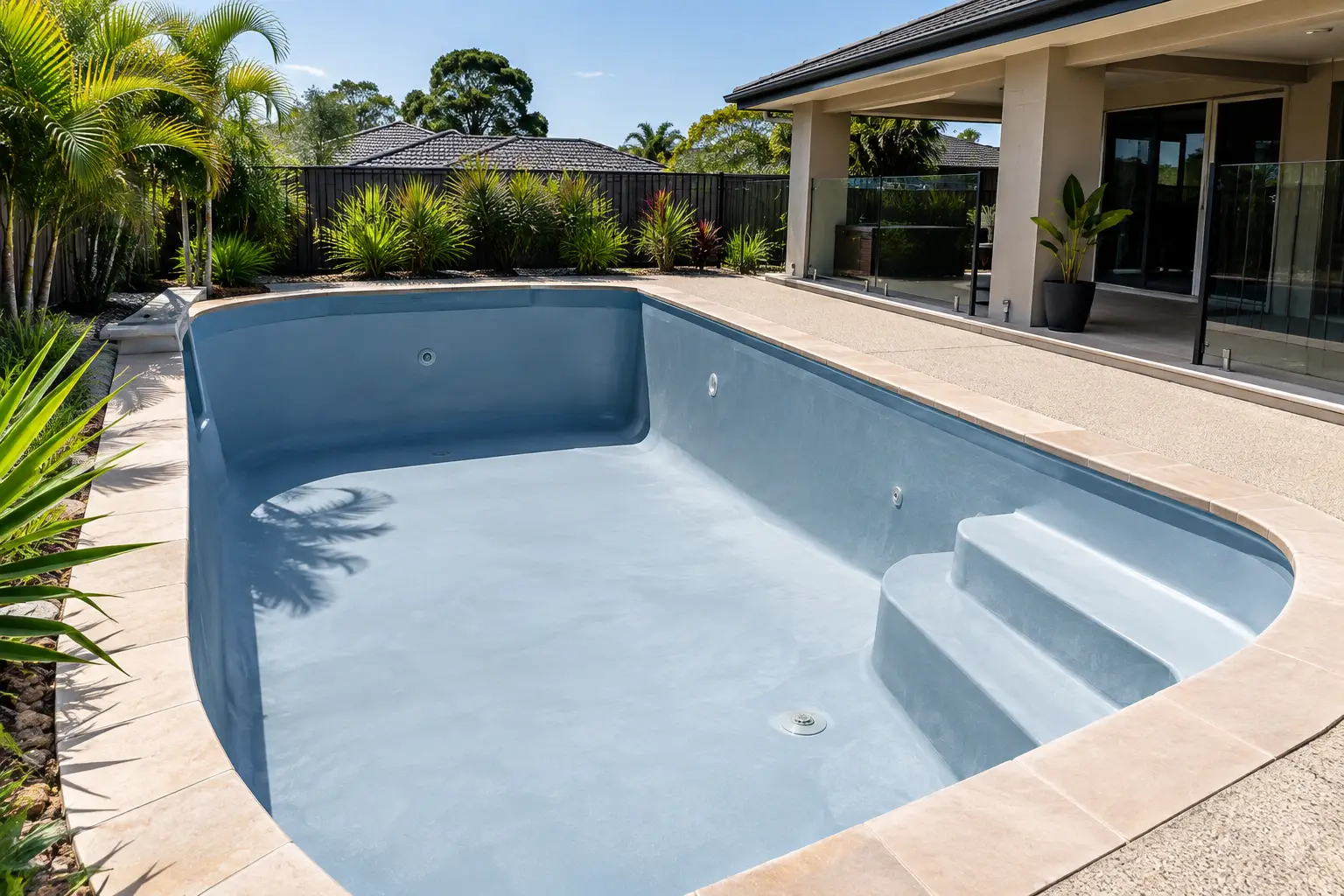
A pool can look smaller than it measures, especially once you include deep ends, steps, benches, walls and the waterline band. That is why a reliable pool paint coverage guide starts with surface area, not a guess based on litres or the pool’s overall size. Ordering too little can leave you short for the final coat. Ordering far too much wastes money and may point to an incorrect calculation.
For a durable repaint, calculate the full internal surface area, confirm the existing coating, then use the published coverage rate for the specific product and number of coats. Coverage is only one part of the decision. The right epoxy or chlorinated rubber system, suitable preparation and any required primer matter just as much.
Pool paint coverage guide: start with surface area
Pool paint is applied to the internal surface, not the volume of water the pool holds. A large but shallow pool may need less paint than a smaller pool with steep walls, a deep end and broad entry steps.
For a basic rectangular concrete pool, measure the length, width and average depth in metres. Record the measurements before ordering. If the pool has curved walls, a kidney shape, coves, ledges or unusual features, break it into smaller, manageable sections and add them together. This produces a more useful estimate than trying to force an irregular pool into one simple formula.
A practical calculation includes the floor, walls, steps, benches and any other painted areas. Do not leave out the waterline tile transition if it will be coated, or the vertical faces of entry steps. These areas can add meaningful square metres.
For a rectangular pool, use these starting calculations:
- Floor area: length × width
- Long walls: length × average depth × 2
- End walls: width × average depth × 2
- Steps, benches and ledges: measure each horizontal and vertical face separately
Add each figure to find the total square metres. For sloping floors, using an average depth is generally more realistic than calculating only from the shallow or deep end. If the slope is substantial or the pool shape is complex, allow extra time to measure it carefully.
Convert area into the right quantity of paint
Once you have the total surface area, check the technical information for the exact pool coating you plan to use. Do not assume every product covers the same area per litre. Two-pack epoxy, chlorinated rubber paint and primers can have different application requirements and coverage rates.
The basic calculation is:
Total pool surface area ÷ product coverage rate × number of coats = product quantity required
For example, if your pool has 80 square metres of paintable surface and the product’s stated coverage rate is 8 square metres per litre per coat, one coat requires 10 litres. If the coating system requires two coats, the paint requirement becomes 20 litres before allowing for the pool’s condition and application losses.
Use the coverage rate stated for the actual BG Coatings product you are buying, rather than relying on a figure from another paint brand or an old tin in the shed. Coverage can change depending on the coating type, application method, film thickness and surface profile.
The Pool Paint Calculator is the best place to enter your measurements and work through quantities for the chosen system. It helps avoid the common mistake of calculating only one coat when the coating instructions call for more.
Allow for surface condition, but do not guess wildly
Rough or porous concrete can absorb more material than a sound, previously coated surface. Areas that have been mechanically prepared, patchy repairs and exposed concrete may also affect how much primer or first coat is needed.
A modest allowance can be sensible where the pool surface is irregular, but a large unexplained allowance is not a substitute for checking the product system. If your calculation seems unusually high or low, revisit the measurements and confirm whether steps, walls and the number of coats have been included.
Do not try to stretch product beyond its recommended coverage rate to make up a short order. Applying too thinly can reduce the coating build intended by the manufacturer and may contribute to an uneven finish or premature failure.
Primer coverage is a separate calculation
Primer is not automatically required for every repaint, and it should not be added to an order simply because it seems safer. The need for primer depends on the substrate, the existing coating condition and the coating system being applied.
Bare or suitably prepared concrete may require a compatible primer as part of the specified system. A sound existing coating may have different requirements. Fibreglass pools also need careful assessment because the existing surface and previous coating determine what can be applied successfully.
If a primer is required, calculate it separately using its own published coverage rate. Primer coverage can differ from topcoat coverage, particularly on porous concrete. Measure the area to be primed, then check whether the entire pool or only specific prepared sections need primer. Applying an incompatible primer, or using one where the system does not call for it, can create another adhesion problem rather than solving one.
Coverage depends on choosing a compatible coating
The most accurate quantity calculation is still useless if the paint system is wrong for the pool. Before you select epoxy or chlorinated rubber pool paint, identify what is currently on the surface.
This is where many failed repaints begin. Applying a new coating over an incompatible old coating can lead to lifting, wrinkling, peeling or poor adhesion, even when the quantity and application rate were correct. A pool may look sound from a distance but still have weak, chalky or poorly bonded layers underneath.
Two-pack epoxy pool paint is a high-performance system that requires correct mixing, preparation and application within the product instructions. It is not a casual substitute for every old pool coating. Chlorinated rubber pool paint is also a specific coating system, with its own compatibility and preparation requirements.
If you do not know the existing paint type, do not order based on colour or appearance alone. Check any previous coating records if available, inspect for signs of failure and seek specialist product guidance before choosing the system. Pool Paint Sydney can help customers work through coating type, primer requirements and quantities before they buy.
Common coverage mistakes that cost time and money
The first mistake is measuring only the floor. Pool walls often represent a substantial part of the paintable area, especially in deeper pools. The second is forgetting the second coat, which can halve the order quantity on paper and leave the job incomplete in practice.
Another common issue is using a generic online coverage figure rather than the product’s own information. Pool coatings are not house paints, and their required film build, preparation and application conditions are specific to the system.
Customers also sometimes calculate paint correctly but overlook primer. Conversely, others buy primer for the whole pool without confirming whether it is suitable or necessary. Both problems are avoided by deciding on the coating system first, then calculating every component within that system.
Finally, do not treat peeling paint as a coverage issue. Peeling is usually a preparation, substrate or compatibility issue. More paint applied over loose or failing material will not create a sound base. Remove unsound coating and prepare the surface as required before calculating the material needed for the repaired area.
Measure first, then use the Pool Paint Calculator
Before ordering, write down your pool’s length, width, shallow depth, deep depth and the dimensions of steps, benches and ledges. Confirm whether the pool is concrete or fibreglass, whether the existing coating is known, and whether there are bare or repaired areas.
Then use the Pool Paint Calculator with the coverage information for the selected epoxy or chlorinated rubber system. Check the required number of coats and calculate any compatible primer separately. If the pool has an unusual shape, coating failure or an unknown existing paint, get advice before committing to a product.
A careful measure takes far less time than correcting a short order, applying an unsuitable system or trying to make insufficient paint cover more area than it should. Buy the correct system the first time, follow its product instructions, and give the final quantity calculation one last check before placing your order.