
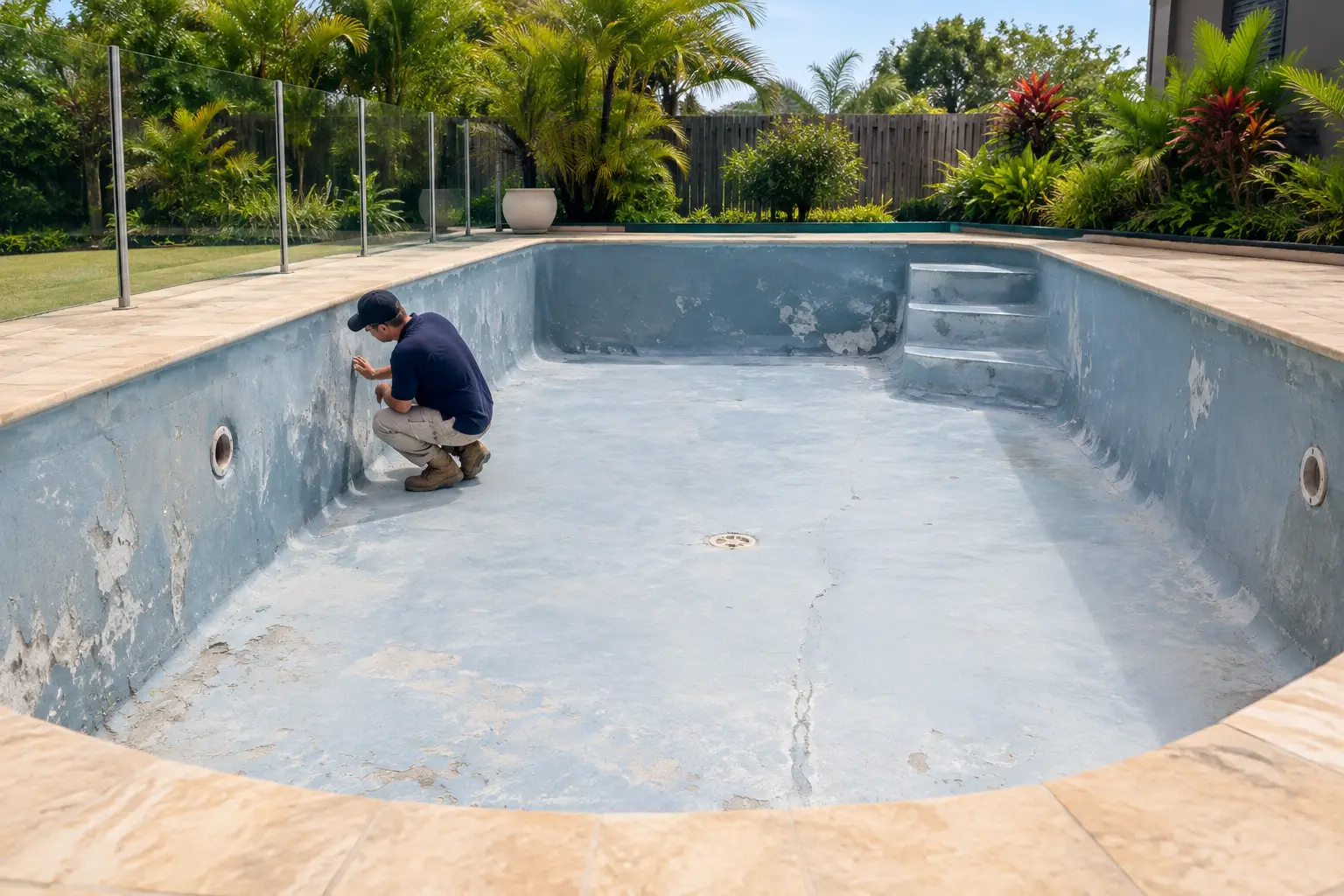
A new coat can look like the easy fix for a faded or peeling pool. But pool coating compatibility warning signs need to be dealt with before you order paint. Applying a good coating over an unknown, unstable or incompatible finish is one of the quickest ways to create more peeling, blistering and wasted product.
The right repainting system depends on three things: what the pool shell is made from, what is currently on it, and whether the existing surface is sound enough to coat. Get those answers first, then select the paint and primer system.
1. You do not know what the existing coating is
This is the biggest warning sign. Many older concrete and fibreglass pools have been painted more than once, often by different owners using different products. The current finish may be epoxy, chlorinated rubber, acrylic or another coating altogether. Its appearance alone is not a reliable identification method.
Epoxy and chlorinated rubber are not interchangeable systems. Choosing a new topcoat simply because it is labelled as pool paint can lead to an adhesion failure if it is not compatible with the old coating.
Start with any records from the previous repaint, leftover tins, invoices or product names. If none are available, inspect the coating carefully and seek technical guidance before selecting a system. A small compatibility test area may also be appropriate, but it needs to follow the coating manufacturer’s instructions. Do not treat a guess as a coating specification.
If the existing coating cannot be reliably identified, the safer path may involve removing unsound material and preparing the pool surface for the system recommended for the exposed substrate. The condition of the coating matters just as much as its type.
2. The old paint is peeling, flaking or lifting at the edges
Peeling paint is not something a fresh coat can hold down. If you can lift the old coating with a scraper, see flakes around steps and fittings, or find loose edges where the surface has failed, the problem is beneath the new paint layer.
This often happens when a previous coating was applied over poor preparation, a contaminated surface, moisture, or an incompatible earlier finish. It can also occur where an old coating has reached the end of its serviceable condition.
Remove all loose and poorly bonded coating until you reach a firm edge or sound substrate. Feather those edges as required by the product instructions, then clean and prepare the surface properly. If extensive areas are lifting, spot repairs may not be enough. A coating system is only as reliable as the layer underneath it.
3. The surface is chalky, powdery or leaves colour on your hand
A faded surface is not always a problem, but chalking is. Rub a clean hand across a dry area. If powder or colour comes away easily, the existing coating has weathered and weakened at the surface.
Paint applied over chalky material is bonding to loose powder, not to a stable coating. The result can look acceptable at first and then fail when the new film starts to pull away.
Thorough cleaning and abrasion are usually required to remove the degraded layer and create a sound surface profile. The exact preparation depends on whether the pool is concrete or fibreglass and on the coating system being used. Do not assume that primer will fix a chalky coating. A primer is not a substitute for removing weak material.
4. You are planning to change coating types without checking compatibility
A common mistake is deciding to move from one paint type to another based on colour, availability or a belief that a two-pack epoxy is automatically the best upgrade. Epoxy is a high-performance pool coating system, but it must be applied over a correctly prepared, compatible surface. The same principle applies to chlorinated rubber pool paint.
For repainting, the existing coating often determines the suitable topcoat. A sound chlorinated rubber finish generally needs a compatible chlorinated rubber repainting approach. A sound epoxy coating needs an epoxy-compatible system. Where the old paint is unknown, failed or unsuitable, surface preparation and primer requirements must be assessed before selecting the new coating.
This is where technical information matters more than a shortcut. Check the product information for the chosen BG Coatings system and confirm that it is suitable for your pool shell and existing surface. If you are unsure, provide clear photos and details of the pool’s current coating condition before ordering.
5. You are relying on primer to solve an unknown coating problem
Primer is valuable when it is specified for the substrate and coating system. It can improve adhesion to correctly prepared concrete or fibreglass and form part of a complete coating process. It is not a universal bonding layer that makes every old paint compatible with every new paint.
Using the wrong primer can create another incompatible layer. Skipping a required primer can also leave the topcoat without the foundation it needs. The correct answer depends on the substrate, the existing finish, the extent of bare areas and the paint system selected.
For example, a pool with sections taken back to bare concrete may have different preparation needs from a pool with a sound, previously painted epoxy surface. A fibreglass pool also requires a system suitable for fibreglass, with careful attention to cleaning and surface preparation. Treat bare patches, repairs and the surrounding coating as one complete system rather than separate jobs.
6. The pool surface has glossy patches, stains or an uneven finish
Glossy areas can indicate that the existing coating has not been sufficiently abraded for repainting. Stains, greasy marks, sunscreen residue and other contaminants can also interfere with adhesion. Uneven sheen is a warning to look closer, not merely an appearance issue.
Preparation needs to leave a clean, dry, stable and suitably keyed surface. In Sydney and across NSW, outdoor work can be complicated by changing weather, overnight condensation and hot conditions that affect application windows. Follow the coating data sheet for surface preparation, mixing, application conditions and recoat requirements rather than working to a general painting rule.
If a patch has a different feel, gloss or adhesion to the rest of the pool, investigate it before coating the entire surface. Small test areas are far easier to correct than a full pool coating failure.
7. You have calculated paint quantity before confirming the system
Ordering enough product matters, but quantity is the last part of compatibility planning, not the first. Coverage varies according to the coating, the number of coats, the texture and porosity of the surface, and whether primer is required. A rough pool surface or substantial bare concrete can use more material than a smooth, previously coated pool.
Once you have confirmed the coating type and primer requirement, use the Pool Paint Calculator to estimate the paint and primer quantities for your pool dimensions. Include the floor, walls, steps, ledges and other paintable areas. Then check the product information for the required number of coats and application rate.
Buying too little can leave you trying to stretch coats too thin or ordering more product midway through the job. Buying a system before identifying the existing surface can be more costly again, because the wrong paint is not made right by applying extra coats.
How to choose the right pool coating system
Before selecting epoxy or chlorinated rubber pool paint, establish whether the pool is concrete or fibreglass, identify the current coating where possible, and assess whether it is firmly bonded. Remove loose material, clean thoroughly and prepare the surface according to the relevant product instructions.
Then select the compatible coating system and any required primer as a package. Pool Paint Sydney supplies BG Coatings epoxy and chlorinated rubber pool paint systems, along with compatible primer options for suitable applications. Review the relevant product page and technical information, use the Pool Paint Calculator for quantities, and ask for specialist guidance if the existing coating is unclear.
A repaint is the time to stop a small adhesion question becoming a full coating failure. Pause at the warning signs, confirm the surface and buy the correct system the first time.