
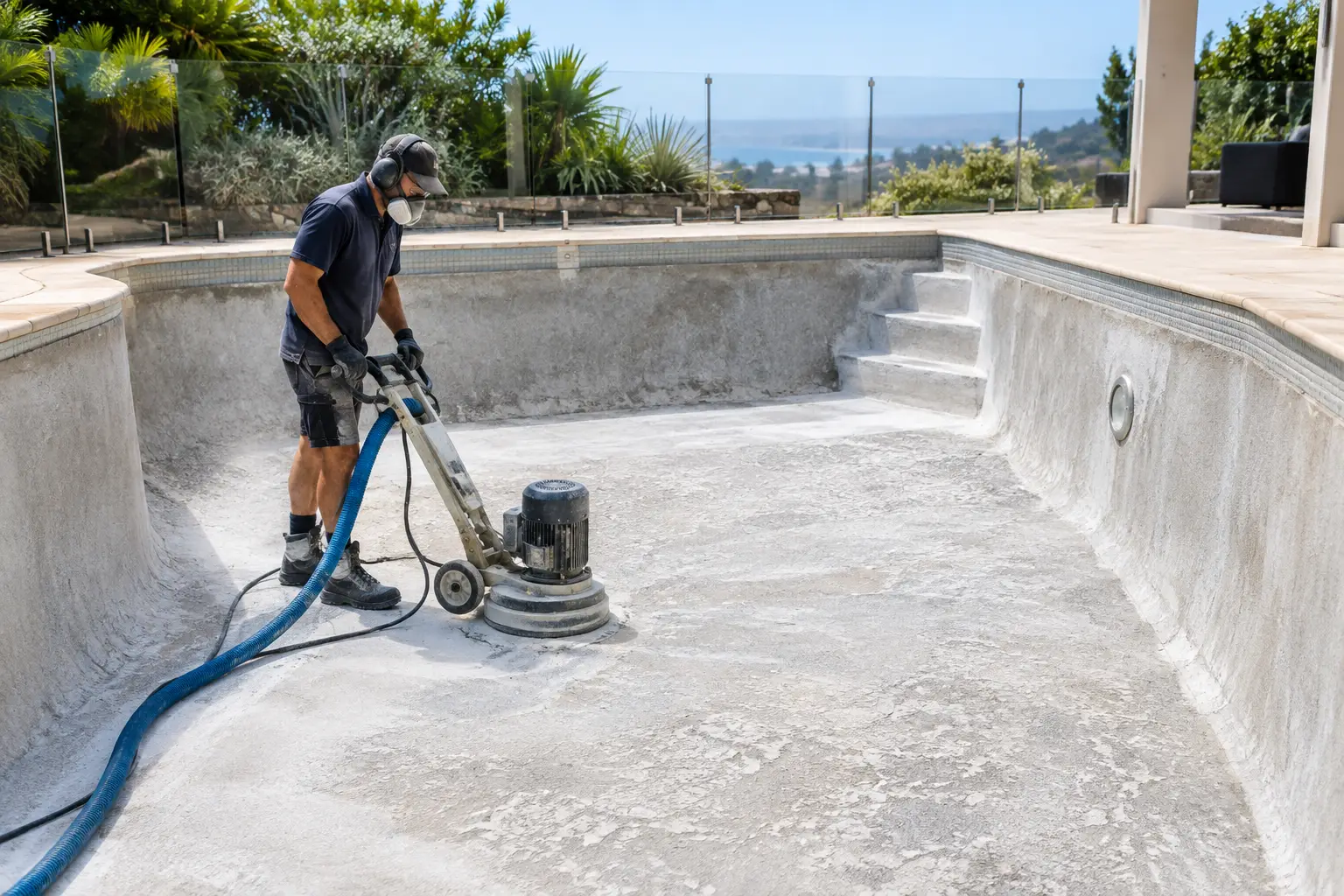
A proper acid etch concrete pool preparation can make the difference between a coating that bonds well and one that peels before it should. But acid etching is not a universal fix for every pool. It is mainly used on sound, bare concrete where the surface is too smooth or contains cement laitance that could stop a new coating from gripping properly.
If your pool is already painted, blistering or peeling, the first job is not reaching for acid. You need to identify the existing coating, remove failed material and determine whether the remaining surface is suitable for repainting. Etching over old paint does not make an incompatible coating compatible.
When should you acid etch a concrete pool?
Acid etching is a surface-preparation step for bare concrete pools. It lightly opens the concrete surface by removing the weak, smooth cement film sometimes left after curing. This creates a cleaner, more suitable profile for the specified primer or pool coating system.
It is commonly considered when a concrete pool has been stripped back to bare substrate, when new concrete has fully cured as required, or when the concrete is hard and smooth with little visible texture. The aim is not to damage the shell or aggressively eat into the concrete. The aim is an even, clean surface that is ready for the coating system you have selected.
An acid etch may not be appropriate where the pool has a sound existing coating that is being recoated within a compatible system. In that situation, thorough cleaning, deglossing or sanding may be the correct preparation method instead. Always follow the preparation requirements for the particular coating and primer, rather than applying a one-size-fits-all method.
Do not acid etch over old pool paint
This is one of the most costly mistakes in pool repainting. Acid does not reliably remove epoxy, chlorinated rubber or other old pool coatings. It may leave the surface patchy, create contamination problems or give a false impression that the pool is ready to paint.
Before choosing a preparation method, assess what is currently on the pool:
- If the existing paint is peeling, flaking, bubbling or soft, remove all unsound coating before proceeding.
- If the old coating is sound, establish what type it is and only use a compatible recoating system.
- If you cannot identify the existing coating with confidence, do not assume that any new paint will adhere to it.
- If areas have been repaired with mortar or patching compounds, check that they are fully cured and suitable for immersion and coating.
A pool can look mostly sound but still fail because a new paint layer was applied over a weak older coating. The new coating is only as secure as the surface beneath it.
What acid etching does and does not fix
Acid etching can remove laitance, light mineral deposits and surface glazing from bare concrete. It can help prepare a suitable concrete substrate where the coating system calls for it. It does not repair structural cracks, hollow areas, loose render, failing patches or moisture-related coating failure.
It also cannot solve poor coating compatibility. For example, applying a two-pack epoxy coating over an unsuitable old paint may lead to lifting or delamination even if the surface was etched first. Likewise, using the wrong primer, skipping a required primer or applying paint to a damp substrate can undermine an otherwise careful preparation job.
If you are dealing with a previously painted pool, the key decision is usually the existing coating type and condition. If you are dealing with bare concrete, the key decision is whether the concrete profile and specified coating system require acid etching, mechanical preparation, primer or a combination of these steps.
How to prepare an acid etched concrete pool
The exact process must follow the product instructions and safety data for the acid and the pool coating system. Acid is hazardous, so this is not a step to improvise. Wear appropriate personal protective equipment, keep the work area well ventilated and ensure children, pets and bystanders are kept away.
Start with a clean, empty and dry pool
The pool must be empty before coating preparation begins. Remove loose paint, dirt, residue and any material that could block the acid from contacting bare concrete evenly. Pay close attention to corners, steps, waterline areas, around fittings and repaired sections, as these are common locations for coating failure.
Do not treat acid etching as a cleaning substitute. Heavy contamination, loose material and failed paint need to be dealt with first. Acid applied to an unprepared surface can produce inconsistent results and create more rinsing work.
Apply only as directed and keep it even
Use the acid product only in accordance with its label and safety directions. Preparation is generally carried out in manageable sections so the surface can be treated consistently and rinsed thoroughly. Never mix chemicals unless the manufacturer specifically instructs you to do so.
The concrete should develop an even, lightly textured finish rather than glossy smooth patches. If some areas remain hard and smooth while others are heavily etched, coating adhesion can vary across the pool. Uneven preparation is often the start of uneven results.
Rinse and neutralise thoroughly
After etching, thorough rinsing and neutralising are critical. Acid residue left on the concrete can interfere with primer and paint adhesion. Follow the specified neutralising method, rinse until all residue is removed, and dispose of rinse water responsibly in line with local requirements.
Once rinsed, inspect the surface again. It should be clean, sound and free from loose particles. Allow the concrete to dry fully before priming or coating. Sydney and NSW weather can make this harder than expected, especially after rain, during humid conditions or where a shaded pool shell dries slowly. Do not rely on the surface looking dry at a glance. Follow the coating system’s requirements for substrate dryness and suitable application conditions.
Choose the coating system before you begin
Acid etching is only one part of the job. The correct pool paint depends on whether you are coating bare concrete, recoating a compatible previous finish, or applying over a properly prepared primer.
For bare or correctly prepared concrete, a two-pack epoxy pool coating is often considered where a high-performance epoxy system is suitable for the project. It requires careful mixing, preparation and application within the product directions. Chlorinated rubber pool paint is a different system and may be appropriate for certain compatible recoating situations, but it should not be selected simply because it is easier to find or apply.
Do not switch between coating types without checking compatibility. If the existing paint is chlorinated rubber, epoxy or unknown, that answer affects every stage that follows: removal, sanding, primer choice and the new topcoat. A compatible primer is not an optional extra where the selected system specifies one. It is part of the adhesion plan.
Pool Paint Sydney supplies BG Coatings pool paint systems, including two-pack epoxy, chlorinated rubber and compatible primers. Check the relevant product information before ordering so the preparation method matches the product you intend to apply.
Calculate paint and primer after surface preparation is clear
Do not order coating based only on the pool’s length and width. Steps, deep ends, walls, ledges and unusual shapes all add surface area. Under-ordering can leave you unable to apply the specified coats consistently, while over-ordering wastes money.
Use the Pool Paint Calculator once you know the pool dimensions, the coating system and whether a primer is required. Enter the internal measurements carefully and allow for all coated surfaces, not just the floor. Then check the stated coverage rate and number of coats for the selected product rather than assuming every paint covers the same area.
This order matters: identify the substrate, confirm the old coating or bare concrete condition, choose the compatible system, then calculate quantities. Buying paint before answering those questions is how many repainting jobs become expensive corrections.
Common mistakes to avoid
The most common error is acid etching a pool that still has unsound paint attached. The next is failing to rinse and dry the concrete properly before coating. Other avoidable problems include applying primer where it is not compatible, skipping it where it is required, and selecting a paint type without confirming what is already on the pool.
Another issue is rushing because the surface looks ready. Concrete preparation does not have to be complicated, but it does have to be complete. A clean, sound, dry and correctly profiled surface gives the coating system its best chance to perform as intended.
Before you buy, confirm whether your pool is bare concrete or previously painted, choose a compatible coating and primer system, and use the Pool Paint Calculator to order the right quantity. That bit of checking is far easier than removing a failed coating later.