
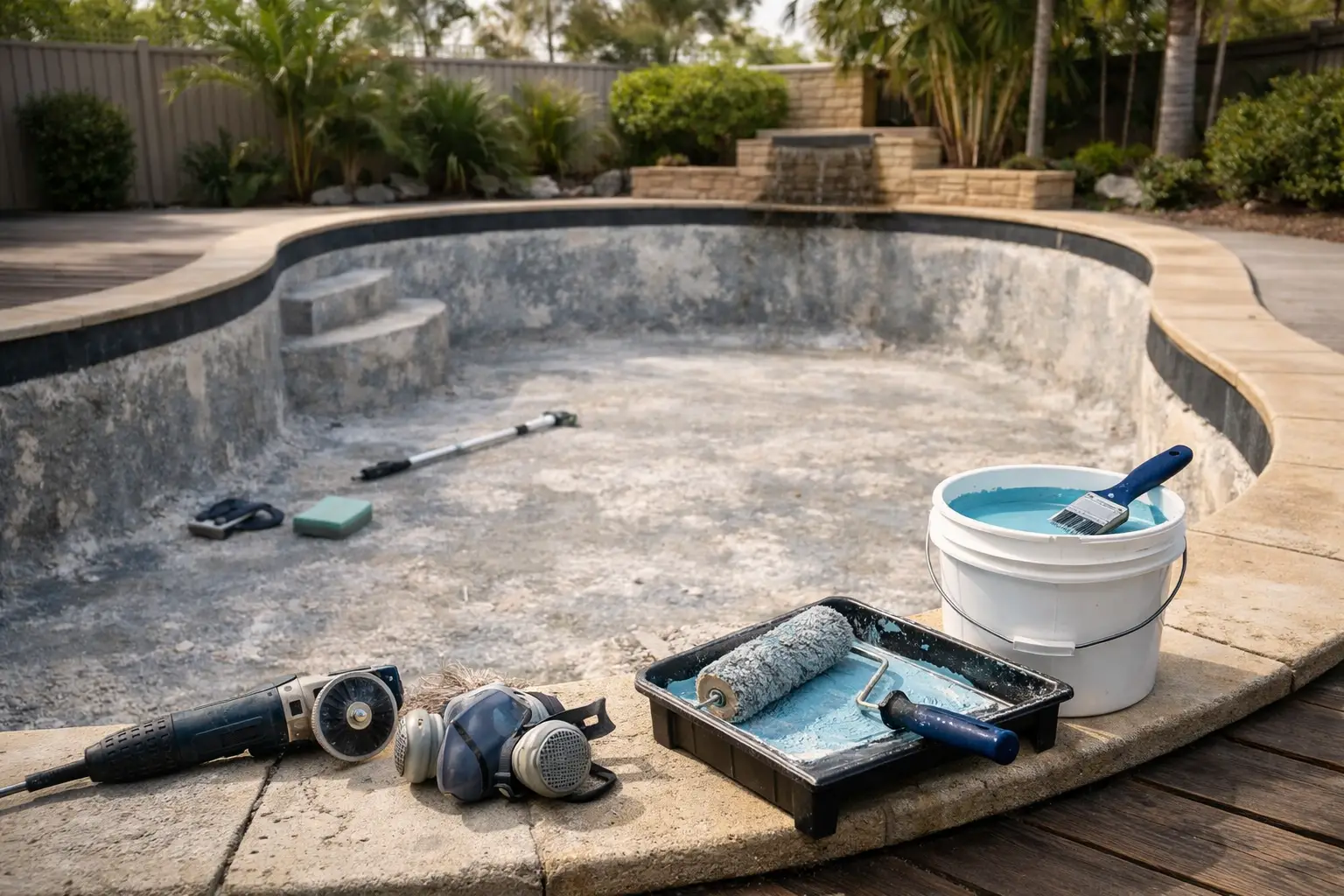
A rough pool surface can look like an easy repainting job because it appears to give new paint something to grip. That assumption causes plenty of failures. The right pool paint for rough surfaces depends on why the surface is rough, what is already on it and whether the existing coating is still sound. Texture alone does not make a surface ready for paint.
Roughness may come from exposed concrete, old coating layers, patchy preparation, previous peeling or a fibreglass finish that has become worn and uneven. Each situation needs a different decision before you order paint. Get the coating system wrong, skip preparation or use an incompatible primer and the new finish may blister, peel or fail well before it should.
Why a Rough Pool Surface Needs More Than Paint
A rough finish is often a symptom rather than the real problem. On concrete pools, it may mean the old coating has weathered away, the substrate is porous, or past repairs have left high and low areas. On fibreglass, a dull or coarse feel can indicate a worn surface, old paint that is breaking down, or sanding marks from earlier preparation.
The first question is whether the surface is structurally sound and firmly bonded. Pool paint is a coating system, not a structural repair product. It will follow the profile beneath it. It cannot properly fix loose render, hollow areas, major cracks or a surface that continues to break down.
A rough but solid surface can be suitable for repainting after proper cleaning, removal of loose material and the correct preparation. A rough surface with flaking paint is not ready until all poorly adhered coating has been removed. Painting over loose edges simply transfers the failure into the new paint layer.
Identify What Is on the Pool Now
Before choosing epoxy or chlorinated rubber paint, identify the existing surface and coating where possible. This is the most useful step you can take to avoid buying the wrong system.
A bare or previously painted concrete pool may suit a two-pack epoxy system, but the correct approach depends on the coating currently present and its condition. Fibreglass pools also need a coating system suited to fibreglass and to any existing paint. Do not assume that a paint labelled for pools will bond to every old pool coating.
If you know the pool was previously painted with chlorinated rubber, a compatible chlorinated rubber repaint system may be the practical choice. If it has an epoxy coating, a compatible epoxy system is generally the direction to investigate. Where the existing paint cannot be identified, do not guess based on colour, age or texture. Check a hidden area, review old records if available, and seek product-specific guidance before proceeding.
This matters because incompatible coatings can soften, wrinkle, lift or lose adhesion. A rough surface can hide these problems until the pool is filled and the job becomes expensive to correct.
Choosing Pool Paint for Rough Surfaces
For many worn concrete pools, two-pack epoxy pool paint is considered where a durable, high-build coating system is required and the preparation is suitable. Its performance depends on accurate mixing, proper surface preparation and applying the recommended coats at the required rate. It is not a shortcut for a surface that is dirty, damp, chalky or unstable.
Chlorinated rubber pool paint is commonly selected for repainting an existing compatible chlorinated rubber coating. It can be a sensible option where the old system is known and remains well bonded after preparation. It should not be treated as a universal overcoat for unknown paint types.
The right choice is therefore based on compatibility first, then substrate, preparation requirements and application conditions. A coarse concrete shell might be physically suitable for epoxy, while a rough previously painted pool may need a compatible repaint system instead. The product page and technical information for the chosen BG Coatings system should be followed, particularly for mixing, thinning, recoating and curing requirements.
When Primer Is Required
Primer is not an optional extra to add or remove on a hunch. Its purpose is to create the correct bond between the prepared substrate and the topcoat system. Bare concrete, porous areas, repaired sections and certain coating-change situations may require a compatible primer. Existing sound paint may have different requirements.
Using no primer where one is required can leave the coating vulnerable to poor adhesion. Using the wrong primer can be just as problematic. Buy the primer as part of the coating system, rather than selecting a general-purpose paint primer from the shed.
If the pool has a mix of bare patches and intact old paint, treat this as a system decision. The bare sections need appropriate preparation and may need priming, while sound existing coating needs to be cleaned and abraded as specified. Do not apply primer across the whole pool unless the relevant product instructions support that approach.
Preparation Makes the Difference
A rough surface needs careful preparation, not aggressive work for its own sake. The aim is to remove contamination and all unsound material, then leave a clean, dry, stable surface with the profile required by the selected coating.
Start by examining the entire pool, not just the worst-looking wall. Scrape and sand areas where paint is peeling, blistered, chalky or lifting at edges. Remove every weak layer until you reach sound, firmly bonded coating or a stable substrate. Feather rough paint edges so they do not telegraph sharply through the new finish.
Then clean the surface thoroughly. Dirt, body oils, residue and fine sanding dust can interfere with adhesion even when the surface feels rough. Follow the coating system’s specified cleaning and preparation process. Rinse where required and allow the pool shell to dry fully before coating. Sydney’s humid weather and cool overnight conditions can slow drying, so allow for the actual site conditions rather than working to a rushed timetable.
Do not try to paint over a damp pool shell, and do not coat during unsuitable weather. Moisture and poor conditions are common causes of bubbling, loss of bond and uneven finish. The exact application window should come from the relevant product information, not a general weather app alone.
Do Not Use Paint to Hide Major Defects
A coating can improve appearance, but it is not a levelling compound or repair system. Small texture differences may remain visible after painting, especially in strong sunlight. If the pool is heavily pitted, has loose render, widespread cracking or major unevenness, those issues need to be properly assessed and addressed before a coating system is applied.
Likewise, if old paint comes away easily across large areas, spot-sanding is unlikely to be enough. The loose coating has to be removed back to a sound base. This is slower than applying paint straight over it, but it is far less costly than having a freshly painted pool peel again.
Calculate Enough Paint for a Textured Surface
Rough concrete can use more paint than a smooth surface because the texture increases the actual area and absorbs more material. This is one reason customers run short near the end of a job. Stretching the final coat to make a tin last can leave insufficient film build and an inconsistent finish.
Measure the pool carefully, including the floor, walls, steps, ledges and any areas being coated. Use the Pool Paint Calculator before ordering to estimate paint and primer quantities for the pool’s dimensions and selected system. If the surface is notably rough, porous or irregular, account for that condition and check the stated coverage information for the specific product.
Do not rely on the pool’s water volume to calculate paint. Litres tell you how much water the pool holds, not the surface area that needs coating. A long shallow pool and a deep compact pool can hold similar volumes but need very different amounts of paint.
Application Errors That Cause Early Failure
Even the correct paint can fail if it is applied incorrectly. Two-pack epoxy must be mixed accurately and used in line with its stated working time. Chlorinated rubber paint also has its own preparation, thinning and recoating instructions. These are not interchangeable systems.
Avoid applying excessively thick coats to cover roughness in one pass. Heavy application can create problems with drying and finish quality. Apply the specified number of coats at the recommended rate, using suitable equipment and maintaining a wet edge where practical. Pay particular attention to steps, corners and rough repaired sections, where it is easy to miss coverage or leave thin areas.
Before ordering, confirm four things: the pool substrate, the existing coating type, whether the old coating is sound, and whether a compatible primer is required. If any of these are unclear, pause before choosing a product. That short check can prevent an incompatible system being applied over the whole pool.
For a rough pool that is stable, dry and properly prepared, the correct BG Coatings epoxy or chlorinated rubber system can provide a practical repainting path. Use the Pool Paint Calculator to work out quantities, then select the compatible paint, primer and colour from the relevant Pool Paint Sydney product information. A careful decision before the order is the simplest way to avoid doing the job twice.