
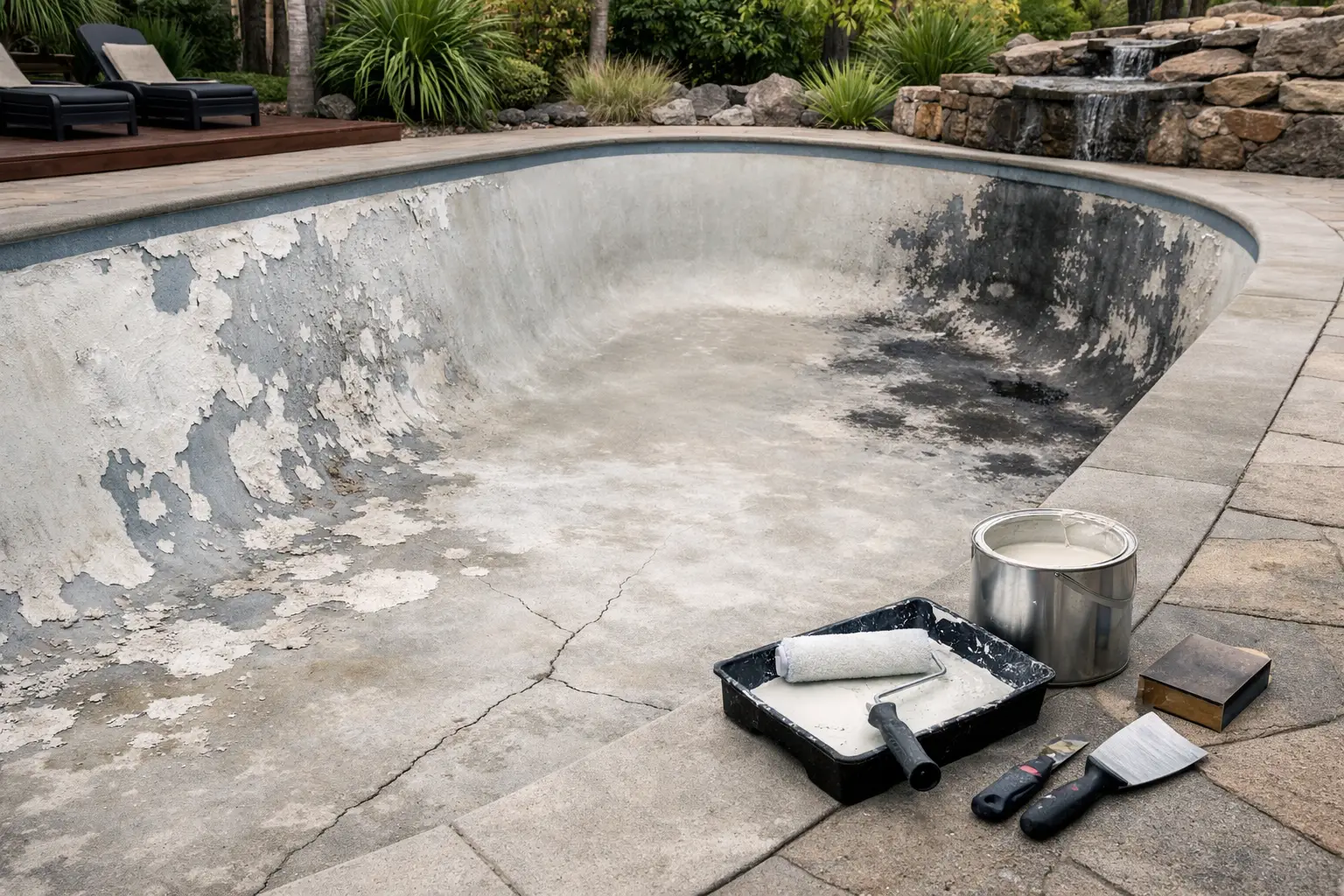
A concrete pool can look fine when it is emptied, then reveal the real problem as soon as the old coating is inspected closely. These concrete pool paint failure examples show that peeling, bubbling and patchy colour are rarely just a paint problem. They usually point to an unsuitable coating choice, poor preparation, moisture in the substrate or an incompatible primer.
The fix is not to apply another coat over the top and hope for the best. Identify what failed first, prepare the surface to suit the new system, then order enough compatible paint and primer to achieve the specified coating build.
Concrete pool paint failure examples: what each one means
1. Large sheets of paint peeling from the concrete
When paint comes away in broad sheets, often exposing bare concrete underneath, adhesion has failed at the surface. This is one of the most common and costly outcomes on older painted pools.
Typical causes include painting over loose or chalky coating, inadequate mechanical preparation, dust left on the shell, or applying a new system over an unknown existing coating. A coating can also peel where moisture has affected the bond between concrete and paint.
Do not spot-paint the loose sections and coat over the rest. Scrape and mechanically abrade all unsound material until the remaining surface is firmly bonded. If a significant amount of the old coating lifts, removing the failed coating more thoroughly is usually the safer path. The sound concrete or firmly bonded existing coating then needs to be cleaned, dry and prepared in line with the selected product system.
Before choosing epoxy or chlorinated rubber paint, establish what is already on the pool wherever possible. If the existing coating is unknown, seek product-specific technical guidance before ordering. Compatibility matters more than saving a step.
2. Blisters or bubbles under the coating
Blisters may appear as small raised bubbles or larger soft areas that break open when scraped. They can form shortly after application or become obvious after the pool is returned to service.
The usual cause is moisture or vapour pressure beneath the coating. Concrete is porous, and a pool shell that has not dried sufficiently can hold moisture below a paint film. Painting in unsuitable weather, applying paint to a damp surface or trapping contaminants under the coating can all contribute.
Open a few blisters and inspect what is beneath. If the concrete is damp, crumbly or contaminated, simply recoating will not solve it. Remove the affected coating, allow suitable drying time, and follow the preparation and primer instructions for the chosen coating. Sydney and NSW weather can make timing difficult, particularly after rain, during humid periods or when overnight condensation is likely. Plan the job around a stable dry window rather than a date on the calendar.
3. New paint lifting over old paint
This failure is often caused by incompatibility. A new coating may initially look smooth and well covered, then soften, wrinkle, split or release from the previous paint layer. The issue is not always visible on day one.
Two-pack epoxy and chlorinated rubber are different systems. They have different preparation, application and compatibility requirements. Applying a stronger solvent-containing coating over an unsuitable old layer can disturb it. Applying a coating without the required primer can create a weak interface even if the surface looks clean.
If you know the existing paint type, select the compatible repaint system recommended in the product information. If you do not know it, do not guess based on colour, age or how glossy it looks. Test an inconspicuous area where appropriate and confirm the recommended approach before committing to the full pool. This small check can prevent a complete repaint becoming a strip-back job.
4. Chalky paint and colour rubbing off on your hand
A chalky surface is a coating that has weathered or degraded at the top layer. You may notice powder on your hand, faded colour around the waterline area, or a surface that looks dry and flat rather than sound.
Paint will not bond reliably to loose chalk. Washing alone may not be enough because the weak material remains attached to the coating beneath. The surface must be cleaned and abraded until it is sound, with all residue removed before primer or topcoat application.
How far you need to go depends on the condition of the existing coating. Light, even weathering on an otherwise firmly bonded surface may be manageable with proper preparation. Heavy chalking, widespread flaking or areas that soften under abrasion are warning signs that a more extensive removal process is required.
5. Patchy sheen, thin spots and early wear
A pool can be the right colour and still be under-coated. Patchy gloss, visible roller marks, poor hiding or early wear on steps and ledges often indicates inconsistent application thickness or insufficient product ordered for the pool area.
This problem commonly starts before painting. Estimating litres from the pool’s water volume does not work because paint coverage is based on the area being coated – floor, walls, steps, benches and other features. Missing these surfaces can leave you short, leading to stretched coats or skipped areas.
Use the Pool Paint Calculator to calculate the coating area and check the product coverage guidance for the system you are buying. Order the correct quantity of both paint and any compatible primer before starting. Each coat should be applied at the recommended rate, not thinned or stretched to make a tin go further.
6. Peeling around cracks, repairs and rough concrete
Failure around localised areas can mean the coating has followed the condition of the substrate. Paint is a protective finish, not a structural repair product. If concrete is unsound, actively cracking, crumbling or contaminated, the coating will not create a lasting base by itself.
Remove loose material and make sure the substrate is suitable for coating before proceeding. Where there are structural concerns, water pressure issues or movement in the concrete, have the underlying condition assessed before buying paint. Once the surface is sound, prepare repaired or bare sections as required by the chosen primer and coating system so they do not become weak points in the new finish.
How to avoid repeating the failure
The reliable sequence is simple, but every stage matters: identify the existing coating, remove failed material, clean and abrade the remaining surface, allow the concrete to dry, use the correct compatible primer where required, then apply the selected pool coating at the specified rate.
Do not assume epoxy is automatically the best option because it is a two-pack product, and do not choose chlorinated rubber simply because that is what was used years ago. The best system depends on the current surface, the previous coating and the preparation you can complete properly. Product data and technical guidance should decide the system, not a quick visual judgement.
It is also worth checking the practical details before opening any tins. Confirm the total coating area with the Pool Paint Calculator, include walls and steps, and make sure the paint, primer, rollers and preparation plan all match the selected system. Running out mid-job or substituting an incompatible product creates avoidable risk.
Choosing the right repaint system for your concrete pool
For a pool with a known, sound existing coating, start with the compatible repaint option and its preparation requirements. For bare concrete or areas taken back to concrete, check whether the selected system requires a compatible primer. For an unknown or failing coating, pause before purchase and get clear technical advice on the safest preparation and repaint path.
Pool Paint Sydney supplies BG Coatings epoxy pool paint, chlorinated rubber pool paint and compatible primer systems for Australian concrete pools. Review the relevant product information, confirm your surface and coating history, then use the Pool Paint Calculator to buy the correct system and quantity the first time.
A failed coating is frustrating, but it also gives useful evidence. Read the failure pattern, correct the cause rather than covering it, and your next paint job starts with a far better chance of a sound, even finish.