
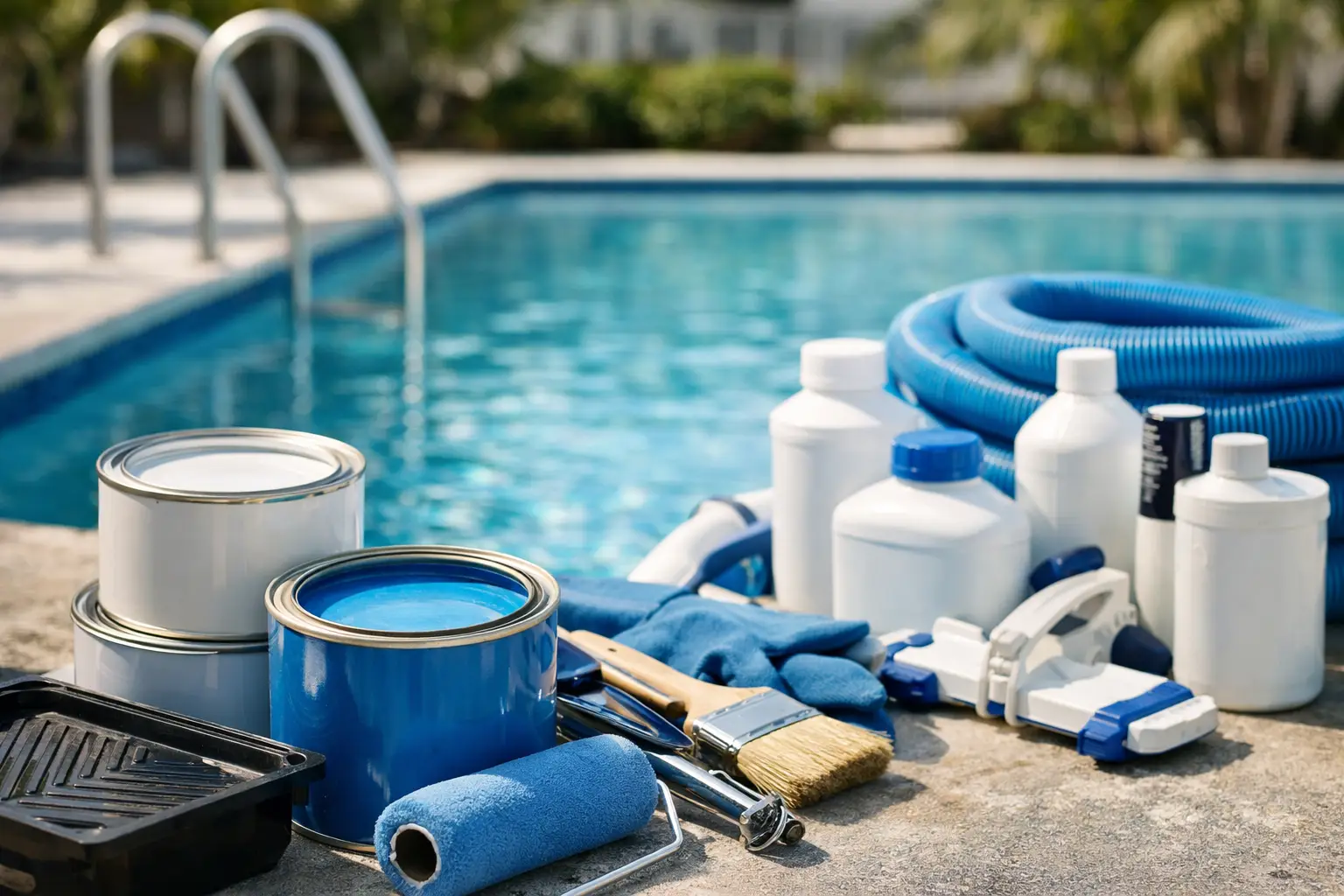
A trade pool paint supplier should do more than send tins of paint. If your pool coating has peeled, chalked, blistered or worn through, the product is only one part of the fix. You need the right epoxy system for the pool surface, accurate quantity advice and clear preparation instructions. Get any of those wrong and even quality pool paint can fail early.
For homeowners, DIY renovators and tradies, the best supplier is one that helps you make the correct call before the job starts. That means asking what the pool is made from, what is already on it, how badly the existing coating has failed and whether moisture is affecting the surface.
What a trade pool paint supplier should help you identify
Concrete and fibreglass pools may both be painted, but they do not always need the same preparation or coating approach. A concrete pool can have porous, dusty or previously painted surfaces. Fibreglass may have a smooth gelcoat, old paint with poor adhesion, or areas that need sanding before a new epoxy coating can grip.
A supplier that simply says “this paint suits pools” is not giving you enough information. Before buying, you should be able to confirm three things: the pool substrate, the existing coating type and the condition of the surface.
Start with the pool surface
Bare concrete, previously painted concrete and fibreglass all need different checks. Bare concrete must be sound, clean and suitably prepared so the coating can bond. A painted concrete pool needs loose or failed paint removed, with the remaining coating checked for adhesion. Fibreglass needs thorough cleaning and abrasion to remove gloss and give the epoxy a mechanical key.
If the current paint is peeling in sheets, do not assume another coat will cover the problem. Peeling usually means the bond underneath has failed. Painting over loose edges or chalky material only transfers the failure into the new coating.
Find out what coating is already there
This is where many repainting jobs go wrong. An epoxy coating is designed for durability, but it must be compatible with the existing surface. If you do not know what has previously been applied, test a small area and assess how firmly it is attached before committing to a full repaint.
A practical supplier will not promise that one coating can solve every situation without preparation. They should explain when a full removal is the safer option and when a well-bonded existing coating can be prepared for recoating.
Why epoxy pool paint is usually the serious option
For a pool that needs a hard-wearing painted finish, epoxy pool paint is commonly chosen because it is built to handle immersion, pool chemicals and regular surface wear. It is a better fit for a proper restoration than low-cost general-purpose paint that is not made for a submerged pool environment.
In Australian conditions, the coating also needs to cope with UV exposure around the waterline, changing temperatures and regular cleaning. That does not mean epoxy is maintenance-free or that poor preparation no longer matters. It means you are starting with a coating system intended for the job.
The trade-off is that epoxy requires discipline. Surface preparation, mixing ratios, induction time where specified, pot life and recoat windows all matter. It is not a product to open, stir casually and apply whenever the weather looks reasonable.
Choose a supplier that provides the technical information needed to apply the system correctly. You should know the recommended preparation method, number of coats, coverage rate, drying conditions and curing time before refilling the pool.
Do not buy pool paint based on litres alone
A paint quantity estimate should be based on the total interior surface area, not just the pool’s water capacity or a rough guess at its length and width. Floors, walls, steps, ledges and deep ends all add area. Under-ordering often leads to thin coats, colour variation or a rushed second order while the job is underway.
To estimate the surface area, calculate the floor area, then add the wall area using the pool perimeter and average depth. Add steps, benches and other built-in features separately. Once you have the total square metres, divide it by the stated coverage rate for each coat, then multiply by the number of coats required.
For example, if a pool has 80 square metres of paintable area and the product covers 8 square metres per litre per coat, you need 10 litres for one coat. If the system requires two coats, allow 20 litres before considering a small contingency for rough concrete, steps and application losses.
Coverage figures are guides, not guarantees. Rough or porous concrete can use more paint than a smooth, previously coated surface. A good trade pool paint supplier will help you check your measurements rather than relying on a one-size-fits-all kit recommendation.
The preparation advice that prevents peeling
Most pool paint failures are preparation failures. The visible issue may be bubbles, flaking or bare patches, but the cause is usually contamination, moisture, weak old paint or an inadequately prepared surface.
The pool must be emptied, cleaned and allowed to dry properly before coating. Oils, sunscreen residue, body fats, salt deposits and chemical residue can interfere with adhesion. Pressure washing may remove loose material, but it does not automatically remove every contaminant or create the profile needed for a new coating.
Pay close attention to these common problems:
- Chalking: If the old surface leaves powder on your hand, it needs to be properly cleaned and stabilised or removed. Paint will not bond reliably to chalk.
- Peeling edges: Scrape and sand back until only firmly attached coating remains. Feather the edges so they do not show through the new finish.
- Moisture: Concrete can hold moisture after rain, washing or groundwater pressure. Applying epoxy to a damp substrate can cause blistering and bond failure.
- Glossy fibreglass: A smooth, shiny surface needs cleaning and sanding. Without a suitable profile, the new coating has little to grip.
Do not skip repairs to cracks, chips or hollow-sounding sections. Fix them with products suitable for pool immersion and allow them to cure as required before painting. The finish will only be as sound as the surface underneath.
What to expect from a supplier before you order
A useful supplier asks practical questions rather than pushing the biggest pack size. Be ready to provide photos of the pool surface, dimensions, whether it is concrete or fibreglass, the condition of the old paint and the timing of the job.
You should also receive straight answers about weather. Sydney and many parts of Australia can have hot days, sudden rain and high humidity that affect application. Painting in direct heat can shorten working time and make it harder to keep a wet edge. Rain or heavy moisture before curing can ruin a fresh coating. Plan the project around the product’s stated application conditions, not just the weekend you have available.
For tradies, reliable stock and clear system information matter as much as the coating itself. A delayed job can cost time, while the wrong paint can cost a callback. For DIY customers, technical support can be the difference between a finish that lasts and a pool that needs repainting far sooner than expected.
Choose the correct pool paint system the first time
The cheapest option is rarely the lowest-cost outcome if it fails after one season. A better approach is to buy a high-performance epoxy pool coating that suits your substrate, then follow the specified preparation and application process without shortcuts.
Pool Paint Sydney supplies epoxy pool paint for concrete and fibreglass pools and can help confirm the right system, quantity and preparation approach before you start. If you are unsure whether your old coating is sound enough to repaint, ask before ordering. A few clear photos and accurate measurements can prevent a costly mistake.
A pool repaint is worth doing once and doing properly. Check the surface, calculate the full coating requirement, allow enough time for preparation and curing, then buy the system that matches the job rather than the one that merely looks convenient.