
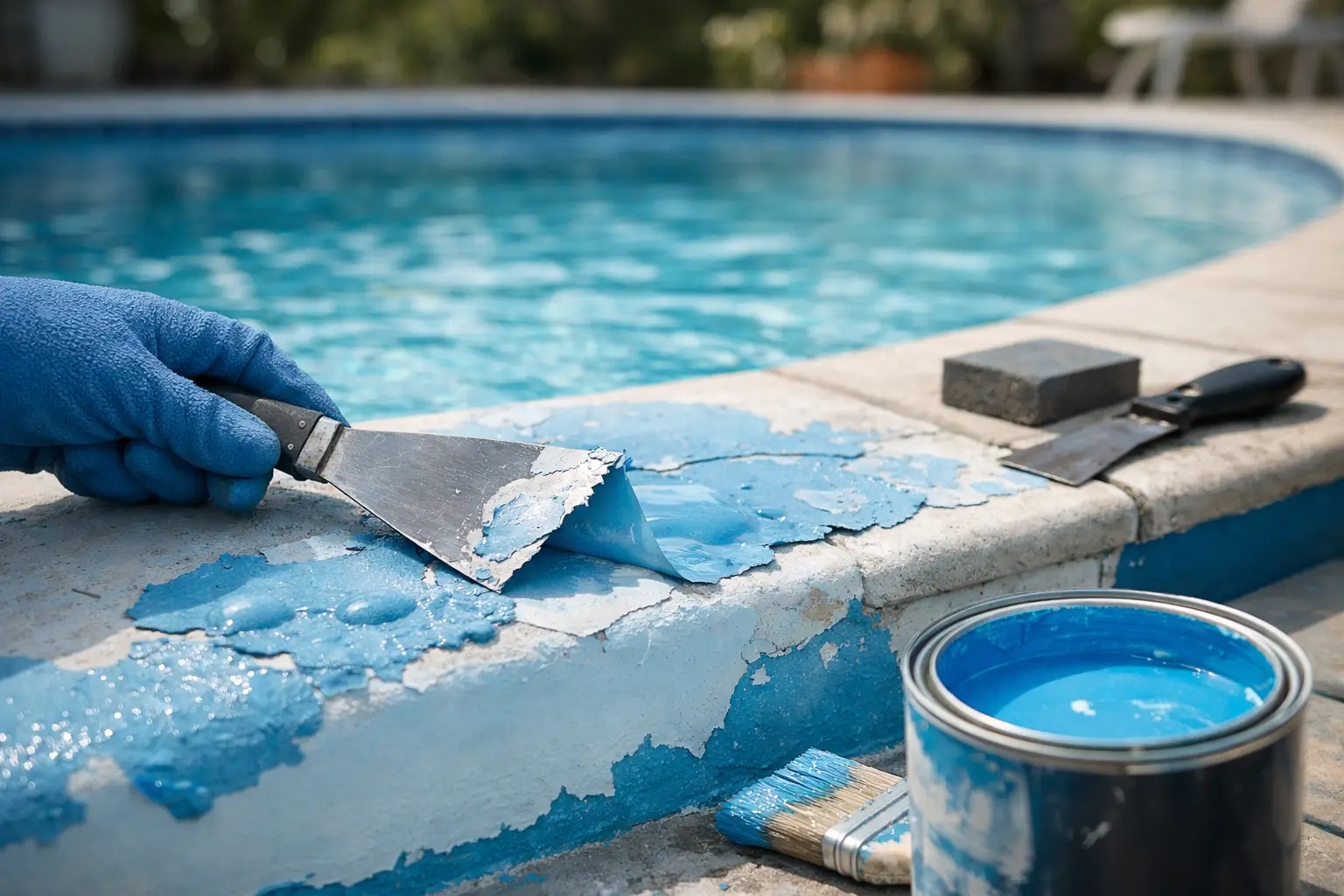
A few small bubbles in a freshly painted pool can turn into widespread peeling once the pool is filled. If you are working out how to fix bubbling pool paint, do not paint straight over the problem. Bubbling is a sign that something underneath the coating has failed, usually moisture, poor adhesion or trapped solvent. Find the cause first and the repair has a far better chance of lasting.
First, identify what the bubbles are telling you
Not every bubble has the same cause. The timing, location and feel of the bubble usually point to the correct repair.
Bubbles that appear while the paint is still wet are commonly application bubbles. They can happen when paint is rolled too quickly, mixed too aggressively, applied too thickly, or coated in hot weather. Small surface bubbles may settle as the paint flows out, but bubbles that remain after curing need to be sanded back before another coat is applied.
Blisters that appear days, weeks or months after painting are more serious. These are often raised pockets where the coating has lost contact with the pool surface. Pressing one may reveal a hollow sound, moisture or a soft paint film beneath it. This is generally an adhesion or moisture issue, not a problem that can be fixed with another topcoat.
Pay attention to where the bubbling occurs. Blisters concentrated low on concrete pool walls or across the floor can point to moisture pressure through the concrete. Bubbles around old repairs, steps or fibreglass patches may indicate poor surface preparation or an incompatible coating below the new paint.
Why pool paint bubbles in Australian conditions
The most common reason for bubbling pool paint is moisture trapped beneath an epoxy coating. Concrete is porous. If the shell has not dried properly after draining, washing or rain, moisture can push against the coating as temperatures rise. Sydney summers make this worse because a damp pool surface can heat up quickly once the sun hits it.
Poor preparation is another regular cause. Epoxy needs a clean, sound and properly profiled surface to grip. If old chalky paint, algae, oils, sunscreen residue, loose material or dust remain, the new coating may look fine at first but detach later.
Other causes include applying epoxy outside its recommended temperature range, recoating before the first coat has cured as required, or using the wrong paint system over an existing coating. A pool that has previously been painted with a different product may need more extensive removal or a compatible primer before epoxy can be used successfully.
On fibreglass pools, bubbling can also result from surface contamination, gloss that has not been sanded back, or a previous coating that is failing underneath. Do not assume the visible top layer is the only issue. If the old paint is letting go, your new epoxy will only be as sound as the coating left beneath it.
How to fix bubbling pool paint step by step
The correct repair is usually localised if the rest of the coating is firmly bonded. If blisters are widespread, the job becomes a full repaint and may require removal of most or all failed paint.
Drain, inspect and let the pool dry
Drain the pool safely and inspect every bubbled area. Mark the edges of the failure with chalk so you can see how far it extends. Tap around the bubbles with a scraper or the handle of a tool. A hollow sound or paint that lifts easily means the failure reaches beyond the visible blister.
Do not rush this stage. The pool must be dry before repair work begins. After cleaning or rain, allow extra drying time. Concrete that looks dry can still hold moisture below the surface, particularly in shaded areas and near the deep end.
Remove all loose and blistered coating
Scrape, sand or mechanically grind back every bubble until you reach sound, firmly bonded paint or bare concrete or fibreglass. Stop only when the remaining coating cannot be lifted at the edges. Feather the perimeter of the repair so there is no sharp paint edge showing through the final coats.
If blisters keep appearing as you work, or large sections release with little effort, treat it as a broader coating failure. Spot repairs will be temporary if the surrounding paint has already lost adhesion.
Clean and prepare the exposed surface
The exposed area must be clean, dry and properly keyed. On concrete, remove dust and any weak or chalky material. Depending on the condition of the pool, this can involve sanding, grinding or acid etching followed by thorough rinsing and drying. Acid washing is not a shortcut for removing failed paint. It does not replace scraping and sanding loose coatings.
For fibreglass, sand the repair area to remove gloss and create a consistent profile for the new coating. Clean away all sanding dust and contamination. Avoid household cleaners that can leave residue behind.
Before painting, run your hand across the surface. It should feel clean, dry and solid, not powdery, greasy or soft. This simple check prevents many repeat failures.
Apply the correct epoxy system
Use a high-performance epoxy pool coating that suits the pool substrate and the condition of the existing paint. Epoxy is the sensible choice when you want a durable, chemical-resistant finish, but it relies on correct preparation and mixing.
Mix only the amount you can apply within the product’s working time. Stir the components steadily rather than whipping air into the paint. Apply at the recommended spread rate. Overloading the roller to make the job faster can trap solvent and air, leaving bubbles or an uneven finish.
Two properly applied coats are usually more reliable than one heavy coat. Follow the specified recoat window closely. Applying the next coat too soon can trap solvents, while waiting too long may require additional sanding for adhesion.
Pool Paint Sydney supplies epoxy pool coating systems backed by BG Coatings and can help confirm whether your concrete or fibreglass pool needs a straightforward repaint, local repair or more complete coating removal before you buy.
When bubbling means you should strip the pool
A full strip is more work, but it is often cheaper than repainting a failed surface twice. Consider removing the old coating more extensively when bubbles cover multiple areas, paint lifts in sheets, the surface is heavily chalked, or you cannot identify the existing coating type.
The same applies where there is ongoing moisture pressure through the concrete shell. Painting over a moisture problem will not stop it. Check for cracks, leaking plumbing, poor drainage around the pool and signs of water entering from behind the shell. Repair the source before applying a new epoxy system.
If only one small area has failed after impact damage or a patch repair, a local repair can be appropriate. The trade-off is that colour and sheen can vary between old and new paint, especially on sun-exposed pools. In that situation, repainting the full interior may give a more consistent finish.
Avoid bubbles on your next pool repaint
Most bubbling is preventable. Plan the job around dry weather, allow proper drying time after washing, and avoid painting a hot surface in direct afternoon sun. Start early when the surface is dry and temperatures are within the coating instructions.
Check the old paint before ordering. If you are unsure whether it is epoxy, chlorinated rubber, acrylic or another system, test a small area or get advice before coating over it. Choosing the correct pool paint first is far less expensive than dealing with widespread adhesion failure later.
Calculate the pool’s interior area and buy enough material for the recommended number of coats. Stretching paint too far creates thin coverage. Applying it too heavily creates a different problem, with poor cure and trapped solvent. Use the stated coverage rate and allow extra material for rough concrete, steps and repairs.
Do not accept bubbling as a cosmetic issue. Remove the failed paint, prepare the surface properly and apply epoxy at the correct rate. That is how you get a pool finish that stays bonded through heat, chemicals and regular use rather than becoming another repainting job next season.