
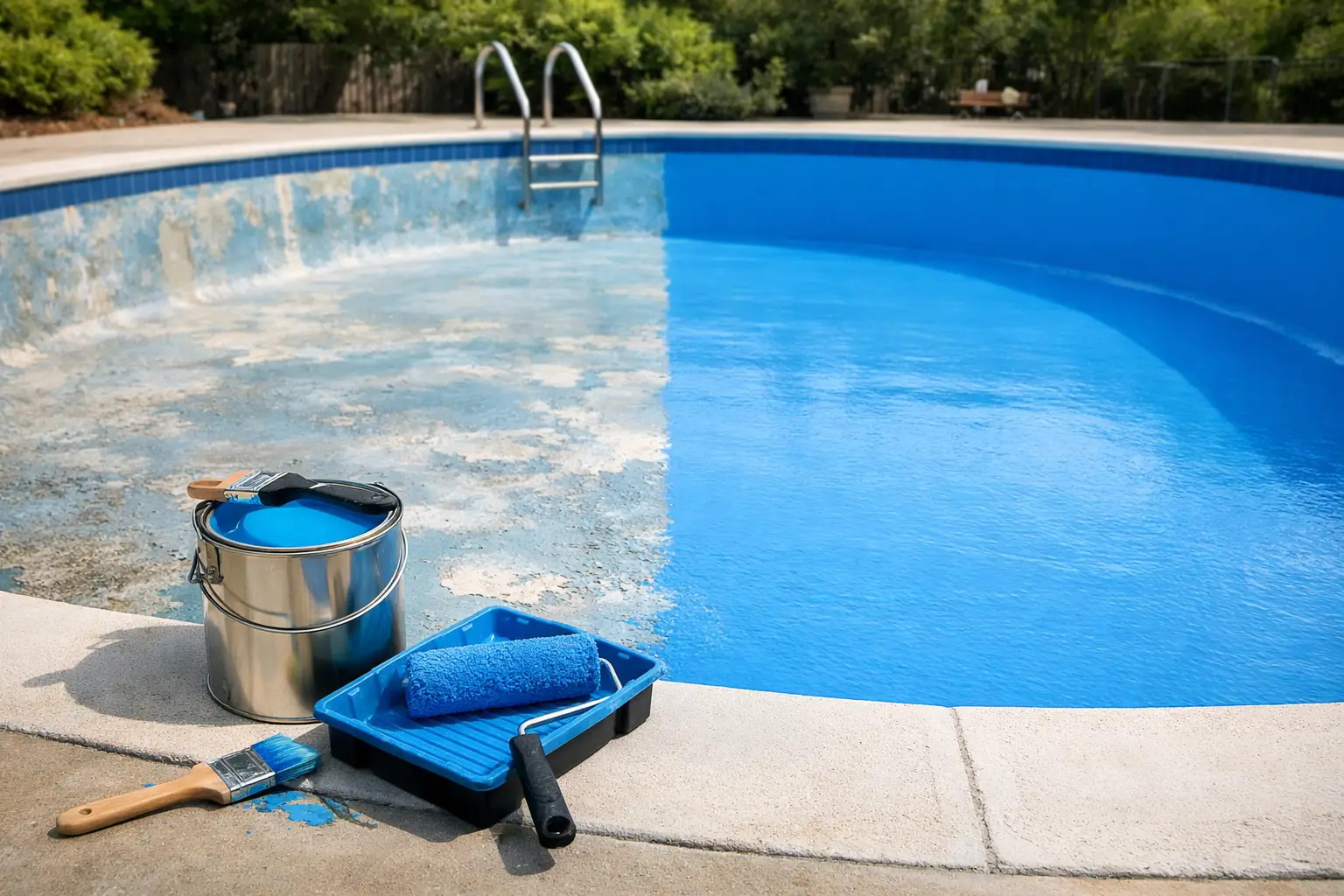
A pool can look worn out long before the concrete or fibreglass shell has a real problem. Chalky colour, patchy walls and a dull waterline often point to a failed or exhausted coating. The best pool paint for faded surfaces is usually a proper two-pack epoxy system, but only when it suits the surface underneath and the preparation is done properly.
Simply painting over faded pool paint is where expensive mistakes begin. If the old coating is loose, chalking heavily, incompatible with epoxy or contaminated with sunscreen and body oils, fresh paint may look good briefly and then peel. The right result starts with diagnosing what is already on the pool.
Why pool paint fades in Australian conditions
Sydney and Australian pool owners deal with a tough combination: high UV exposure, warm water, pool chemicals, salt systems and long periods of direct sun. Over time, lower-grade coatings can oxidise at the surface. The colour fades, the finish becomes powdery and the coating loses the ability to protect the shell properly.
Ready to Repaint Your Pool?
Buy premium epoxy pool paint in Sydney with fast delivery and local pickup available.
Buy Pool Paint NowFading alone does not always mean the paint has failed. A sound epoxy coating can lose some gloss or colour after years of service while still remaining firmly bonded. The question is whether the surface is stable enough to repaint.
Rub a dry hand or dark cloth over the pool wall. A small amount of fine residue can be expected from an old coating, but heavy chalking is a warning sign. So are blisters, flaking edges, bare patches, cracking and paint that lifts when scraped. These issues need to be fixed before any new coating goes on.
The best pool paint for faded surfaces: two-pack epoxy
For concrete pools and suitable fibreglass pool surfaces, a two-pack epoxy pool coating is generally the best choice when long-term durability matters. Once cured, epoxy forms a hard, chemical-resistant film that handles regular immersion, pool treatment chemicals and normal surface wear far better than many single-pack alternatives.
That does not mean epoxy is a shortcut. It is a high-performance coating system, so it needs a clean, dry, stable surface. Applied over weak paint or an incompatible finish, even good epoxy can fail. Applied over properly prepared concrete or sound compatible epoxy, it offers the durable finish most owners want from a full pool repaint.
A specialist epoxy system such as the coatings supplied by Pool Paint Sydney is intended for real pool conditions, not general exterior painting. Choose the correct epoxy system for your pool type, follow its mixing and recoating instructions exactly, and allow enough paint for the specified number of coats. Skimping on film build is a common reason a repaint looks thin and wears early.
When epoxy is the right choice
Epoxy is a strong option if you are repainting bare concrete, previously epoxy-painted concrete that is still well bonded, or a fibreglass pool that has been assessed as suitable for the coating system. It is particularly worthwhile where the existing finish has faded badly and you want to reset the surface with a hard, uniform coating.
It also makes sense for pool owners who are willing to drain the pool, prepare it thoroughly and allow for proper cure time before refilling. A pool repaint is not a job to rush before a weekend barbecue. Temperature, surface moisture and cure time all affect the outcome.
When you need to stop and check first
Do not assume every painted pool can be coated with epoxy. Older pools may have chlorinated rubber, acrylic or unknown coatings. Some fibreglass pools may have gelcoat damage, osmosis blisters, wax contamination or previous finishes that need specific preparation.
If you do not know what is on the pool, test an inconspicuous area or ask for technical guidance before ordering. A simple compatibility check is much cheaper than stripping a newly failed coating. If the old paint is peeling across large areas, remove all unsound material rather than trying to bury the problem under a fresh coat.
How to choose the correct paint system
The best product is not decided by colour alone. Start with the pool shell and the condition of the current coating. Concrete and fibreglass require different checks, while a pool that is bare needs a different approach from one with stable, existing epoxy.
For a concrete pool, inspect for hollow areas, cracks, failed patches and moisture issues. Repair cracks and defective areas with materials suitable for pool immersion, then allow repairs to cure as required. Bare concrete also needs the correct surface profile. Smooth, dense concrete gives paint very little to grip, which is why cleaning and mechanical or chemical preparation matter.
For fibreglass, look closely for cracking, crazing, loose paint, repairs and surface contamination. Fibreglass must be sound and thoroughly abraded where required so the coating can bond. Do not treat it like a concrete pool and use a one-size-fits-all preparation method.
Colour should be your final decision, not your first. Light blue remains popular because it gives clean-looking water and makes debris easier to see. Darker colours can create a stronger visual effect and may help water warm slightly, but they can also show fading, calcium marks and surface imperfections more clearly. Choose a colour you are happy to live with after the water is back in, not just one that looks good on a small swatch.
Preparation decides whether the repaint lasts
Most peeling paint jobs fail because of preparation, not because the owner bought the wrong colour. The pool must be drained, cleaned and dry enough for the coating system. Any residue from sunscreen, oils, algae treatment, scale remover or previous cleaning chemicals can interfere with adhesion.
Start by removing loose and flaking paint. Scrape failed edges back until you reach sound material. Sand or mechanically abrade glossy areas so the new epoxy has a proper key. Thoroughly clean the entire pool, including steps, corners, waterline areas and around fittings where contamination often builds up.
After cleaning, remove all residue. Dust left from sanding or preparation is still contamination. Vacuum carefully, rinse where the preparation method requires it, and give the shell enough time to dry. Do not rely on the weather forecast alone. Concrete can hold moisture below the surface, especially after rain, pressure washing or a high water table.
Before painting, mask fittings and plan your application sequence. Mix only the amount of two-pack epoxy you can apply within its stated pot life. Once mixed, the material starts curing in the tin. Trying to use epoxy after its working time has passed can lead to poor flow, roller marks and an uneven finish.
Buy enough paint for the full job
Under-ordering paint can leave you with a thin final coat or a colour variation if a second batch is needed later. Measure the pool before you buy. For a rectangular pool, calculate the floor area, then add the area of each wall. For curved, kidney or freeform pools, break the shape into simpler sections and allow a sensible margin.
Coverage figures are useful, but they are not guarantees. Rough concrete, porous repairs and heavily textured surfaces use more coating than a smooth, previously painted pool. Two coats are commonly required for a durable, even result, so calculate for both coats rather than assuming one heavy coat will do the job.
As a practical rule, have your pool dimensions, depth range, surface type and current paint condition ready before ordering. This makes it easier to confirm quantity and select the right system first time.
Mistakes that turn a faded pool into a failed repaint
The fastest way to waste money is to paint over uncertainty. Avoid these common errors:
- Coating over loose, chalky or peeling paint without removing it.
- Using a general-purpose exterior paint instead of a pool-rated epoxy coating.
- Skipping surface abrasion because the old paint feels hard.
- Painting after rain or before the shell has dried properly.
- Mixing inaccurate ratios or applying epoxy outside its pot life.
- Refilling the pool before the specified cure time has passed.
Each of these can cause blistering, soft paint, poor adhesion or early fading. The fix is rarely a small touch-up. In many cases, it means draining the pool again and starting the preparation from scratch.
Make the repaint worth doing
If your pool surface is faded but sound, a correctly chosen epoxy system can make it look sharp again and protect the shell for years of regular use. If the surface is peeling, chalky or unknown, slow down long enough to identify the cause before you buy.
Measure the pool, assess the existing coating honestly and choose a pool-specific epoxy system with enough material for proper coverage. A repaint done with the right paint and preparation is not just a cosmetic upgrade – it is the difference between a finish that lasts and one that needs doing again far too soon.
Ready to Repaint Your Pool?
Buy premium epoxy pool paint in Sydney with fast delivery and local pickup available.
Buy Pool Paint Now