
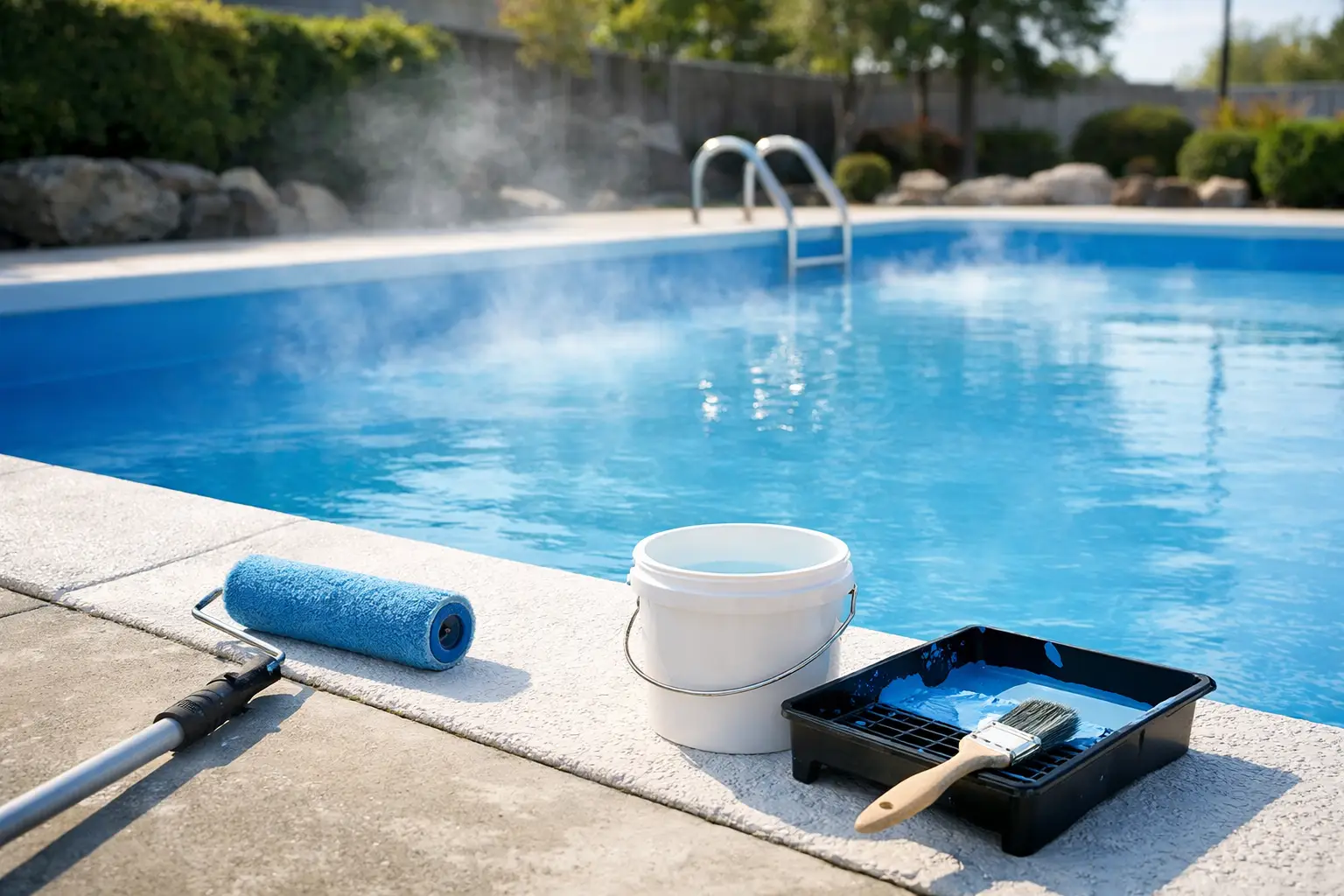
A pool can look dry enough to fill within hours of painting, but that does not mean the coating has cured. Filling too early is one of the fastest ways to spoil an otherwise well-prepared epoxy pool paint job. Water pressure, pool chemicals and trapped moisture can mark, soften or weaken paint before it has developed its full film strength.
This pool paint curing guide explains what curing actually means, how long to wait, and how to avoid the common mistakes that lead to peeling, blistering and early coating failure.
Dry to touch is not cured
Epoxy pool paint goes through more than one stage after application. First, solvents evaporate and the coating becomes dry to touch. It may then be safe to recoat, depending on the product and conditions. Full cure comes later, when the epoxy hardener and resin have chemically reacted and the coating reaches the toughness needed to handle continuous water immersion.
Ready to Repaint Your Pool?
Buy premium epoxy pool paint in Sydney with fast delivery and local pickup available.
Buy Pool Paint NowThat distinction matters. A surface can feel hard under your shoes yet still be vulnerable to water. If you fill the pool at this point, the coating may absorb moisture before it has fully cross-linked. The result can be soft patches, staining, loss of gloss, blistering or a finish that fails much sooner than it should.
For epoxy pool coatings, always use the cure time in the product data sheet for the actual temperature at your pool. A general rule is to allow around seven days before filling, but this is not a substitute for the manufacturer’s instructions. Cool conditions can extend the wait considerably.
What changes epoxy pool paint curing time?
Temperature is the biggest factor. Epoxy cures through a chemical reaction, and low temperatures slow that reaction. A warm, stable week helps a coating cure properly. A run of cold nights, rain or heavy dew does not.
Sydney and many parts of Australia can have ideal painting days followed by cool evenings or sudden wet weather. Check the forecast for the entire painting and curing window, not just the day you plan to apply the first coat. Painting on a warm morning is not enough if rain arrives before the coating is protected, or if temperatures drop sharply overnight.
Humidity and surface moisture also matter. High humidity slows solvent evaporation, while dew settling on fresh paint can leave dull areas, water spotting or poor surface cure. Concrete pools are particularly prone to moisture issues because water vapour can move through the substrate. If the shell is damp before painting, epoxy adhesion is already at risk.
Film thickness plays a part as well. Applying paint too heavily may look like a shortcut, but thick coats take longer to release solvent and can cure unevenly. Apply the recommended spread rate rather than trying to make one coat do the work of two. A correctly applied epoxy system gives a more reliable finish than an overloaded coat.
Pool paint curing guide: when can you fill the pool?
The correct answer is the full cure time stated for your specific epoxy coating, adjusted for the conditions on site. Do not count from when you finished painting if the coating was exposed to rain, dew, unusually cold weather or contamination. In those situations, assess the finish and seek technical advice before moving ahead.
Before filling, the coating should be uniformly hard, dry and free from tackiness. There should be no soft areas around steps, corners, deep ends or repaired sections. These areas are often painted more heavily and can cure more slowly.
Do not use a quick fingertip test as the final check. It may tell you that the paint has skinned over, but it cannot confirm that the coating has cured through its full thickness. Follow the stated wait time even if the paint looks ready earlier.
Once the cure period is complete, fill the pool without delay. A freshly cured epoxy surface is best put into service as intended. Keep the pool clean while it is empty, and prevent leaves, dust, sprinkler water, pets and foot traffic from contaminating the coating before filling.
Do not add chemicals straight away
After filling, allow the water to circulate before bringing it to normal chemical balance. Start with clean water where possible, then test and adjust it gradually. Avoid throwing concentrated chemicals directly onto the painted surface. Pre-dissolve products where appropriate and use the pool circulation system to distribute them.
Aggressive water chemistry can shorten the life of any coating, including epoxy. Keep pH, chlorine and other treatment chemicals within their recommended ranges. If the water is out of balance, fix it promptly rather than allowing it to sit that way for weeks.
Rain, dew and unexpected weather
Rain on uncured paint is not a minor inconvenience. It can affect gloss, create surface marks and interfere with the coating’s cure. The severity depends on how long the paint had been drying, how heavy the rain was, and the product used.
If rain hits very fresh paint, do not simply wait for it to dry and fill the pool. Let the surface dry fully, inspect it closely and check for whitening, dull patches, runs, soft areas or contamination. Affected sections may need sanding and recoating. Ignoring visible damage usually turns a small repair into a larger repaint later.
Dew can be just as frustrating, especially when painting late in the day. Plan application so each coat has enough time to become weather-safe before evening moisture arrives. Starting earlier, working within the recommended temperature range and avoiding late-afternoon coats gives you a better margin.
Curing mistakes that cause expensive failures
Most early pool paint failures are not caused by the epoxy itself. They come from rushed prep, poor conditions or filling before the system is ready. Avoid these four common mistakes:
- Painting over a damp concrete shell: Moisture below the coating can push the paint away from the surface, creating blisters or peeling.
- Recoating outside the specified window: Applying the next coat too soon can trap solvent. Waiting too long without sanding can reduce coat-to-coat adhesion.
- Using the wrong paint system: Epoxy pool paint is a strong choice for suitable concrete and fibreglass pools, but the existing coating must be identified and prepared correctly first.
- Rushing the fill: A few days saved at the end of the project can cost you the full job if the coating softens or loses adhesion under water.
If your old pool paint is peeling, chalky or blistered, do not assume a fresh coat will solve it. Remove loose and failed material, clean thoroughly, repair defects and prepare the remaining sound coating as required. Epoxy relies on a clean, stable surface. It cannot bond reliably to weak paint underneath.
Concrete and fibreglass pools need different checks
Concrete pools need close attention to moisture, porosity and surface contaminants. Any hydrostatic pressure, water ingress, previous acid washing residue or damp areas should be addressed before coating. New concrete also needs adequate curing before it is painted. Painting a shell that is still releasing moisture is a common cause of failure.
Fibreglass pools are less porous, but they bring their own risks. The surface must be properly cleaned and abraded so the epoxy has a mechanical key. Wax, oils, sunscreen residue and poorly sanded glossy gelcoat can all cause adhesion problems. If the fibreglass is damaged, repair it first and ensure the repair material is compatible with the epoxy system.
In both cases, choose the paint system based on the pool substrate, the existing coating and the condition of the shell. Buying paint before confirming these details is how DIY jobs go wrong. The correct epoxy pool coating, applied over properly prepared concrete or fibreglass, is far more likely to give the long-lasting result you expect.
Plan the job around the cure period
A successful repaint is planned backwards from filling day. Allow time for draining, cleaning, repairs, sanding or grinding, priming if required, coating, recoating and full cure. Do not schedule painters, a pool party or a handover based only on the application day.
Order enough paint for the full system before you start. Running short and trying to stretch the final coat can leave inconsistent protection, while changing products mid-job can create compatibility issues. Measure the pool carefully, including walls, steps, ledges and deep-end slopes, then calculate coverage using the product’s stated spread rate.
Pool Paint Sydney supplies epoxy pool coatings designed for Australian pool conditions and can help confirm the right system before you commit. If you are unsure about existing paint, moisture, surface preparation or cure times, get that advice before opening the tins.
The best time to protect a new pool coating is before the first coat goes on. Give the surface proper preparation, paint within the recommended conditions and let the epoxy fully cure before water touches it. That patience is what turns a repaint into a finish that lasts.
Ready to Repaint Your Pool?
Buy premium epoxy pool paint in Sydney with fast delivery and local pickup available.
Buy Pool Paint Now