
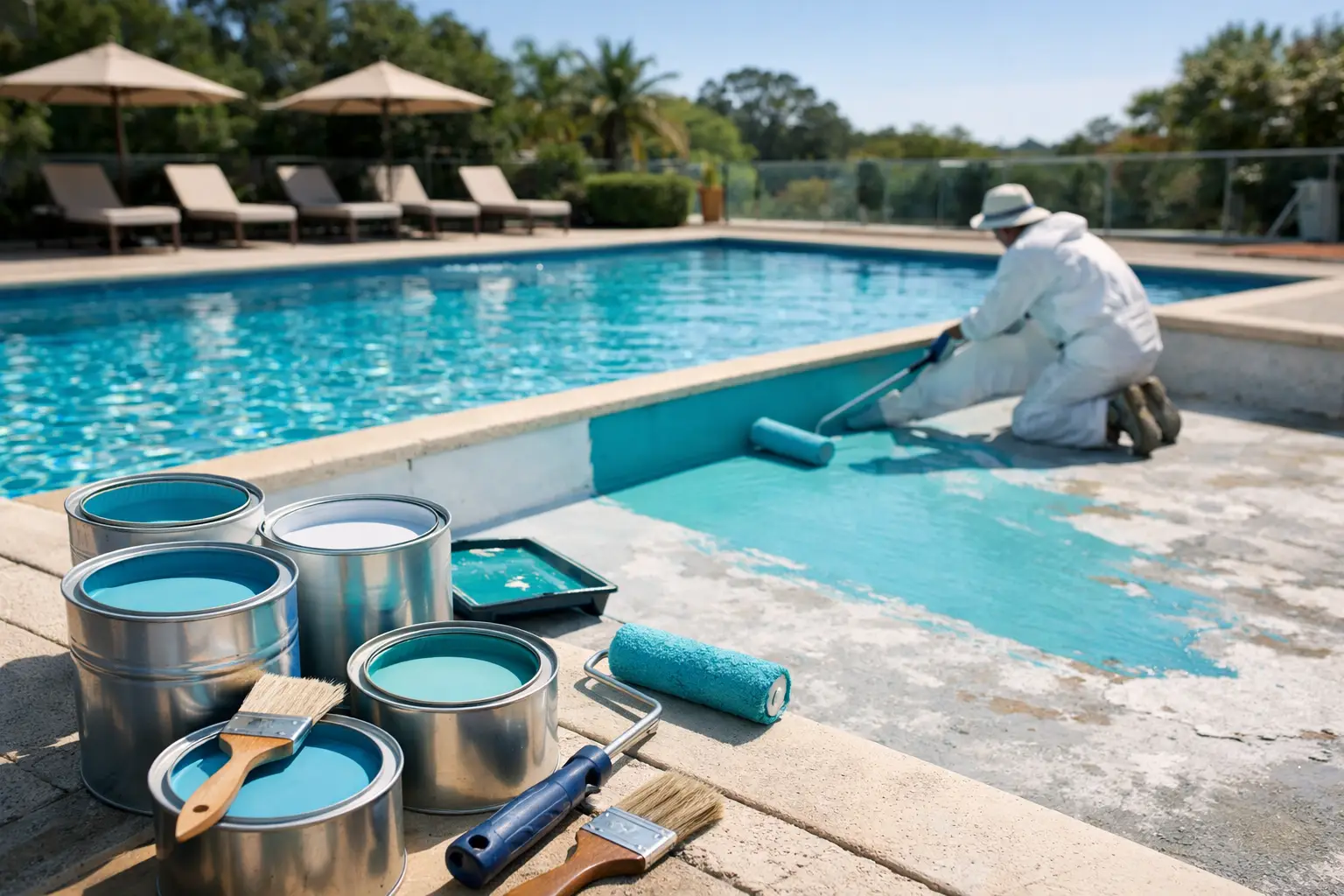
A pool repaint is only as good as the coating system underneath it. The wrong product can look fine for a few months, then blister, peel or wear away once chlorine, sun and pool traffic get to it. This pool repaint product selection guide helps you choose an epoxy system that suits your pool surface, existing coating and the condition of the shell before you spend money on paint.
For most concrete and previously painted fibreglass pools, a proper two-pack epoxy pool coating is the long-lasting option when the surface is prepared correctly. But epoxy is not a shortcut over loose paint, moisture problems or an unknown coating. Start with the surface, then choose the product.
Start with the pool surface and existing paint
Before selecting a pool paint, work out exactly what you are painting. Concrete, fibreglass and previously painted surfaces can all need a different approach. The biggest repainting mistake is choosing a coating first and asking compatibility questions later.
A bare concrete pool needs a coating designed to bond to mineral surfaces and cope with permanent water immersion. New concrete must also be properly cured before painting. If the pool has been painted before, the old coating matters just as much as the concrete underneath it.
A fibreglass pool is different. The shell moves slightly over time, and its gelcoat or old paint needs careful cleaning, sanding and compatibility checking. Do not assume a coating that worked on a neighbour’s concrete pool will suit a fibreglass shell. If the surface is bare fibreglass, damaged gelcoat, or has an unknown previous coating, get technical advice before ordering.
Identify the old coating before repainting
If the existing paint is sound, firmly bonded and compatible, repainting can be straightforward. If it is peeling, chalky, soft or bubbling, it is a surface failure that needs to be dealt with before new paint goes on.
Look for these signs:
- Paint lifting in sheets or flakes, usually caused by poor adhesion or moisture beneath the coating.
- A white, powdery surface that rubs onto your hand, often called chalking.
- Blisters or bubbles, which can point to trapped moisture, chemical damage or coating failure.
- Soft or rubbery paint that marks easily, suggesting the old product may not be suitable for an epoxy topcoat.
A simple adhesion check can help. Cut a small crosshatch into an inconspicuous dry area, press strong tape over it, then pull the tape away sharply. If paint comes off with the tape, do not paint over it. Remove the failed coating and prepare the surface properly.
If you cannot identify the existing coating, treat it cautiously. An epoxy coating may not bond reliably to every old paint type. In that situation, testing a small prepared patch or speaking with Pool Paint Sydney’s technical team is cheaper than repainting the whole pool twice.
Why epoxy is usually the right pool repaint product
Pool paint lives in a hard environment. It sits under water, copes with chlorine and salt, handles cleaning, and in Australian pools it is exposed to strong UV whenever the water level drops or the pool is empty. Standard exterior paint is not made for this job.
Two-pack epoxy pool paint is made for immersion and offers strong adhesion, chemical resistance and surface durability. It is the practical choice for pool owners who want a finish that can stand up to regular use, provided the preparation and application are done properly.
The trade-off is that epoxy demands more care than a basic one-pack coating. You need to mix the components accurately, work within the product’s pot life, apply it at the recommended spread rate and allow the full cure period before filling the pool. Skipping any of those steps can shorten the life of an otherwise good coating.
For concrete pools, choose a high-performance epoxy pool coating system that is specified for swimming pool use, not a general-purpose epoxy floor product. For fibreglass pools, confirm the coating is suitable for the existing surface and follow the recommended preparation method exactly. Product suitability is not just about what the tin says. It is about the complete system: substrate, preparation, primer if required, coating and cure time.
Pool repaint product selection guide: choose by condition
The fastest way to choose the correct system is to match it to the problem in front of you.
Sound, previously painted concrete pool
If the existing coating is well bonded and in reasonable condition, clean it thoroughly, remove contaminants, sand to create a sound keyed surface and repair any cracks or defects before applying the epoxy coating. This is often the most efficient repaint scenario because you are not starting from bare concrete.
Do not confuse faded paint with failed paint. Fading can be cosmetic, while peeling is an adhesion problem. A faded but firmly bonded coating may be suitable for repainting. A peeling one is not.
Bare or stripped concrete pool
Bare concrete needs more preparation than most people expect. Remove dirt, algae, oils, laitance and loose material. The surface must be clean, dry and mechanically sound. Acid washing may be part of the preparation process where appropriate, but it must be followed by thorough rinsing and neutralising as required. Residue left in the pool can affect adhesion.
Check for moisture issues before coating. If water is pushing through the concrete or the surface remains damp, fix that problem first. Paint cannot stop active water pressure from behind the shell. Applying epoxy over moisture is a common cause of blistering and delamination.
Peeling or failed pool paint
Do not try to seal peeling paint under a fresh coat. Remove every loose or poorly bonded section, feather the edges and assess how widespread the failure is. If the paint is lifting across large areas, full removal is usually the safer option.
The cause also matters. Poor preparation, painting over chalking, incompatible products, incorrect mixing, painting in unsuitable weather and filling too early can all lead to failure. Unless you address the original cause, a new coating can fail in the same way.
Fibreglass pool with dull or worn paint
A painted fibreglass pool can often be recoated successfully, but only if the old finish is stable and properly prepared. Remove waxes, oils and sunscreen residue, sand thoroughly for adhesion and repair any cracks or damage before coating. If the pool has a gelcoat rather than paint, confirm that the selected epoxy system is suitable before proceeding.
Avoid guessing on fibreglass. A quick compatibility check can prevent a costly reaction or poor bond.
Calculate paint quantity before you buy
Running short of paint halfway through the final coat is a problem you can avoid. Work out the total internal pool area, not just the water volume. Measure the floor, walls, steps, benches and any ledges.
For a basic rectangular pool, calculate the floor area by multiplying length by width. Then add the wall area by multiplying the perimeter by the average depth. Add steps and benches separately. Freeform pools need a more careful estimate, but measuring sections and adding them together will give you a usable result.
Once you have the square metre area, check the manufacturer’s stated coverage rate for the chosen epoxy system. Coverage changes with surface profile, porosity and application method. Rough or previously stripped concrete uses more paint than a smooth, sound surface, so allow a sensible margin rather than ordering to the exact minimum.
Most pool epoxy systems require multiple coats. Calculate quantity for the full specified system, not one coat. Buying enough product from the same batch where possible also helps keep colour consistent.
Preparation decides whether the coating lasts
Even the best epoxy pool paint will fail if it is applied over dust, algae, grease, loose paint or a damp surface. Preparation is not the boring part of the job. It is the job.
Drain the pool completely and allow enough time for the shell to dry. Clean away all contaminants, repair cracks and hollow areas, remove loose material, then sand or mechanically abrade the surface to create a key. Vacuum thoroughly before coating. A clean-looking pool is not necessarily a paint-ready pool.
Choose application weather carefully. Avoid painting when rain, heavy dew, extreme heat or high humidity could affect the coating. In Sydney and across Australia, early planning matters. A hot day can reduce working time after mixing, while a cool or damp period can delay cure.
Mix only the amount you can apply within the stated pot life. Measure accurately and follow the induction time, thinning guidance and recoat window on the product instructions. Do not add extra solvent to make the paint go further. That can reduce film build and compromise the coating.
Buy the system, not just a tin of paint
The correct purchase may include more than the topcoat. Depending on the surface condition, you may need repair materials, cleaning products, preparation tools and enough epoxy for the required number of coats. A cheaper coating is not cheaper if it fails early or leaves you short on the second coat.
Choose a pool-specific epoxy system backed by clear technical instructions and support. BG Coatings epoxy pool coatings supplied by Pool Paint Sydney are designed for the demands of concrete and suitable fibreglass pool repainting, including chemical exposure, UV and daily surface wear.
Before ordering, have four details ready: your pool surface, whether it has been painted before, the current condition of the coating and the total area to be painted. That information makes it far easier to buy the correct system the first time and avoid the usual repainting mistakes.
A successful pool repaint does not come from applying more paint over a problem. It comes from choosing a compatible epoxy system, preparing the surface without shortcuts and allowing the coating the time it needs to cure before the pool goes back into service.