
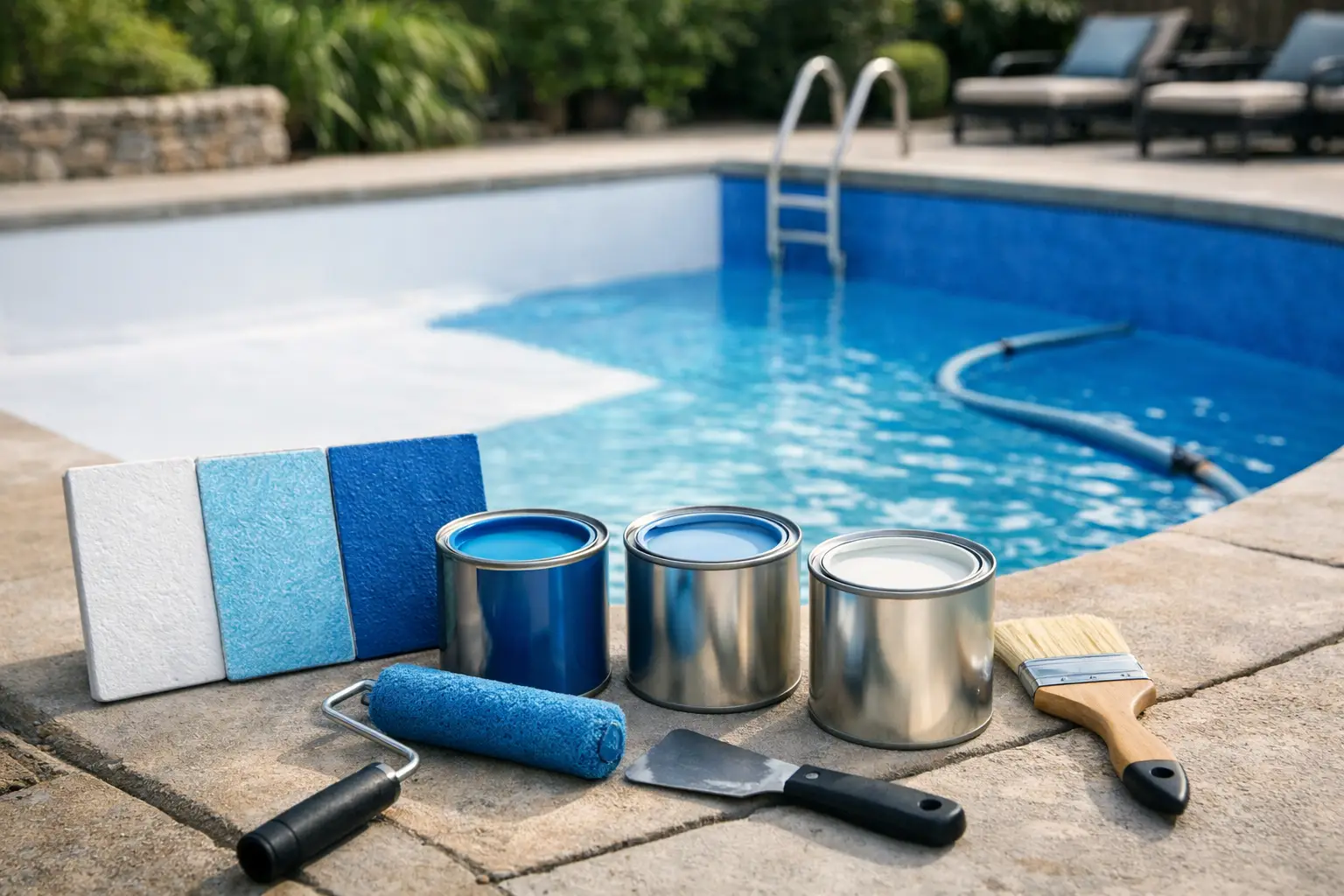
A pool that is peeling, chalky or badly stained does not need the cheapest tin of paint. It needs a coating system that matches the pool surface, the existing finish and the condition of the shell. When you compare pool coating system options, the biggest mistake is treating all pool paints as interchangeable. They are not.
The correct choice starts with two questions: what is your pool made from, and what is currently on it? Get either answer wrong and even a quality coating can fail early.
The pool coating systems worth comparing
For most repainting jobs, pool owners will come across epoxy, acrylic and older rubber-based pool paint systems. Each has a place, but they do not offer the same durability, preparation requirements or compatibility.
Two-pack epoxy pool coating
A two-pack epoxy system is the serious option for concrete pools and suitable fibreglass pools that need a durable, chemical-resistant finish. It is made by mixing a resin with a hardener before application. Once cured, it forms a hard coating designed to stand up to pool chemicals, regular cleaning and surface wear.
This is usually the best choice when a concrete pool has been stripped back, when old paint has failed, or when you want the longest-lasting repaint rather than a short-term cosmetic fix. A properly prepared epoxy coating also gives a smoother, more substantial finish than many single-pack alternatives.
The trade-off is preparation. Epoxy is not forgiving of poor adhesion, damp surfaces, loose old paint or incorrect mixing. Concrete must be clean, sound and properly profiled. Any peeling sections need to be removed, and repairs must be completed before coating begins. If moisture is coming through the concrete, that issue needs attention first.
For a pool owner prepared to do the groundwork properly, epoxy is generally the system that offers the best value over time. It costs more upfront than basic paint, but repainting a failed pool every few years costs far more in labour, materials and frustration.
Acrylic pool paint
Acrylic pool paint is a single-pack option often chosen because it is simpler to apply and easier to touch up. It can suit some pool surfaces and can be useful where compatibility with an existing acrylic coating has been confirmed.
The drawback is service life. Acrylic coatings are generally softer and less resistant to chemical exposure and abrasion than a quality epoxy system. In a heavily used pool, or a pool exposed to strong summer sun and variable water chemistry, an acrylic coating may need attention sooner.
Acrylic can make sense if you need a lower-cost refresh and accept that it is not the longest-life option. It is not the right answer for every old painted pool, particularly where you are trying to cover a failed or unknown coating. Applying acrylic over an incompatible surface can leave you back at the peeling stage quickly.
Rubber-based and chlorinated rubber coatings
Rubber-based pool paints were common on older pools, so they still appear in repainting decisions. The problem is not that every existing rubber coating must be removed immediately. The problem is assuming a modern coating will bond to it without checking.
Some old rubber finishes soften or react when the wrong solvent or topcoat is applied. Others may be heavily chalked, porous or close to the end of their life. If you cannot identify the existing coating, do not guess. A small test area, a solvent test and advice based on the pool’s history are far cheaper than recoating the entire shell after a failure.
For a pool you want to restore for the long term, removing unstable old paint and moving to a compatible epoxy system is often the better decision. It takes more preparation, but it gives you a known starting point.
Compare pool coating system options by pool surface
The material beneath the paint matters as much as the paint itself.
Concrete pools
Concrete is the most common candidate for epoxy coating. It is stable, durable and well suited to a hard two-pack finish, provided the surface is prepared correctly. Bare concrete needs cleaning and profiling so the coating can bond. Old concrete may also need crack repairs, patching and removal of weak or chalking paint.
If the pool has previously been painted with epoxy and the existing coating is sound, recoating can be more straightforward. The surface still needs a thorough clean and mechanical abrasion to create a key. Never assume a clean-looking epoxy surface is ready for paint without sanding or preparing it as specified.
If the concrete is bare or has widespread paint failure, do not try to hide the problem under extra coats. Remove loose material first. Paint only adheres as well as the surface beneath it.
Fibreglass pools
Fibreglass pools require a different approach because the surface is not porous concrete. The gelcoat or previous coating must be thoroughly cleaned, degreased and sanded to create adhesion. Wax, sunscreen residue, oils and polishing products can all interfere with coating bond.
A suitable epoxy system can provide a durable refurbishment option for a tired fibreglass pool, but surface condition is critical. If the fibreglass is flexing, blistering, badly crazed or showing structural damage, painting alone will not solve it. Complete those repairs before selecting a coating system.
For fibreglass, avoid buying based on colour alone. Confirm the product is suitable for fibreglass and follow the specified preparation process. Skipping sanding because the shell looks smooth is one of the quickest ways to create a peeling problem.
What actually causes pool paint to peel?
Most paint failures are preparation or compatibility failures, not simply bad paint. The common causes are familiar:
- Coating over loose, chalky or poorly bonded old paint.
- Applying epoxy over an incompatible coating without testing or removing it.
- Painting a damp concrete surface or one affected by moisture pressure.
- Inadequate cleaning, especially oils and contaminants on fibreglass.
- Incorrect mixing ratio, missed induction time or poor pot-life management with two-pack epoxy.
- Applying too thinly, too heavily, or outside the recommended weather conditions.
Sydney and Australian summer conditions add another consideration. A hot surface can shorten working time, while rain, humidity and cool nights can affect cure. Plan the job around the product’s application and curing window, not just the first sunny day you have free.
Choose the system based on the job, not the label
If your concrete pool is bare, stripped or suffering widespread old-paint failure, a high-performance two-pack epoxy system is usually the sensible choice. It gives the strongest path to a long-lasting result, but only after proper surface preparation.
If you are recoating a sound existing acrylic finish and need a simpler short-term refresh, a compatible acrylic coating may suit. Confirm compatibility first. If the existing coating is unknown, deteriorated or rubber-based, pause before ordering. Identify it or prepare to remove it rather than gambling on adhesion.
For a fibreglass pool, choose an epoxy coating specifically suitable for fibreglass, then put most of your effort into cleaning and sanding. The coating can only perform if it has something solid to grip.
Pool Paint Sydney supplies BG Coatings epoxy pool paint systems for concrete and fibreglass pools, with practical support to help you select the right system before work starts.
Do not underestimate paint quantity
Buying too little paint often leads to thin coats, missed areas or a rushed attempt to stretch material further than it should go. Buying too much wastes money, particularly with mixed two-pack products that have a limited pot life.
Measure the pool floor, walls, steps, ledges and any internal features. Multiply length by width for the floor, then calculate each wall separately using its average depth. Add the areas together and allow for the number of coats required by the system. Rough, porous concrete can use more product than a smooth previously painted surface.
Coverage figures are a guide, not a promise. Surface profile, roller method and repair work affect actual usage. If your calculation is close to the limit, allow enough material to achieve the required film build rather than trying to make a kit go further.
The decision that saves the most money
The best coating system is rarely the quickest or cheapest option at the checkout. It is the one that suits the existing surface and is applied over proper preparation. For most concrete and fibreglass restoration jobs where durability matters, a compatible epoxy system is the stronger choice.
Before you buy, identify the existing finish, inspect the surface for failure, calculate the area accurately and choose the coating system that matches the job. That is how you avoid painting the same pool twice.