
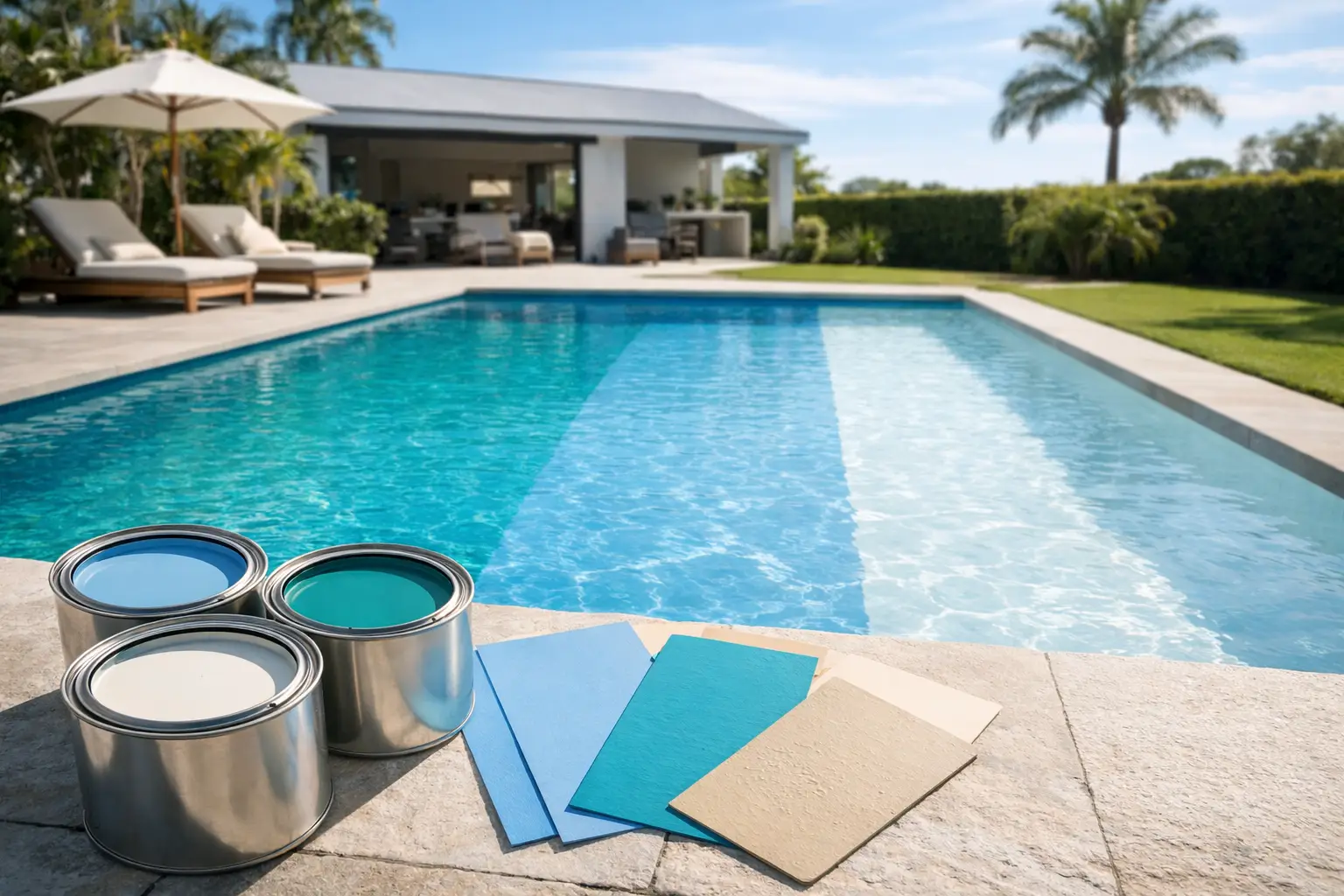
A pool can be structurally sound and still look tired because the existing coating has faded, stained or started to peel. When comparing the top pool paint colours Australia pool owners choose, colour matters, but it should not be the first decision. The right epoxy system, correct surface preparation and enough product for the required coats determine whether the finish lasts.
For a repaint that looks good beyond the first summer, choose the colour after confirming your pool surface and existing coating are suitable for epoxy paint.
Top pool paint colours in Australia
Blue remains the standard for good reason. It gives pool water a clean, inviting look, works with most Australian backyards and does a better job of disguising minor marks than white. But not every blue produces the same result. Water depth, direct sunlight, surrounding paving and even nearby trees all change how the finished colour appears.
Light blue for a bright, classic pool look
Light blue is a popular choice for older concrete pools and smaller backyard pools. It makes the water look fresh and can make a compact pool feel more open. In Sydney, where intense sun can make a pool surface appear lighter than it does indoors, a light blue coating often delivers the familiar resort-style blue many owners want.
The trade-off is maintenance visibility. Light colours show leaf stains, dirt, algae marks, iron staining and calcium deposits sooner. If the pool sits under gums or jacarandas, expect to see more between cleans. That does not make light blue a bad choice, but it does mean water balance and regular cleaning need to be kept under control.
Mid blue for the best all-round result
Mid blue is usually the safest option when you want a practical colour that still looks sharp. It creates a clear blue water appearance without showing every small mark as readily as white or pale blue. It also suits most pool shapes, from older kidney-shaped concrete pools to modern rectangular designs.
For many repainting jobs, mid blue is the sensible middle ground. It is bright enough to lift a faded pool but forgiving enough for busy family pools, properties with surrounding gardens and pools that get regular use.
Dark blue for deeper-looking water
Dark blue gives water a deeper, stronger look. It can suit larger pools, dramatic landscaping and modern outdoor areas where the pool is intended to be a feature. It can also hide some general grime better than pale colours.
However, dark colours are not maintenance-free. Calcium scale, dust, sunscreen residue and scratches can be more noticeable against a dark finish. Dark blue also absorbs more heat, which may slightly affect surface temperature in full sun. If your pool has ongoing calcium problems or you know the water chemistry has been hard to manage, solve that issue before choosing a dark colour.
White and very pale colours
White epoxy pool paint can look crisp, especially in a formal or coastal-style backyard. It gives the water a pale aqua appearance in shallow areas and can make steps, ledges and the pool floor easy to see.
It is also the least forgiving option. White shows staining, algae discolouration, dirt and mineral deposits quickly. A white pool needs consistent chemical management and cleaning. It is best for owners who want that bright look and are prepared to maintain it, rather than those hoping a new coating will hide an existing water-quality problem.
Grey and contemporary neutral colours
Grey can produce anything from soft blue-grey water to a darker, more reflective look, depending on the shade and surroundings. It suits contemporary homes, charcoal paving and minimalist landscapes. It can be a good alternative when standard blue does not suit the rest of the outdoor area.
Before committing, consider visibility. Very dark grey can make it harder to see the floor in deeper water, particularly late in the day. This is a practical consideration for families with children, not just a design choice.
Choose colour based on the pool, not a paint chart
A paint colour sample is useful, but it cannot show exactly how a full pool will look once it is under water and exposed to daylight. The water itself acts like a filter. A colour that appears strongly blue in the tin may look lighter in a shallow pool, while the same coating can appear deeper in a pool with a dark surrounding fence or dense landscaping.
Start with the pool’s depth and setting. Pale blue and white generally make shallow pools look lighter and more open. Mid and dark blues create more depth. Grey may suit the home better, but the exact water colour is less predictable than many people expect.
Also look at what the colour needs to hide. A pool beneath trees, near unsealed areas or used heavily by kids will generally be easier to live with in mid blue than bright white. If staining is already a problem, do not choose a colour to disguise the cause. Treat the water chemistry, remove staining where possible and prepare the surface properly before coating.
The right epoxy paint matters more than the shade
The best-looking colour will fail if it is applied over a weak, chalky or incompatible surface. Peeling pool paint is usually not caused by the colour. It is caused by poor preparation, moisture, contamination, applying over unsound old paint or using a coating system that does not suit the substrate.
Before buying paint, identify whether the pool is concrete, fibreglass or another surface. Then assess the existing finish. Is it sound and well bonded? Is it powdery when rubbed? Are there bubbles, flaking patches, rust marks, osmosis issues or previous repairs? These answers affect the preparation work and whether an epoxy coating is the correct system.
For concrete pools, preparation commonly involves removing failed paint, cleaning contaminants, repairing cracks and checking that the surface is dry and properly prepared for the coating. For fibreglass pools, thorough cleaning, sanding and repairing damaged areas are critical. A glossy or contaminated fibreglass surface gives paint very little to grip.
Do not assume a new coat will bond because the old paint looks mostly intact. Test adhesion in several areas, particularly around steps, waterline tiles, corners and previous repair patches. If old paint is lifting, paint applied over it is likely to lift with it.
Avoid costly colour and quantity mistakes
Colour choice is one part of the purchase. Quantity is the other. Running short halfway through a coat can create visible lap marks and inconsistent film thickness. Buying too little also encourages people to stretch the product, which reduces protection and can shorten the life of the coating.
Measure the pool carefully: length, width, average depth, walls, floor, steps, ledges and any spa section. Do not rely only on the pool’s water volume. Paint coverage is based on surface area, and rough concrete uses more coating than a smooth surface. Two proper coats are normally the goal for an even, durable epoxy finish, so calculate for the full system rather than one thin coat.
It is also worth checking the application window before ordering. Epoxy coatings have specific requirements for surface dryness, temperature, humidity, mixing and recoat times. Australian weather can work against a repaint, especially when rain, overnight dew or extreme heat is expected. Plan the job so the pool can stay empty and protected for the full preparation, application and curing period.
A practical way to make the final choice
If you want the least risky colour decision, choose mid blue. It suits most Australian pools, gives a clean water colour and is more forgiving than very light or very dark finishes. Choose light blue if a bright, open look is the priority and you can stay on top of cleaning. Choose dark blue or grey when the pool design and surrounding landscape call for it, while accepting that scale and surface marks may stand out differently.
Then confirm the coating system before you order. Pool Paint Sydney can help you match an epoxy pool paint system to your concrete or fibreglass surface, work out quantity and avoid buying a product that will not bond properly. A clear photo of the pool, details of the existing paint and accurate measurements make that advice far more useful.
A fresh pool colour should be the reward at the end of a properly planned repaint, not the thing that distracts from preparation. Get the surface and epoxy system right first, then choose the shade you will be happy to look at every day.