
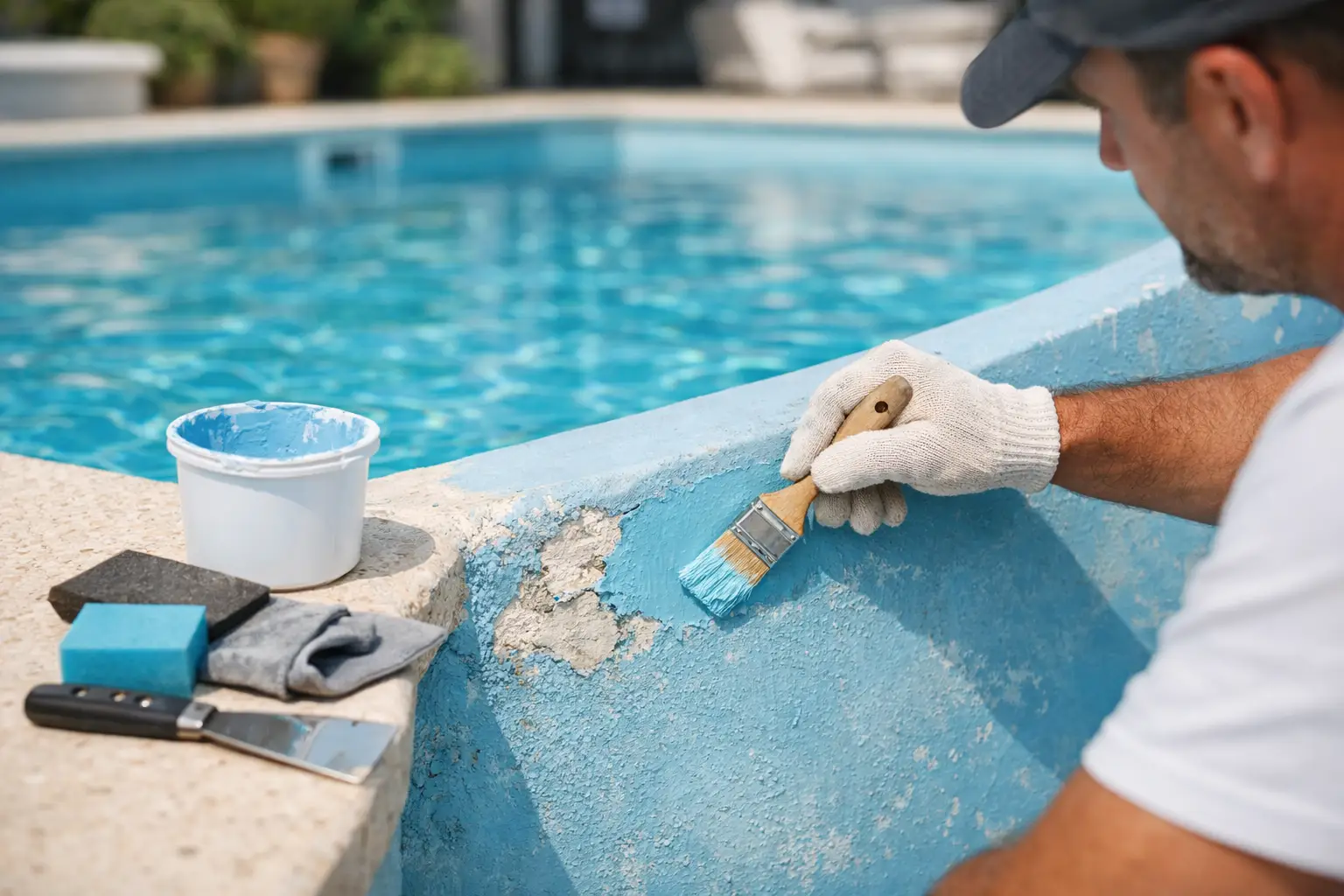
If you are searching for how to patch pool paint, the first thing to know is this: a patch only works if the existing coating is still sound around the damaged area. If the paint is already peeling, chalking, or lifting in multiple spots, a small repair usually turns into a short-term fix that fails again once the pool is filled.
That is where many pool owners waste money. They touch up the obvious bare patch, fill the pool, and a few weeks later another section lets go. The issue was not the patch itself. It was the condition of the old coating underneath and around it.
When patching pool paint makes sense
Patching is worth doing when the damage is isolated and the surrounding paint is still firmly bonded. Typical examples are a scraped step edge, a small worn patch near the waterline, or a localised repair after minor surface work.
If the pool has broad peeling, blistering, flaking, or different layers of old unknown paint systems, patching is usually the wrong call. In that case, you are better off preparing for a full repaint with the correct epoxy system. That gives you a consistent finish and a much better chance of long-lasting results.
A simple test helps here. Use a scraper or strong tape on the paint around the damaged spot. If more coating lifts easily, stop thinking patch repair and start thinking full coating failure.
Why pool paint patches fail
Most patch jobs fail for predictable reasons. The old surface was not prepared properly, the wrong product was used, or the repair was applied over unstable paint.
In Australian conditions, sun exposure, pool chemicals, and heat put extra stress on any weak point. A pool might look fine when empty, then once it is back in service the patch edge starts to lift or discolour.
The most common causes are poor adhesion, moisture in the substrate, painting over chalky or degraded paint, and mixing incompatible coatings. If your existing pool is coated in epoxy, patch it with the correct epoxy pool paint system. Do not guess. Putting a different paint type over an existing coating is one of the fastest ways to create a bigger failure.
How to patch pool paint step by step
1. Identify what paint is already on the pool
This is the decision that matters most. If the existing coating is epoxy, use epoxy for the patch. If you do not know what is on the pool, be careful. A patch with the wrong paint might look fine at first and then fail once submerged.
If the pool was previously painted with a two-pack epoxy and the surrounding coating is still hard and well bonded, a compatible epoxy repair is usually the best option. For concrete and fibreglass pools, choosing the right system first saves a lot of rework.
2. Check whether the damage is local or widespread
Look past the obvious bare section. Check steps, corners, waterline areas, returns, and any place with previous peeling. If you find multiple weak spots, patching may not be worth the effort.
You want firm edges, no flaking, and no powdery residue. If the paint rubs off in your hand or sounds hollow when scraped, the coating has likely reached the end of its life.
3. Remove all loose and failed paint
This part needs to be thorough. Scrape back every loose edge until you reach sound material. Do not leave feathered edges that are still lifting, because the new paint will only stick to that unstable layer.
For small repairs, mechanical abrasion is usually enough. Sand the damaged area and extend beyond it into the solid coating so the patch can bond properly. The goal is a clean, firm, dull surface, not a glossy one.
4. Clean the surface properly
Dust, grease, sunscreen residue, mineral deposits, and chalky paint all interfere with adhesion. After sanding, vacuum or wash away dust and let the area dry fully.
If the pool surface has contamination from algae treatment, salt, or calcium, clean that off before painting. A patch over contamination often looks like a paint problem, but it is actually a prep problem.
5. Repair the substrate if needed
If the damaged area has exposed concrete, pinholes, or minor surface defects, deal with those before painting. Paint is not a filler. It will not hide rough repairs or bridge unstable sections.
For concrete pools, any spalled or rough area should be made sound first. For fibreglass, the surface needs to be stable and correctly prepared before coating. The patch should restore the coating system, not try to fix structural defects with paint alone.
6. Apply the correct epoxy pool paint
Once the area is sound, clean, and dry, apply the epoxy pool paint according to the product instructions. Mix accurately. Two-pack epoxy is not forgiving if the ratio is wrong or if it is applied outside the recommended conditions.
Feather the repair into the surrounding area as neatly as possible, but be realistic: a patch may still show slightly, especially if the existing paint has faded. That is cosmetic. What matters is adhesion and durability.
In many cases, if the patch area is visible and the pool coating is older, it makes more sense to repair the local damage and then recoat the whole surface for a uniform finish.
How to patch pool paint without creating a bigger repaint job
The safest approach is to treat the patch like a mini coating job, not a quick touch-up. That means proper abrasion, proper cleaning, and using a paint system designed for immersion.
Do not use leftover shed paint, general-purpose epoxy, or a one-coat fix sold as a shortcut. Swimming pools are a harsher environment than most painted surfaces. Water immersion, chlorine, salt systems, and UV all expose weak products very quickly.
It is also worth paying attention to timing. If the pool shell is damp, or if you are trying to rush the cure window because rain is coming, hold off. A failed patch costs more than waiting an extra day for better conditions.
When a full repaint is the better buy
A lot of buyers ask for patch paint when what they really need is a fresh coating system. If the old pool paint is faded across the whole pool, if there are multiple peeling areas, or if the previous paint type is unknown, a full repaint is usually the smarter spend.
This is especially true for older concrete pools around Sydney and coastal areas where UV, weather swings, and chemistry issues have already stressed the surface. Patching one section of a worn-out coating does not reset the life of the rest of the pool.
If you want a longer-lasting result, choose the right pool paint and coat the pool properly once, instead of chasing repair spots every season.
Choosing the right product for the repair
For most serious patch and repaint work, epoxy pool paint is the right system where compatibility allows. It offers stronger adhesion, better chemical resistance, and better durability than lower-grade alternatives when applied over a properly prepared surface.
The key is matching the product to the pool surface and the existing coating. Concrete and fibreglass pools can both perform well with the correct epoxy system, but product choice and preparation still matter.
If you are unsure what coating is on your pool now, get that sorted before you buy. Guessing is expensive. The right system the first time is always cheaper than stripping failed paint later.
For buyers ready to repair or recoat, Pool Paint Sydney supplies epoxy pool coatings designed for Australian conditions and can help you work out which system suits your pool, how much paint you need, and whether a patch is actually worth doing.
A few mistakes to avoid
Do not patch over peeling edges and hope the new coat will hold them down. It will not. Do not paint over damp surfaces. Do not mix coating types. And do not assume a small damaged area means a small problem.
Most pool paint failures come back to product choice and preparation. Get those two right, and a patch has a fair chance of lasting. Get them wrong, and even the best-looking repair will be temporary.
If your pool only has one or two isolated damaged areas, a well-prepared epoxy patch can be a sensible fix. If the coating is failing more broadly, the better decision is usually to stop patching, choose the correct pool paint system, and repaint it properly once.