
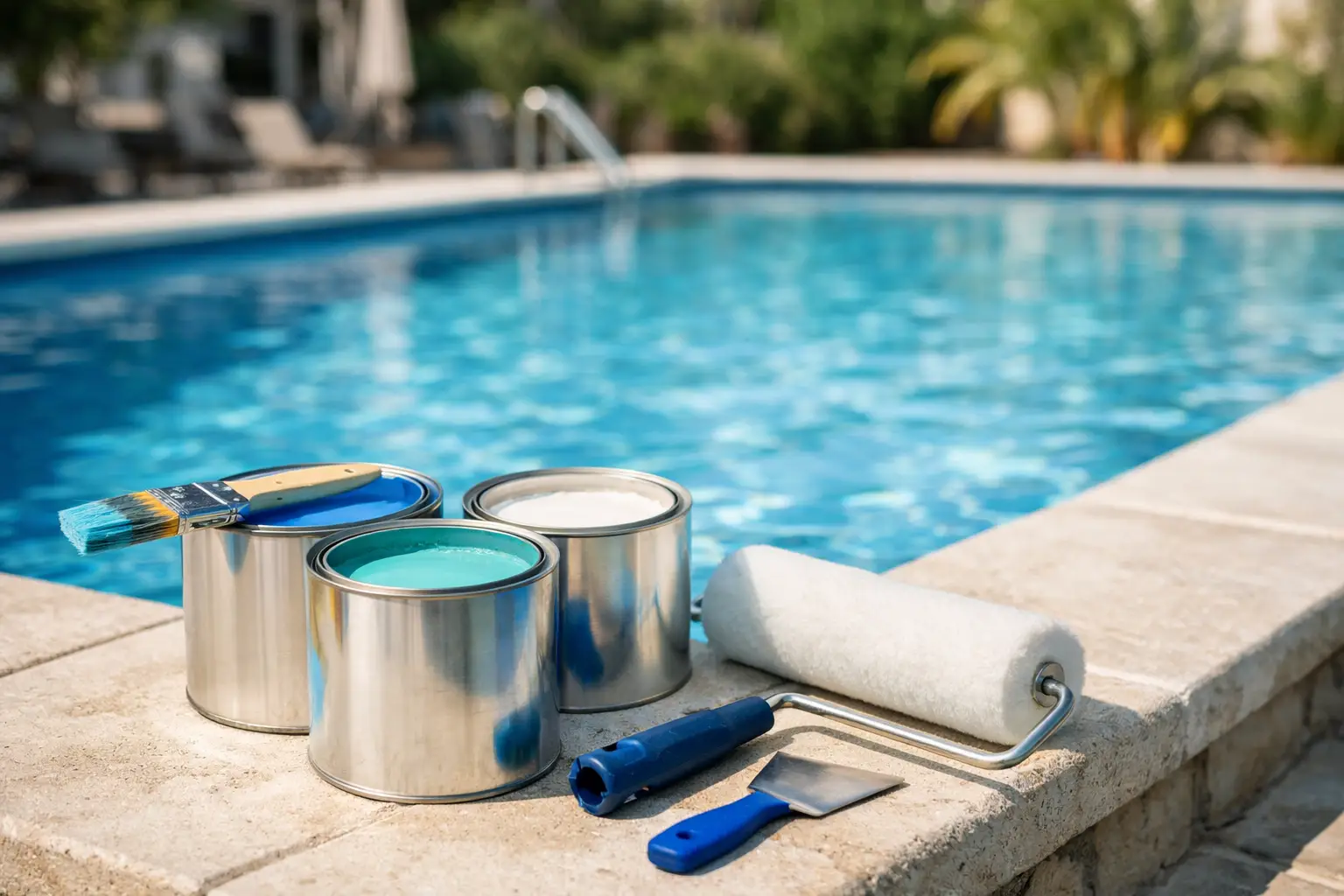
If you are asking what pool paint lasts longest, you are usually asking a second question too – what will not peel, chalk, fade or need doing again in two years. That is the real issue for most pool owners. You do not want the cheapest tin. You want the system that survives Australian sun, pool chemicals and day-to-day wear without turning into another repair job.
The short answer is this: for most concrete and fibreglass pools, a high-quality epoxy pool paint lasts longer than acrylic or rubber-based alternatives. But that only holds true if you use the right product for the surface and prepare that surface properly. The longest-lasting paint on paper will still fail early if it is applied over loose paint, moisture, grease or the wrong existing coating.
What pool paint lasts longest on Australian pools?
In real repainting jobs, epoxy pool paint is generally the longest-lasting option.
That is because epoxy forms a harder, more chemical-resistant coating than older one-pack systems. It stands up better to chlorine, salt, cleaning, abrasion and UV exposure, which matters in Australia where pools cop a lot of sun. It also gives a denser finish, so it is less likely to soften, wear thin or break down quickly when the pool is in regular use.
For pool owners deciding between systems, the usual order of durability looks like this:
- epoxy pool paint lasts the longest
- chlorinated rubber lasts less time and is less common as a long-term choice
- acrylic pool paint is usually the shortest-term option
That does not mean every epoxy is equal. Cheap epoxy coatings can still underperform. The quality of the resin system, the amount applied and the compatibility with your pool surface all matter.
Why epoxy usually outlasts other pool paints
The reason is not marketing. It comes down to how the coating cures and what it is designed to handle.
A proper two-pack epoxy coating chemically cures into a harder film. That makes it more resistant to pool water, sanitiser, surface wear and cleaning. If the pool is concrete, epoxy also bonds well when the surface is correctly etched and prepared. If the pool is fibreglass, the right epoxy system can give a tough refurbishment layer that holds up far better than general-purpose paint.
Acrylic paints are easier and cheaper, but they are usually chosen when budget matters more than lifespan. They can look good at first, but they do not usually offer the same resistance to harsh pool conditions. That often means repainting sooner.
Chlorinated rubber was once common in pools, but it is not the first choice when someone wants maximum durability. It can still have a place in some repaint situations, especially where compatibility with an existing coating matters, but it is not usually the answer to what pool paint lasts longest.
The biggest reason long-lasting pool paint still fails
Most pool paint failures are not caused by the paint itself. They are caused by choosing the wrong system or skipping proper prep.
This is where people lose money. They buy a coating based on price, roll it over an unknown old surface, and hope for the best. Then the paint blisters, lifts or peels once the pool is filled.
Common causes of early failure include poor surface preparation, painting over old unsound paint, moisture in concrete, incorrect primer use, applying too thinly, or using a coating that is not compatible with the existing surface. Even using the right epoxy over a pool that still has loose chlorinated rubber underneath can cause problems.
So if you want the paint that lasts longest, do not just compare product labels. You need to know what is already on the pool, what the substrate is, and whether the surface is stable enough to coat.
What pool paint lasts longest for concrete pools?
For concrete pools, epoxy is usually the best long-term choice.
Concrete is porous and needs a coating that can bond strongly and resist constant immersion. A quality epoxy system is well suited to that, especially on bare concrete or concrete that has been fully stripped and prepared. If the pool has patch repairs, surface wear or previous paint failure, epoxy is often the system used when the goal is to reset the surface properly and get a durable result.
The key is preparation. Concrete needs to be clean, sound and correctly profiled. That may involve acid etching, grinding, patching, removing failed paint and allowing the shell to dry properly before coating. If any of those steps are rushed, even the best epoxy can fail.
For older painted concrete pools, you also need to identify the existing coating before repainting. If you do not know what is on there, you are guessing. That is how people end up with compatibility issues and peeling between layers.
What lasts longest for fibreglass pools?
Fibreglass pools are different. You are not painting porous concrete. You are coating a smooth, non-porous shell that needs the correct refurbishment system.
In many fibreglass pool repaint jobs, epoxy still gives the best long-term outcome when it is the right product for the surface and the prep is done properly. The shell needs to be degreased, sanded and repaired where needed so the coating has a stable profile to grip to. If the pool has osmosis issues, chalking gelcoat or previous coating failure, those problems need to be fixed first.
This is where product choice really matters. Not every paint sold as pool paint is suitable for fibreglass. If you want the coating to last, use a system designed for pool refurbishment rather than a general paint that happens to mention water resistance.
How long should pool paint actually last?
There is no honest one-number answer because lifespan depends on the surface, product quality, prep and exposure.
That said, a properly applied epoxy pool coating generally lasts significantly longer than lower-grade alternatives. In real conditions, it is the system most people choose when they want to avoid frequent repainting. If someone asks for the longest-lasting option rather than the cheapest short-term fix, epoxy is usually where the conversation ends.
If a pool has heavy use, aggressive chemical imbalance, constant direct sun, poor water maintenance or structural movement, the lifespan can be shorter. If the pool is prepared properly, coated at the correct film build and maintained well, the result can last much better.
The practical takeaway is simple: the product matters, but the job matters just as much.
How to choose the right long-lasting pool paint
Start with the pool surface. Is it concrete or fibreglass? Then work out what coating is currently on the pool, if any. If the existing paint is unknown, treat that seriously rather than making assumptions.
Next, look at the condition of the shell. Is the old coating peeling? Is the surface chalky? Are there repairs needed? Is there moisture coming through the concrete? These issues need fixing before paint selection even starts.
Then choose a system based on compatibility and lifespan, not just price. If your goal is to get long-lasting results and avoid doing the job again too soon, a high-performance epoxy pool coating is usually the right direction.
You also need enough paint. Under-ordering is a common mistake. If the coating goes on too thin, durability drops. Coverage rates vary by product and surface texture, so calculate properly before ordering.
For buyers who are ready to repaint, this is where specialist advice helps. Pool Paint Sydney focuses on epoxy pool coatings for concrete and fibreglass pools and helps customers choose the correct system, work out quantity and avoid the common mistakes that lead to failure.
What to avoid if you want the longest lifespan
If you are trying to get the most life out of a pool coating, avoid treating pool paint like standard house paint. It is not the same job.
Do not paint over peeling material just to save time. Do not assume all pool paints are interchangeable. Do not choose a cheaper system if the only reason is the upfront price, because repainting early usually costs more than doing it properly the first time. And do not ignore curing times. Filling too early can ruin a fresh coating before it has had a chance to harden properly.
A long-lasting finish comes from the full system – correct product, correct prep, correct application and enough material on the surface.
If your pool is concrete or fibreglass and you want the option that usually lasts longest, start by looking at a proper epoxy pool paint system and make sure it matches the surface you have. The best result is not the one that looks good for a month. It is the one that still looks sound after summers of sun, chemicals and regular use.