
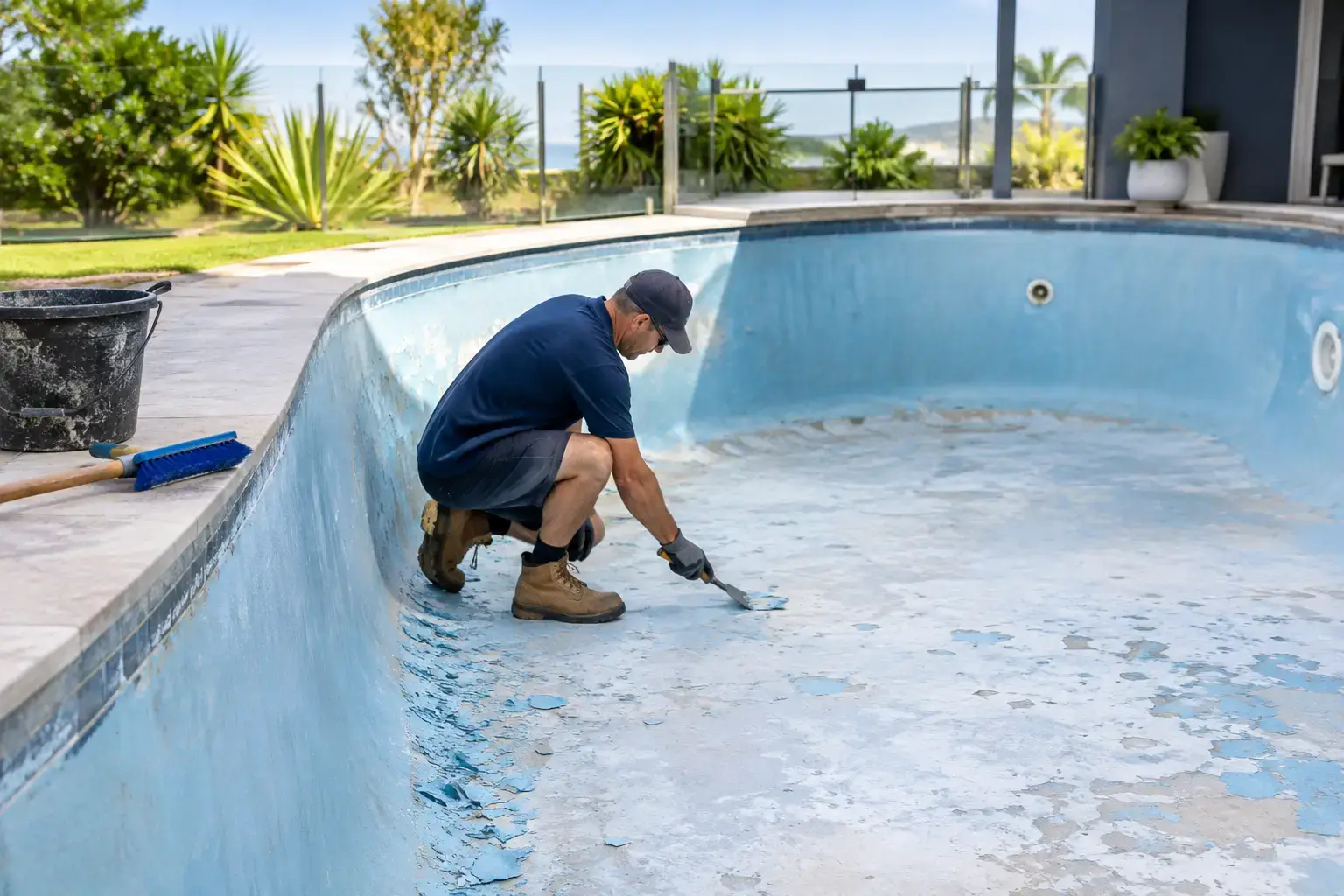
Loose paint is not a cosmetic issue you can paint over. If you remove loose pool paint properly before recoating, you give the new system a sound surface to bond to. Skip that step and the fresh coating may fail with the old paint still attached underneath it.
The goal is not always to strip every trace of existing coating. The goal is to remove all unsound material, identify what remains, and choose a compatible preparation and repaint system for the pool surface.
Start by finding out why the paint is loose
Peeling, flaking and blistering usually point to an adhesion problem. In practical terms, the old coating has lost its grip on the surface below, or the coating layers are no longer compatible with each other.
Common causes include poor preparation before the previous repaint, moisture affecting the substrate, applying a coating over chalky or degraded paint, insufficient drying between stages, or using an incompatible paint or primer. A pool can also have isolated failures around steps, waterline areas, corners and previous repair patches while the rest of the coating remains firm.
Do not assume loose paint means the whole pool needs to be stripped back to bare concrete or fibreglass. Equally, do not assume a few flakes are harmless. Test widely across the floor, walls, steps and coves. If paint lifts easily under firm scraper pressure, has hollow-sounding areas, or releases in sheets, it is not a suitable base for a new coating.
How to remove loose pool paint without damaging the surface
Empty the pool completely and allow the surface to dry before assessing it. A dry surface makes loose edges easier to identify and avoids hiding the extent of a coating problem.
Begin with a sharp scraper or suitable mechanical preparation tool, working methodically from obvious failures out towards sound paint. Remove every area that is peeling, blistered, chipped or lifting at the edge. Feather the remaining sound coating back so there is no sharp ridge between old paint and exposed substrate. A hard edge can remain visible through the new finish and can become a weak point if it is not properly prepared.
Mechanical abrasion is often needed after scraping, particularly where the old coating is glossy, weathered or uneven. The exact method depends on the substrate and the coating condition. Concrete can generally tolerate more aggressive preparation than fibreglass, which can be damaged by excessive grinding or unsuitable abrasives. Use equipment safely, control dust, and avoid turning a coating-removal job into surface damage that requires further repair.
Once preparation is complete, remove all dust and debris. The surface needs to be clean and dry before primer or paint is considered. Any residue left in corners, around fittings, on steps or along the floor-to-wall transition can interfere with adhesion.
Do not stop at the visible flakes
A common DIY mistake is scraping only the paint that has already fallen away. The paint surrounding a failed patch may look intact but have poor adhesion. Check it with a scraper and inspect the edges closely. Keep removing material until you reach coating that is firmly bonded.
If loose paint is widespread across multiple areas, patching may not be the right approach. Broad failure often means the previous coating system, preparation or substrate condition is the real problem. In that situation, a more extensive strip and a reassessment of the coating system is usually the safer path.
Check whether the remaining coating is sound
After you remove loose pool paint, the next decision is whether the remaining coating can stay. Sound paint should be firmly attached, free from active peeling and suitably prepared to accept the new system.
Look for chalking, where colour or powder comes away when rubbed. Check for fine cracking, bubbling, soft spots and areas that have been previously patched. These conditions do not all have the same cause, but they all need to be addressed before recoating.
The existing paint type matters just as much. Two-pack epoxy pool paint and chlorinated rubber pool paint are different coating systems. Applying one over an unknown or incompatible existing finish can lead to wrinkling, lifting or premature failure. Colour alone will not tell you what is on the pool.
If you know the previous coating, follow the relevant system guidance for preparation and recoating. If you do not know it, do not guess based on what is easiest to buy or apply. Identify the coating where possible, test a small area if appropriate under the product instructions, and seek technical guidance before ordering. This is especially important when the old finish is still present over much of the pool.
Concrete and fibreglass need different preparation decisions
Concrete pools commonly have old paint, bare patches and porous areas after loose coating has been removed. If bare concrete is exposed, it may require a compatible primer before the topcoat. Primer is not simply an optional extra. It helps create the correct base where the coating system calls for it and can reduce the risk of an uneven result across mixed bare and previously painted areas.
Before priming concrete, check for signs of moisture-related issues, loose render, surface contamination or structural cracking. Paint will not fix unstable concrete or a substrate problem. Those issues need to be properly resolved before a coating is applied.
Fibreglass pools need a different approach. Their surface is less forgiving of heavy abrasion, and preparation must create a clean, suitably keyed surface without damaging the shell or leaving deep scratches. Any exposed fibreglass, damaged gelcoat or uncertain prior coating should be assessed carefully before selecting primer and paint. Use a system specifically suitable for fibreglass rather than treating it like painted concrete.
Choose the repaint system after preparation, not before
It is tempting to order paint first and work out preparation later. That is how customers end up with an unsuitable product, the wrong primer or insufficient quantity.
Choose between a two-pack epoxy pool paint system and a chlorinated rubber pool paint system based on the existing coating, pool substrate and preparation outcome. Epoxy is commonly selected where the correct epoxy system and preparation conditions are present. Chlorinated rubber is a different system and should only be used where it is compatible with the existing surface and coating history.
The correct product is not automatically the highest-specification coating. It is the coating system that matches the surface you actually have after preparation. That may mean continuing with a compatible repaint system over sound existing paint, or using primer where bare areas and substrate conditions require it.
Pool Paint Sydney supplies BG Coatings epoxy and chlorinated rubber pool paint systems, along with compatible primer options. Review the relevant product information before ordering, particularly where the old coating type is uncertain or bare concrete and sound old paint are both present in the same pool.
Calculate paint and primer after measuring the pool
Removing failed coating can change the amount of primer required, especially when large bare sections are uncovered. Measure the pool’s length, width and average depth, then include walls, floor, steps and other painted areas. Do not base your order on the water volume or a rough estimate from the pool’s footprint.
Use the Pool Paint Calculator to work out paint and primer quantities for the selected system. It is better to calculate after you have completed the loose-paint removal and know whether you are coating bare substrate, sound existing paint, or both. Ordering too little can interrupt application, while ordering the wrong product because the surface was not assessed first can cost far more.
Mistakes that cause the new coating to fail
The most expensive errors usually happen before the first coat goes on. Avoid these four problems:
- Painting over loose edges because they seem small or isolated.
- Assuming all existing pool paint is compatible with the new coating.
- Using primer where it is not specified, or skipping it where bare substrate requires it.
- Ordering paint from rough dimensions instead of calculating the full coating area.
Also plan work around suitable dry weather conditions. Sydney and NSW weather can change quickly, and applying coatings to a damp surface or rushing stages because rain is forecast can compromise the job. Follow the product’s preparation, mixing, application and curing instructions rather than relying on general paint advice.
A durable repaint starts with an honest assessment of what is left after the loose paint comes off. Prepare until the surface is sound, confirm the existing coating or substrate, then use the calculator and select the compatible system. That extra care before ordering is what helps you buy the correct pool paint the first time.