
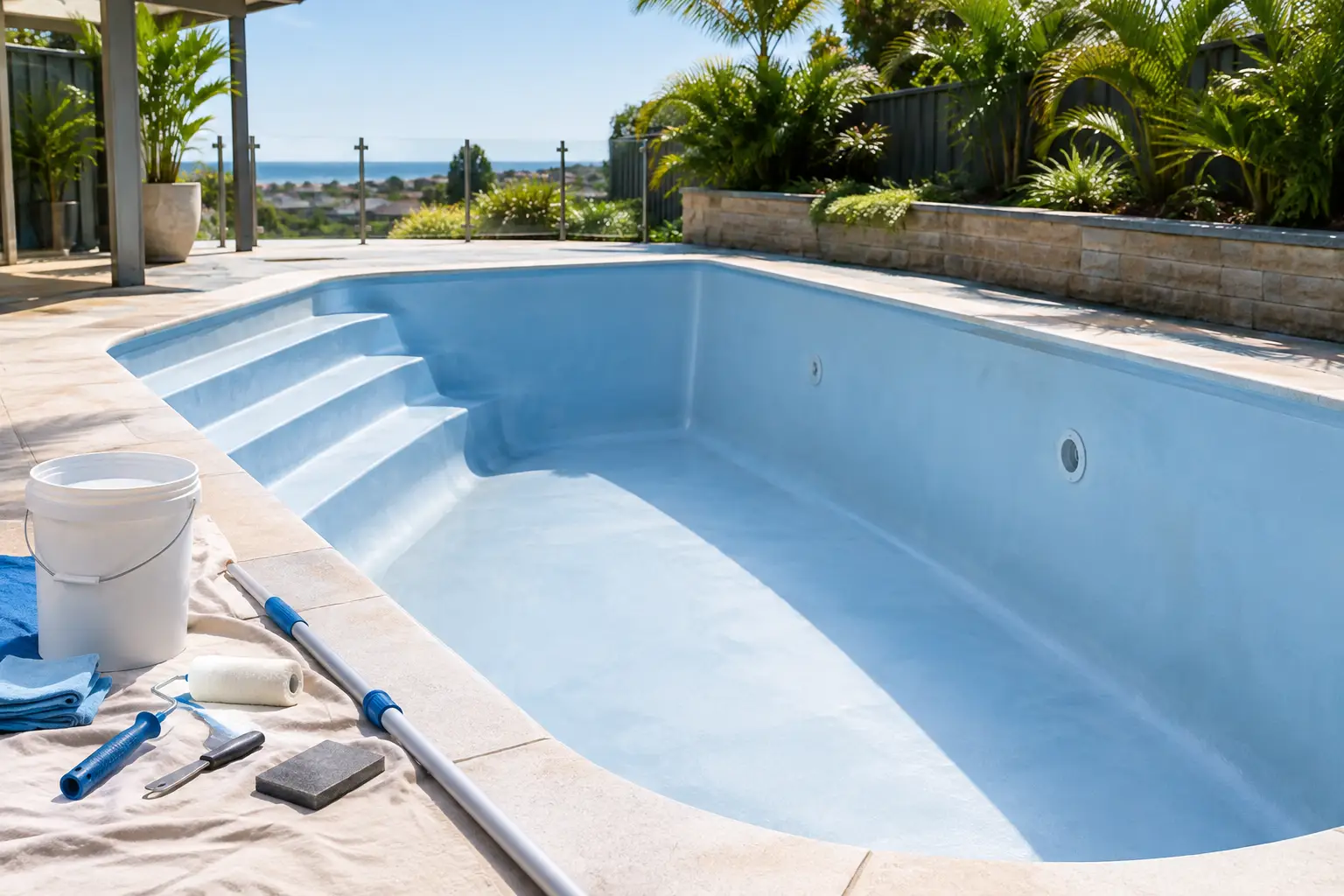
A fibreglass pool can look ready for fresh paint while hiding the one problem that causes most coating failures: nobody is certain what is already on it. This fibreglass pool repaint compatibility guide will help you work out what matters before ordering paint, so the new coating bonds properly instead of peeling, blistering or lifting soon after application.
The rule is straightforward: choose the new coating system around the existing surface and coating, not around the colour you want or the paint that appears easiest to apply. A sound preparation process and compatible system are what give a repaint its best chance of lasting.
Start with the existing coating, not the fibreglass
A fibreglass pool shell is normally finished with a gelcoat surface. Once it has been painted, however, your next coating must be compatible with the old paint as well as suitable for fibreglass. That distinction matters.
Many pools have been repainted more than once over the years. The visible top layer might be chlorinated rubber, two-pack epoxy, acrylic or an unknown product applied by a previous owner. Applying a new coating over an incompatible layer can soften the old paint, cause poor adhesion, or create a failure between coats even if the fibreglass underneath is in good condition.
If the pool is newly gelcoated, unpainted and structurally sound, the decision is more direct. You still need to prepare the surface correctly and use the primer specified for the chosen system where required. But if the pool has previously been painted, identifying that coating is the first job.
Do not assume a pool is epoxy-coated because the paint feels hard, or chlorinated rubber because it has faded. Age, sun exposure and previous preparation can make coatings behave and look different. If there is no reliable record of the existing paint, treat it as unknown until you have checked the available product information and received technical guidance.
Why compatibility problems cause peeling
Peeling paint is often blamed on the last coat applied. In practice, the failure may have started lower down. A new coating can only adhere as well as the layer beneath it. If the older paint is chalky, loose, contaminated or incompatible, the new finish may pull away with it.
On fibreglass pools, common causes include inadequate sanding, applying paint over a glossy surface, leaving traces of loose coating around steps and waterlines, or using a primer that is not designed for the substrate and coating system. Moisture and poor drying conditions can also create problems, particularly during humid Sydney or coastal NSW weather.
There is no useful shortcut here. Paint does not correct an unstable surface. It only covers it temporarily.
Before selecting a system, inspect the entire empty, dry pool carefully. Look closely around corners, steps, returns, skimmer areas and along the waterline. These are common places for old coating failure to show first. If paint flakes away under firm scraping, bubbles, or lifts at the edge, that loose material needs to be removed before repainting.
Identify the condition of the old paint
You do not always need to remove every existing painted layer. A stable, well-adhered coating can sometimes be recoated with a compatible system after thorough cleaning and mechanical preparation. The key word is stable.
A coating may be suitable to repaint if it is firmly bonded across the pool, has no widespread blistering or peeling, and can be sanded to create a consistent surface profile. Minor isolated defects may be dealt with during preparation, provided the surrounding coating remains sound.
Full removal becomes the safer option where the existing paint is extensively failing, its type cannot be confirmed, or different coatings appear to have been applied in patches. It is more work upfront, but coating over a weak or unknown base can waste every dollar spent on paint and preparation.
If you are unsure, take clear photos of the surface, failed areas and any remaining product labels. Note whether the pool is bare gelcoat, painted fibreglass, or has visible repairs. This information makes it easier to confirm the appropriate coating and primer system before you buy.
Choosing epoxy or chlorinated rubber pool paint
For a fibreglass pool repaint, the correct choice depends on the coating already in place, the surface condition and the preparation route. Two-pack epoxy and chlorinated rubber are not interchangeable just because both are pool coatings.
Two-pack epoxy systems
Two-pack epoxy pool paint is commonly selected where a compatible epoxy system is required or where the preparation and substrate are suitable for the full epoxy coating process. It is a two-component product, so the components must be mixed in the correct ratio and used in line with the product instructions.
Epoxy systems demand careful preparation. The surface must be clean, dry, sound and correctly abraded. If a primer is specified for bare fibreglass, exposed areas or the particular preparation method, use that compatible primer rather than substituting a general-purpose product. Skipping it may compromise adhesion where it matters most.
Epoxy can be a practical choice, but it is not the automatic answer for every old painted pool. If the existing coating is chlorinated rubber, do not assume epoxy can go straight over it. Confirm compatibility first.
Chlorinated rubber systems
Chlorinated rubber pool paint is generally used for compatible chlorinated rubber recoats and other approved situations set out in product information. It is often the sensible option when you have positively identified an existing chlorinated rubber coating that remains well bonded and can be prepared correctly.
The advantage is not that one system is universally better than the other. The advantage is using a system that works with the coating already on the pool. A compatible chlorinated rubber recoat over a properly prepared chlorinated rubber surface is usually a far better decision than forcing an incompatible change of system.
When changing coating types, the preparation requirements may be more involved. In some cases, complete removal of the existing coating is necessary before applying a different system. That is why identifying the old paint before ordering is so valuable.
Primer is not an optional guess
Primer requirements vary depending on whether you are coating bare fibreglass, previously painted fibreglass, exposed repair areas or a fully stripped surface. The primer is part of the coating system, not an extra coat selected by colour or convenience.
Use the primer recommended for the specific BG Coatings pool paint system and substrate. Do not mix products from unrelated coating systems or assume a leftover primer will be suitable. Incompatibility can occur below the topcoat and may not become obvious until the pool is back in service.
A practical rule is simple: if sanding or stripping exposes gelcoat or bare substrate in areas, check the product directions for whether those areas, or the whole pool, need compatible primer before topcoating. Treat patchy exposed sections seriously. They can become weak points if they are not prepared and primed as required.
Preparation decides whether the paint stays on
Once you have selected the compatible system, preparation needs the same level of attention as the final coats. Remove loose and deteriorated paint, then clean away dirt, oils, chalking and sanding residue. The surface must be fully dry before coating.
Sanding is not just about making the pool look dull. It creates a mechanical key for the next coat. Glossy, smooth paint can prevent adhesion even when it appears clean. Sand evenly, including steps, coves, walls and areas around fittings, then remove all dust before priming or painting.
Avoid painting in unsuitable conditions. High humidity, rain risk, condensation and extreme heat can interfere with application and drying. In NSW, weather can change quickly, so plan the work around the product instructions rather than relying on a sunny morning forecast.
Apply the required number of coats at the specified spread rate. Trying to stretch paint too far can leave inadequate film thickness, while applying too heavily can create its own problems. Follow the recoat window and curing instructions supplied with the product.
Order the right quantity before you start
Running short halfway through a coating system is avoidable. Measure the pool length, width, average depth and any major features such as steps or ledges, then use the Pool Paint Calculator to estimate the paint and primer required for your selected system.
The calculator is useful only after the coating decision has been made. First confirm whether you need epoxy or chlorinated rubber paint, whether primer is required, and how many coats the system calls for. Then calculate quantities using the actual pool dimensions rather than a rough guess.
Allow for the full painted area, not just the floor. Walls, steps, benches and coves add up quickly, particularly in freeform fibreglass pools. Ordering the correct quantity helps you apply each coat at the intended coverage rate and maintain a consistent finish.
A quick compatibility check before checkout
Before purchasing, be able to answer these questions: What coating is currently on the pool? Is it sound enough to retain? Are you recoating with a compatible system or changing systems after suitable removal? Will bare or exposed fibreglass need a compatible primer? Have you calculated enough product for every required coat?
If one of those answers is unclear, pause before ordering. Pool Paint Sydney can help customers match the appropriate BG Coatings pool paint and primer system to the information available, including photos and details of the existing surface.
A repaint is easiest when the coating decision is made before the sanding starts. Confirm the old paint, prepare the surface properly, use the matching primer where required, and calculate the full system rather than only the topcoat. That is how you avoid a finish that looks good briefly but fails where it counts.