
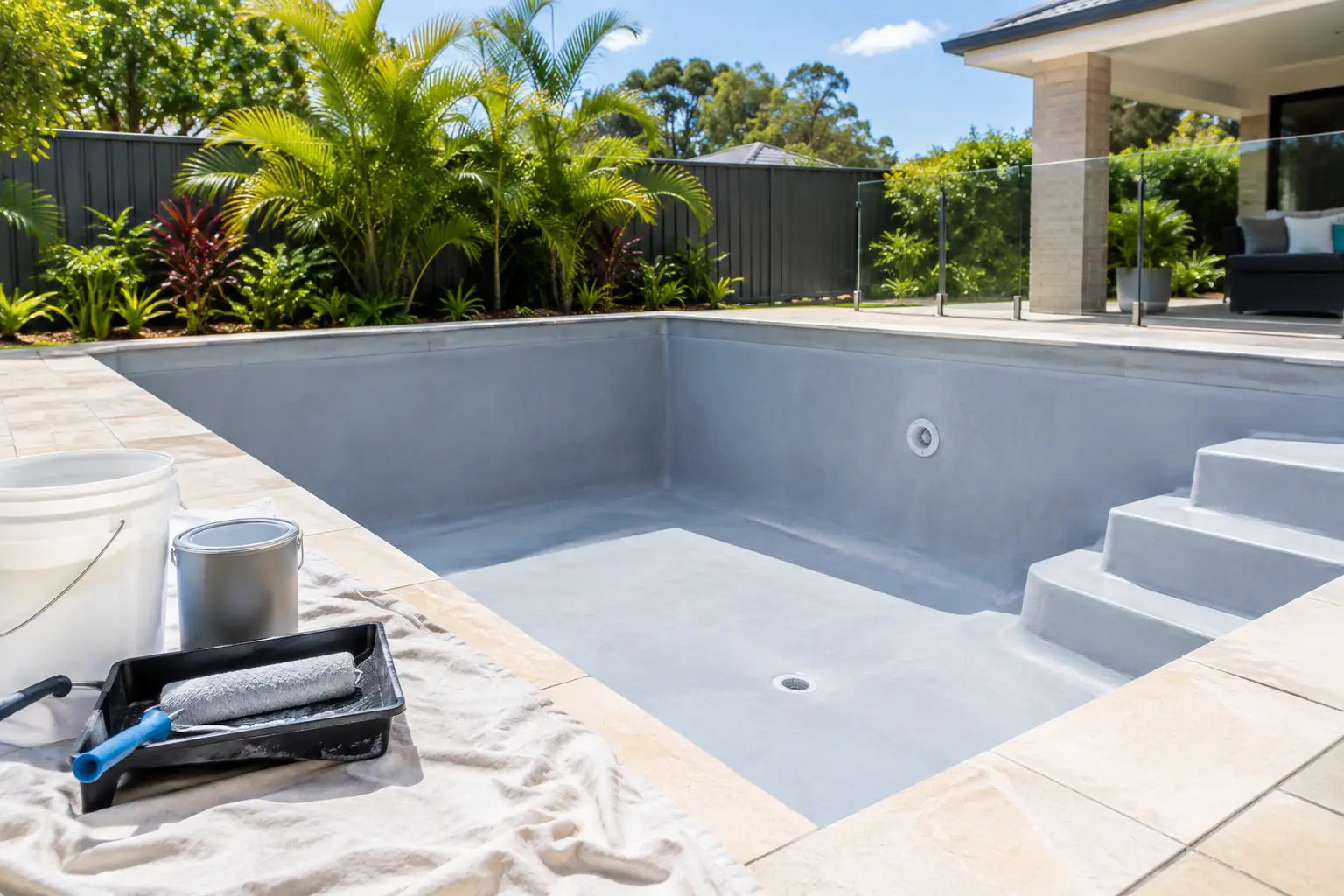
A pool can look tired long before its structure needs attention. Faded colour, chalky residue, peeling patches and rough-looking walls often point to a failed coating system. Epoxy paint can be an excellent option for the right pool, but it is not a universal fix. The surface underneath, the coating already on the pool and the preparation work all decide whether the new finish adheres properly or starts failing early.
If you are repainting an existing concrete or fibreglass pool, start by identifying what is on it now. That one step can prevent the common and expensive mistake of applying a quality epoxy coating over an incompatible surface.
When epoxy paint is the right pool coating
Two-pack epoxy pool paint is a coating system made from two components that are mixed before application. Once cured, it forms a hard, durable film designed for submerged pool surfaces. It is commonly selected for properly prepared concrete pools and for pools that already have a compatible epoxy coating.
Epoxy is generally worth considering when the existing surface is sound, dry, clean and compatible with the new system. It can be a practical choice for an older concrete pool where previous coatings have been removed or where the pool has an existing epoxy finish in good condition.
The key word is compatible. A pool may look as though it has a sound painted surface, but appearance alone does not identify the coating type. Chlorinated rubber, acrylic-style coatings and old unknown finishes can react differently to epoxy. Applying epoxy over the wrong coating can lead to lifting, wrinkling, peeling or a bond that fails once the pool is back in service.
For that reason, epoxy should not be chosen simply because it is labelled as a premium coating. Choose it because it suits the existing substrate and the preparation plan.
Epoxy paint versus chlorinated rubber pool paint
The choice between epoxy and chlorinated rubber pool paint usually comes down to the existing coating, not personal preference.
Epoxy is a two-pack system that requires accurate mixing and disciplined application. It is suited to compatible, well-prepared surfaces and needs the correct primer arrangement where specified. The job needs to be planned around product instructions, weather conditions and the available working time after mixing.
Chlorinated rubber pool paint is often the more appropriate option when repainting an existing chlorinated rubber coating. It is a different coating system and should not be treated as interchangeable with epoxy. If the old paint is chlorinated rubber and remains reasonably sound, recoating with a compatible chlorinated rubber product may avoid unnecessary stripping and reduce compatibility risk.
An unknown existing coating is where people get caught out. Do not guess based on colour, age or what a previous owner may have said. If you cannot confirm the existing finish, seek technical guidance before ordering. A small amount of investigation is far cheaper than removing a newly failed coating.
Start with the pool surface, not the paint colour
Before choosing a colour or calculating litres, assess whether you are painting concrete or fibreglass and whether there is an existing coating.
Concrete pools
Concrete can be suitable for epoxy pool paint, but bare concrete is not automatically ready to coat. It must be structurally sound, free from loose material and prepared to the required surface profile. Residues, laitance, old loose paint, oils and contaminants can interfere with adhesion.
If previous paint is peeling, do not simply sand the edges and coat over it. Peeling is a warning that the bond has already failed somewhere in the system. Loose and unsound material needs to be removed, and the cause needs to be considered. Common causes include coating over contamination, poor preparation, moisture issues, an incompatible repaint or applying insufficient coating.
A compatible primer may be required for bare or suitably prepared concrete. Primer is not an optional extra added for reassurance. It is part of the coating system where the manufacturer specifies it, helping the topcoat bond correctly to the prepared substrate.
Fibreglass pools
Fibreglass pools need a different assessment. The existing gelcoat or painted surface must be clean, sound and correctly abraded or prepared according to the selected coating system. A fibreglass pool with a previous coating may need a compatible repaint product, while a damaged or unknown coating needs closer investigation before epoxy is selected.
Do not assume epoxy will adhere to every fibreglass surface just because the pool is dry and looks dull. Surface condition, previous products and primer requirements matter just as much here as they do on concrete.
Why pool epoxy paint fails
Most coating failures are not caused by the tin of paint. They happen earlier, during product selection and preparation.
Peeling usually points to poor adhesion. That may be caused by loose old paint left in place, inadequate sanding or profiling, contamination, moisture in the substrate, or a coating applied over an incompatible finish. Blistering can also indicate a problem below the visible topcoat, rather than a fault that can be solved by adding another coat.
Another common issue is mixing. Two-pack epoxy must be mixed at the specified ratio and used within the product’s stated working time. Estimating, splitting packs inaccurately or using material after its workable period can compromise the coating.
Weather also matters in Sydney and across NSW. A warm day can shorten working time, while rain, high humidity, cold conditions or overnight condensation can affect preparation and application. Check the product data before starting, and plan the project around suitable dry conditions rather than rushing to finish before a change in weather.
A practical preparation process
Every pool and coating history is different, but a reliable epoxy paint project follows a clear sequence.
First, drain the pool completely and allow the surface to dry as required by the coating system. Inspect the entire interior for loose paint, chalking, flaking edges, contamination and areas where the underlying surface is exposed.
Next, identify the existing coating wherever possible. If it is sound and confirmed compatible, preparation may involve cleaning and mechanical abrasion to create the required key. If it is failing or incompatible, the failed coating must be dealt with before a new system is applied. Coating over a problem does not repair it.
Then prepare bare concrete or fibreglass strictly to the relevant product instructions. This may include cleaning, sanding, profiling and use of the correct compatible primer. Follow safety directions for preparation materials, dust control and protective equipment. Never rely on general house-paint advice for a submerged pool coating.
Finally, calculate the required quantities before opening product. Apply the primer and epoxy topcoats at the specified coverage rate and number of coats. Applying too thinly to stretch the product further can leave an inadequate film build. Ordering too little can also create avoidable delays once preparation is complete.
Calculate epoxy paint before you order
Pool dimensions can be deceptive. A pool with a deep end, steps, ledges, sloping walls or an internal spa section has more paintable area than its length and width suggest. Measuring only the floor is one of the quickest ways to under-order.
Use the Pool Paint Calculator to work from the pool’s actual dimensions and include walls, floor, steps and other painted areas. Then check the selected product’s stated coverage and whether a primer is required for your surface. The calculator is useful for planning, but the final quantity must suit the coating system, number of coats and surface condition.
If the result is unclear, stop before purchasing. Confirm the pool type, existing coating and preparation plan first. It is better to order the correct epoxy system once than to have leftover incompatible material or run short partway through the job.
Choosing the correct epoxy system
A durable repaint starts with a simple decision: what is the pool surface, and what is currently on it? From there, select a compatible epoxy pool paint and primer system, or choose chlorinated rubber instead if that better matches the existing coating.
Pool Paint Sydney supplies BG Coatings pool coating systems and practical product guidance for customers who need to repaint an existing pool. Check the epoxy product page, compatible primer information and Pool Paint Calculator before ordering. If the previous coating is unknown, peeling or showing signs of failure, get that question resolved first.
The best next step is not choosing the brightest colour. It is confirming the surface and coating system so the preparation, primer and epoxy paint all work together from the start.