
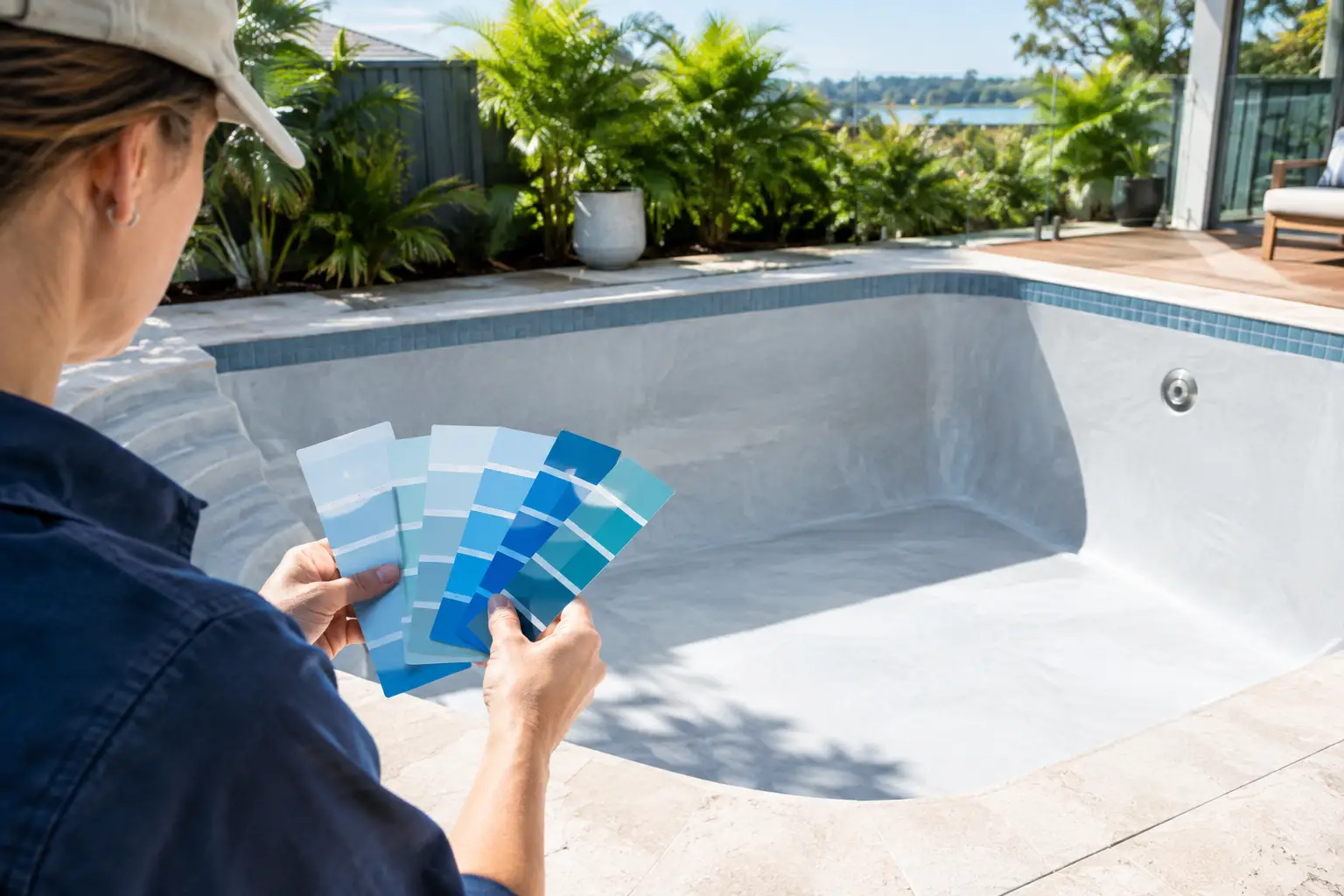
A pool colour can look completely different once it covers a large concrete shell, sits beneath water and catches harsh Sydney sunlight. Pool paint samples are useful for comparing shades before you commit, but colour is only one part of choosing a coating that will last. A sample cannot tell you whether the new paint will bond to the old coating, whether a primer is needed, or whether poor preparation will cause peeling later.
Before ordering paint, use samples to narrow down your preferred colour, then identify the existing surface and coating system. That order matters. A colour you like is no help if it is applied over an incompatible finish.
What pool paint samples can and cannot tell you
Samples are best used to assess colour, sheen and how a coating looks against surrounding paving, coping and landscaping. Look at them outside rather than under indoor lighting. A light blue may appear brighter in direct sun, while darker shades can make the pool look deeper or more formal. The amount of shade around the pool also changes the result.
If a sample is supplied as a painted card or swatch, place it where it will receive similar light to the pool. If you are using a small test application, apply it only to a properly prepared dry area and treat it as a colour check, not proof of system compatibility.
A pool paint sample cannot reliably answer these critical questions:
- Is the existing coating epoxy, chlorinated rubber, acrylic or an unknown product?
- Is the old paint sound enough to be recoated, or is it already failing?
- Does bare concrete, fibreglass or an exposed repair area require a compatible primer?
- Has the surface been cleaned, sanded and prepared to the coating system requirements?
Those answers determine the correct product system. Skipping them is one of the most common reasons a fresh-looking repaint fails early.
Choose pool paint samples after identifying the old coating
The first job is to establish what is currently on the pool. Do not assume that a blue painted pool has the same coating system as another blue painted pool. Colour does not identify paint type.
Start with any records from the previous repaint, such as leftover tins, invoices, photographs or notes from the former owner. Product labels are the most useful evidence. If those are unavailable, inspect the condition of the coating. Widespread peeling, flaking, blistering or soft areas need to be dealt with before new paint is selected.
When the existing coating cannot be identified with confidence, stop before ordering a full paint system. It may be necessary to remove unsound or unknown coatings rather than applying a new layer and hoping it sticks. Applying epoxy over an incompatible coating, or using chlorinated rubber where another system is required, can create an expensive failure that samples will not reveal.
For a pool with a confirmed existing epoxy system, a compatible two-pack epoxy pool paint may be the appropriate recoating path, subject to the surface being sound and prepared correctly. For an existing chlorinated rubber system, select a compatible chlorinated rubber pool paint system. The product page and technical information should be checked before purchase, particularly where the old coating is weathered, patchy or partly removed.
Compare colour where it will actually be seen
Once the coating system is confirmed, colour selection becomes much easier. Check the sample at several times of day. Morning light, midday sun and late-afternoon shade can all change your perception of the same blue, white or grey.
Do not judge a sample only while it is dry on a bench. Hold it beside the pool interior, surrounding tiles and coping. Consider the colour of nearby fencing, rendered walls and established plants as well. A sample that looks subdued beside a dark fence can look much brighter against pale coping.
It also helps to remember that the finished appearance is influenced by water depth, surface texture and light reflection. The shallow end often appears lighter than the deep end. This is normal and should not be mistaken for uneven paint colour.
If you are repainting only part of a pool, matching an old faded coating is difficult. Existing paint may have changed colour through years of sun exposure and wear. In most cases, recoating the complete interior with one compatible system gives a more consistent result than attempting a patch colour match.
Avoid choosing on a screen alone
Website images are helpful for narrowing options, but mobile and computer screens vary. Use pool paint samples or approved colour information as the final colour reference where available. If you need guidance on the available colours for a particular epoxy or chlorinated rubber system, check the relevant product information before ordering.
Preparation decides whether the paint stays on
A perfect colour choice cannot compensate for poor preparation. Most peeling paint problems begin with a surface issue: loose old coating left in place, contamination, inadequate sanding, moisture concerns, or the wrong primer beneath the topcoat.
The correct preparation depends on whether you are working with concrete, fibreglass, a sound existing coating or exposed bare areas. Concrete is not automatically ready for paint simply because it looks dry. Fibreglass needs a coating system suited to that substrate and careful surface preparation. Bare patches can have different primer requirements from intact previously painted areas.
Remove coating that is loose, lifting or otherwise unsound. Feather the edges of stable paint as required, then clean and prepare the entire surface in line with the coating system directions. Do not use a sample test area as a shortcut around preparing the full pool correctly.
Australian weather also affects planning. High heat, direct summer sun, humidity, rain and overnight moisture can all interfere with application conditions. Choose a dry weather window and follow the manufacturer’s directions for surface condition, mixing, application and recoating. Two-pack epoxy products have specific mixing and working requirements, so measure and mix exactly as instructed rather than estimating.
Primer is not an optional extra when the system calls for it
Customers often ask whether they can save time by applying pool paint directly over bare concrete or exposed fibreglass. The answer depends on the coating system and the condition of the surface. Where a compatible primer is specified, it is part of the system, not an add-on.
Primer can be particularly relevant where preparation has exposed bare substrate, where the surface is porous, or where the selected pool coating requires a primer for the intended application. Using the wrong primer can be as problematic as using the wrong topcoat. Do not substitute a general-purpose paint primer.
Check the primer product information alongside the topcoat information before you order. If the pool has mixed areas – for example, mostly sound old paint with bare concrete patches – calculate both products separately and confirm the recommended sequence.
Calculate quantity after the system and colour are chosen
Ordering based on a guess often leaves customers short of paint halfway through a coat, or with unnecessary excess product. Measure the pool carefully and use the Pool Paint Calculator to estimate paint and primer quantities for its dimensions and the selected system.
Measure the length, width, shallow depth and deep depth, then include steps, ledges and other painted features where relevant. A simple rectangle calculation can understate the true surface area, especially in pools with deep ends, curved walls or broad entry steps.
Coverage figures are not a reason to stretch paint further than specified. The coating needs to be applied at the manufacturer’s recommended rate and number of coats. Applying too thinly to make the tins go further can reduce film build and leave an inconsistent finish. Ordering the correct quantity before starting helps you maintain the same product batch and colour across the job.
A practical ordering checklist
Before moving from pool paint samples to a full order, confirm the existing coating type, the surface condition and the required preparation. Select the compatible epoxy or chlorinated rubber system, check whether primer is needed, choose the final colour, and use the Pool Paint Calculator for both paint and primer.
If you are unsure about an old coating or a peeling area, get clarification before purchasing. Pool Paint Sydney can help customers work through coating compatibility, product selection and quantity calculations, but a clear description and photos of the existing surface will lead to better advice.
The right sample helps you choose a colour you will be happy to see every day. The right coating system, primer and preparation plan are what give that colour its best chance of staying where it belongs.