
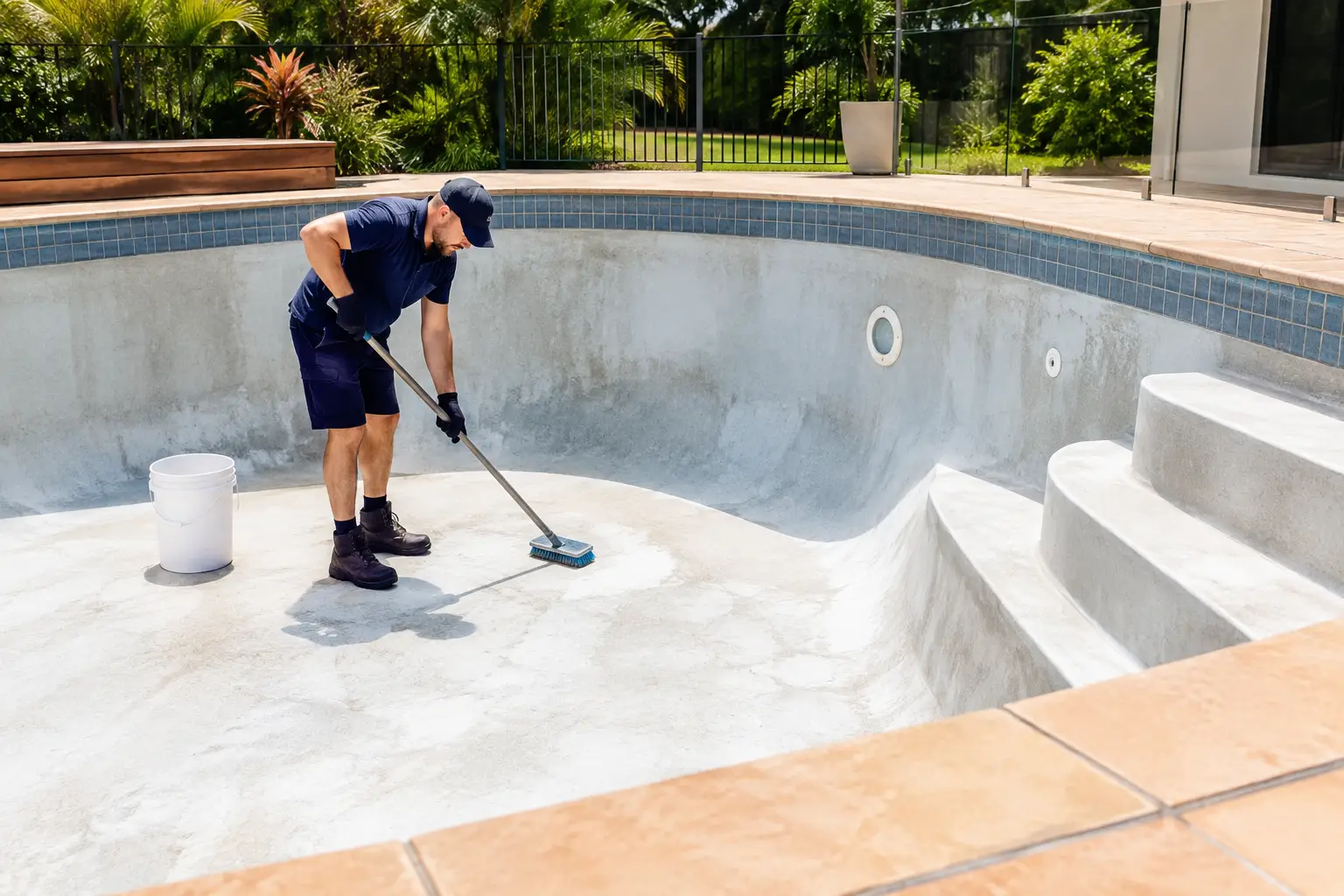
A pool can look clean, dry and ready for paint, yet still fail because a thin film of oil, sunscreen, body fats or old surface contamination was left behind. To degrease a concrete pool surface properly, treat it as a critical coating-preparation step, not a quick wash-down. Paint cannot bond reliably to contamination, and no premium coating system can make up for it.
For an empty concrete pool being repainted, degreasing is usually required before the final preparation stages and before any compatible primer or pool coating is applied. The exact process depends on whether the pool is bare concrete, previously painted, or showing signs of an old coating failure.
Why concrete pool surfaces need degreasing
Concrete is porous, but that does not mean it is automatically clean or paint-ready. Oils and residues can sit on the surface or soak into open pores. Common problem areas include the waterline, steps, ledges, corners, around return fittings and spots where people enter and exit the pool.
The risk is not limited to obvious greasy marks. A surface can feel dry but still carry residue that interferes with adhesion. When paint is applied over contamination, the result may be localised peeling, poor bonding between coats, fisheyes, blistering or coating failure well before the rest of the pool should need attention.
Degreasing also helps expose the true condition of the existing surface. Once residue is removed, you can see whether you are dealing with sound old paint, loose coating, chalking, bare concrete, cracks requiring separate assessment, or areas that need more mechanical preparation.
Check the existing coating before you start
Do not choose a degreasing and repainting process until you know what is on the pool now. This is one of the most common points where DIY repainting jobs go wrong.
A previously painted concrete pool may have an epoxy coating, chlorinated rubber paint, an unknown older coating, or several layers from past repainting jobs. Each situation affects the preparation required and the pool paint system you can use next. Applying a new coating that is incompatible with the existing one can cause lifting, wrinkling or peeling, even if the pool was thoroughly cleaned.
If the existing coating is sound, identify it as accurately as possible before selecting a compatible product. If it is flaking, soft, extensively blistered or poorly bonded, simply painting over it is not a fix. Remove all unsound material first. The remaining surface then needs to be assessed as either a stable existing coating or exposed concrete.
Where the coating history is uncertain, do not guess based on colour or age. Check any previous product records if available and review the technical information for the coating system you are considering. This step can prevent ordering the wrong paint and doing the preparation twice.
How to degrease a concrete pool surface
Start only when the pool is empty and you have suitable ventilation, protective equipment and a dry-weather window for the full preparation and coating process. Follow the safety directions on every product used, including the degreaser, primer and pool paint.
Remove loose material first
Sweep or vacuum out dust, leaves, loose paint flakes and debris. Degreaser works on residue, not on loose coating. Scrape and sand any peeling edges or failed paint as required so contamination is not trapped beneath loose material.
Pay close attention to the waterline, steps and ledges. These sections often carry the heaviest build-up and are regularly missed because they appear visually sound from a distance.
Apply a suitable degreaser and scrub thoroughly
Use a suitable surface degreaser in line with its directions. Work in manageable sections so the product does not dry onto the concrete before you can scrub and rinse it away. A stiff broom or suitable scrubbing brush helps lift residue from the texture and pores of the concrete.
Do not assume one quick pass is enough for heavy contamination. Waterline staining, greasy patches and neglected corners may need a second treatment. The aim is an evenly clean surface, not a spot-cleaned pool where only visible marks have been addressed.
Avoid substituting random household cleaners. Products that leave soaps, fragrances, waxes or other residues can create a new adhesion issue. Use a preparation product appropriate for coating work and follow its dilution, contact-time and handling directions exactly.
Rinse until no residue remains
Rinsing is as important as scrubbing. Any loosened oil, dirt or remaining cleaner must be removed from the surface rather than redistributed around the pool. Rinse methodically from the upper walls down towards the floor and remove rinse water and residue as you go.
Inspect corners, steps, drains, fittings and the cove where walls meet the floor. These are the places where cleaner and contamination can collect. If the rinse water shows persistent oily residue, repeat the degreasing process rather than moving on.
Once rinsed, allow the pool to dry sufficiently before the next specified preparation stage. Do not paint onto a damp concrete surface unless the technical directions for the exact coating system specifically permit it.
Degreasing is not the same as etching or priming
Pool owners often group all surface preparation together, but each stage has a different job. Degreasing removes oils and contamination. It does not automatically create the correct profile for a coating, remove weak old paint, repair defects or replace primer.
Bare or newly exposed concrete may need further preparation under the relevant coating system instructions. This can include preparing the concrete to remove weak surface material and provide the required surface condition before priming. Previously painted surfaces may instead need sanding or abrasion to provide a sound key, provided the existing coating is compatible and well bonded.
Primer is also system-specific. A primer can improve suitability between the prepared substrate and the selected paint system, but it is not a rescue product for a greasy, chalky or poorly prepared surface. Applying primer over contamination only locks the problem into the coating build-up.
Before buying products, establish three things: what the pool is made from, what coating is currently on it, and whether the existing surface is stable enough to retain. Those answers determine whether you need a compatible primer and whether epoxy pool paint or chlorinated rubber pool paint is the suitable option.
Common degreasing mistakes that lead to paint failure
The most expensive mistakes happen when preparation is rushed to get to the painting stage. Watch for these problems:
- Degreasing only the waterline while ignoring floor edges, steps and corners.
- Using a cleaner that leaves a residue, then assuming a clean-looking surface is paint-ready.
- Failing to rinse thoroughly after scrubbing.
- Painting over loose, chalky or blistered old coating after degreasing.
- Treating primer as a substitute for cleaning, sanding or correct surface preparation.
- Choosing a new paint system before checking compatibility with the old coating.
Another common issue is applying too little paint because preparation took longer than expected and the project is rushed. Pool paint needs to be applied at the specified rate and in the required number of coats. Ordering based on a rough visual estimate can leave you short and make it harder to maintain a consistent coating system.
Choosing the coating system after preparation
Once you have degreased the concrete pool surface and completed the required preparation, choose paint based on the existing coating and the product system directions, not simply on which product sounds tougher.
Two-pack epoxy pool paint is commonly considered where the preparation, substrate and coating compatibility suit an epoxy system. It requires careful mixing and application discipline. Chlorinated rubber pool paint can be appropriate for compatible existing chlorinated rubber surfaces and specified repainting situations. Neither option is automatically suitable for every concrete pool.
If the existing coating is unknown, peeling or incompatible with your preferred system, stop before ordering. Review the product information and seek specialist guidance on the preparation route. This is far cheaper than applying a coating that later needs to be stripped back.
Use the Pool Paint Calculator to work out paint and primer quantities from your pool dimensions before purchase. Include walls, floor, steps, benches and other painted areas rather than estimating from the pool’s water volume. The calculator helps you order the correct system the first time and avoid thin coverage caused by running short.
Pool Paint Sydney can assist with selecting a compatible BG Coatings pool paint and primer system when you have confirmed the pool surface and existing coating details. Have clear photos and any information about previous paint available before you enquire.
A clean concrete pool is only the starting point, but it is a non-negotiable one. Take the time to degrease, rinse, inspect and prepare each section properly, then select the coating system that matches what is actually on the pool. That approach gives your new pool paint the sound surface it needs to perform as intended.