
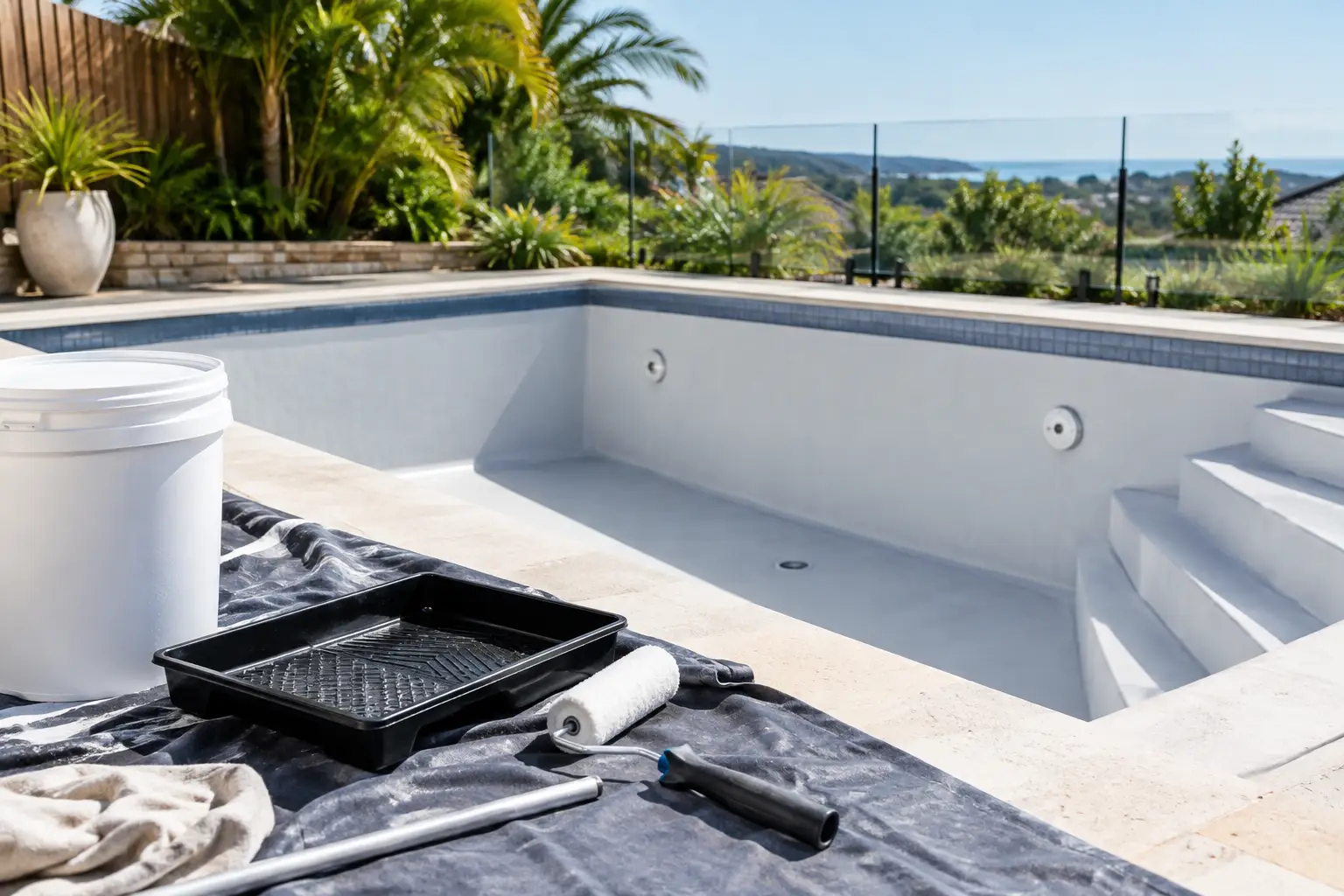
A pool repaint can fail before the first tin arrives. Ordering a coating that does not suit the existing surface, missing a compatible primer or underestimating the area can lead to delays, wasted product and peeling paint. Use this pool paint ordering checklist before you buy so the coating system matches the pool you actually have.
Start With the Surface You Are Repainting
The first question is not which colour you want. It is whether the pool is concrete or fibreglass, and what is currently on it.
A bare concrete pool, a previously painted concrete pool and a fibreglass pool can each require a different preparation and coating approach. Concrete is porous and may need a suitable primer depending on the coating system and condition of the substrate. Fibreglass is non-porous, so adhesion relies heavily on correct cleaning, sanding and use of the appropriate system.
Do not assume that a pool surface is bare because it looks faded or chalky. Old paint can remain bonded in places even when much of it has worn away. Check around steps, corners, waterline areas and behind fittings, where remnants of the previous coating are often easiest to find.
Before ordering, record:
- the pool construction – concrete or fibreglass
- whether the surface is bare, previously painted or partly stripped
- the condition of the current coating, including peeling, blistering, flaking or chalking
- any exposed repair areas or patches that differ from the surrounding surface
If paint is peeling, the problem may be poor preparation, moisture, an incompatible coating or a weak layer underneath. Applying new paint over an unstable surface simply hides the problem briefly. Loose or failed material needs to be removed before a new system is applied.
Identify the Existing Pool Coating
Knowing the old coating type is one of the most valuable checks on this pool paint ordering checklist. It affects whether a new coating is compatible and how much preparation is needed.
The common choices for painted pools are two-pack epoxy and chlorinated rubber. They are not interchangeable by default. Applying one system over an unknown or unsuitable existing coating can cause softening, lifting, poor adhesion or early failure.
If you have records from the last repaint, use them. An old invoice, leftover tin or product label can save a great deal of guesswork. If there are no records, inspect the surface and seek technical guidance before ordering. A small adhesion or solvent test may help identify an existing coating, but it must be carried out carefully and interpreted in line with the relevant product information.
When the existing paint cannot be identified with confidence, the safest path depends on the substrate, the coating condition and the preparation you can realistically complete. In some cases, removing the old coating back to a sound surface is more reliable than trying to coat over an unknown layer.
Choosing Between Epoxy and Chlorinated Rubber
Two-pack epoxy pool paint is a high-performance coating system that requires accurate mixing and disciplined preparation. It is often selected where a durable finish is needed and the surface has been prepared to suit the system. Because it is a two-part product, make sure you understand the mix ratio, pot life and application instructions before placing the order.
Chlorinated rubber pool paint can be a suitable choice for compatible existing chlorinated rubber coatings and certain repainting situations. It is not a shortcut for poor preparation, nor is it automatically suitable over epoxy or unknown paint.
Choose the system based on the substrate and existing coating, not on which product appears easiest to apply. Pool Paint Sydney supplies BG Coatings epoxy and chlorinated rubber systems, with product information to help confirm the suitable option before purchase.
Confirm Whether You Need Primer
Primer is not an optional extra to add at the end of an order. It is part of the coating system where the product instructions or surface condition call for it.
Bare or suitably prepared concrete may require a compatible primer to promote adhesion and create a sound base for the topcoat. Previously painted surfaces may have different requirements, particularly if the old coating is sound and compatible. Fibreglass also requires careful system selection because the wrong primer or topcoat combination can create adhesion issues.
Order primer only after confirming the surface and topcoat system. A primer designed for one coating type may not be suitable under another. If you are dealing with patches of bare concrete among old paint, check whether spot priming is acceptable or whether the full surface needs a particular preparation method.
Do not try to use general-purpose primers, house paint undercoats or unrelated coatings in a pool system. They are not a substitute for a compatible pool coating primer.
Measure Properly Before Ordering Paint
Running short partway through a coat creates a real problem. You may not be able to match the application conditions later, and stopping mid-surface can leave an uneven finish. Ordering far too much is also avoidable when the pool is measured accurately.
Use the Pool Paint Calculator before adding paint or primer to your cart. Measure the internal length, width and average depth of the pool, then include features such as steps, ledges, swim-outs and deep-end transitions. For freeform pools, break the shape into simpler sections and use sensible average measurements rather than guessing from the waterline alone.
Coverage is affected by the coating type, the number of coats, the surface profile and whether the substrate is porous. A rough or previously stripped concrete surface can use more material than a smooth, sound painted pool. The calculator provides a practical starting quantity, but the product data and your surface condition should guide the final order.
Check the quantity for the complete system: primer where required, enough topcoat for the specified coats, and any compatible thinner or ancillary products identified in the instructions. Do not reduce the number of coats simply because the initial estimate seems high. Coating thickness matters, and thin application can compromise the result.
Check Colour and Product Details Before Checkout
Colour selection is practical as well as personal. A pool colour can look different when applied over an uneven substrate, in full Sydney sun or under shade from nearby structures. If the pool has areas of exposed patching or varied old paint, the preparation and first coat need to achieve a consistent base before expecting an even final appearance.
Confirm the selected colour is available in the coating system you have chosen. Also check the pack sizes against the calculated quantity. For two-pack epoxy, make sure the components are ordered in the correct matched sets. Mixing parts from different systems or ratios is not acceptable.
Read the product information before purchase, not when the pool is empty and the job is due to start. Check application method, recoat requirements, preparation instructions, safety directions and the conditions needed for application and curing.
Plan for Weather, Preparation and Delivery
Australian weather can make an otherwise well-planned repaint difficult. Hot days can shorten workable time, while rain, heavy dew, wind-blown debris and unsuitable humidity can affect application. Plan the job around a stable weather window and follow the product guidance for surface and ambient conditions.
The pool must be empty, dry and properly prepared before coating begins. Build time into the schedule for cleaning, removing failed paint, sanding or profiling, dust removal and any primer stage. Rushing preparation to meet a weekend deadline is one of the most common causes of avoidable coating problems.
If you are ordering for a Sydney or NSW project, allow for delivery and ensure the products can be stored safely until the surface is ready. Australia-wide delivery is useful for regional jobs, but it does not replace planning ahead. Do not order based solely on the day you intend to paint.
Final Pool Paint Ordering Checklist
Before checkout, confirm you can answer these questions clearly: What is the pool made from? What coating is already on it? Is that coating sound enough to remain? Which epoxy or chlorinated rubber system is compatible? Is primer required? Have you measured every internal surface and allowed for the required number of coats? Have you checked the product instructions and allowed suitable weather and preparation time?
If one of those answers is uncertain, pause before buying. Check the Pool Paint Calculator, review the relevant coating and primer product information, and seek specialist guidance on the system rather than taking a chance on compatibility. A few checks before ordering are far cheaper than stripping back a failed new coating later.
The right order is not just the right number of tins. It is a complete, compatible system matched to a properly prepared pool surface.