
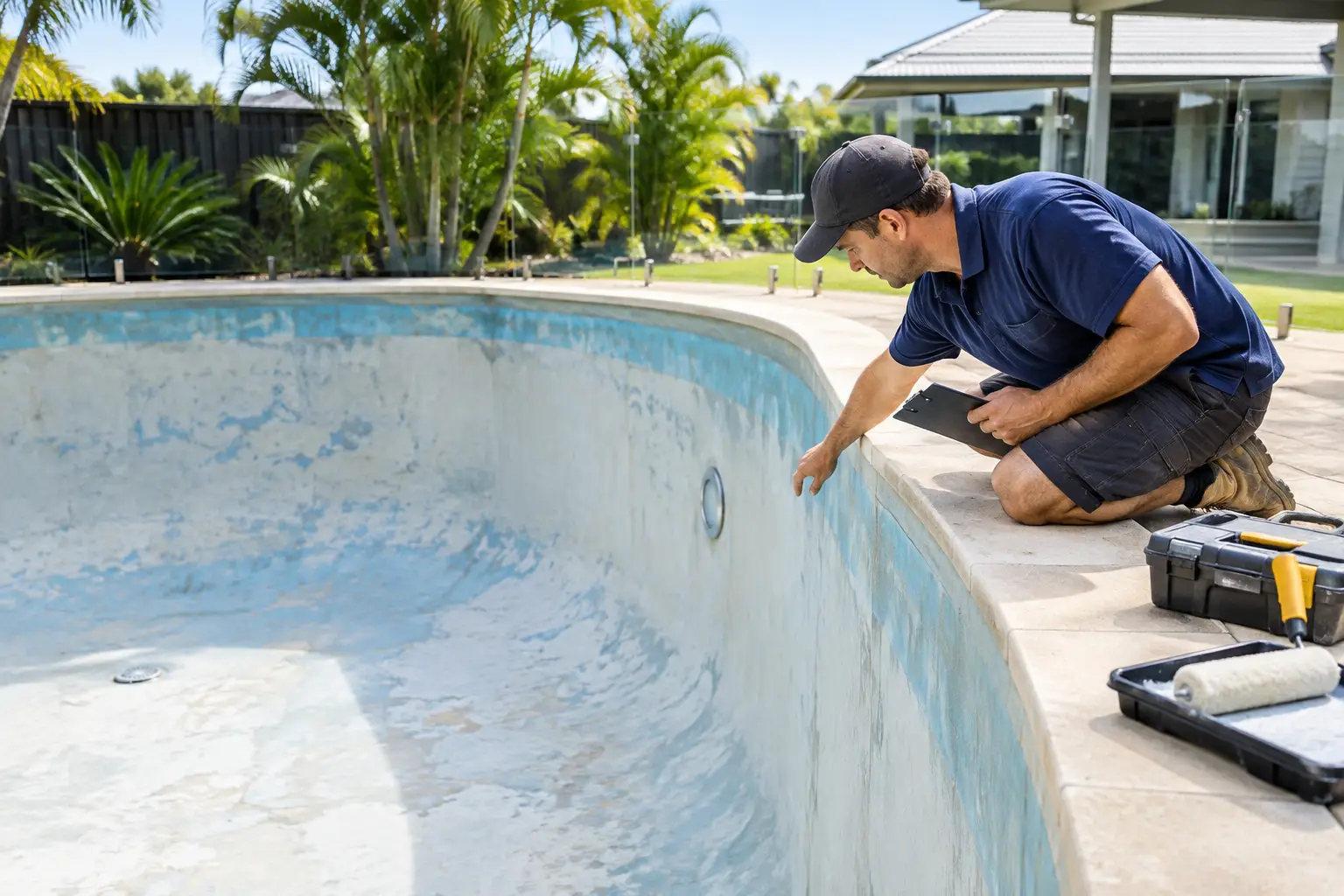
A primer is not a shortcut for poor preparation, and it cannot make an incompatible coating system safe to use. The top pool paint primer checks start with finding out exactly what is on the pool now. Get that answer wrong and even a carefully applied repaint can peel, blister or release from the surface.
For Australian pool owners and tradies, this matters most when repainting an ageing concrete or fibreglass pool with an unknown history. Before ordering paint, work through the checks below, then use the Pool Paint Calculator to calculate the quantities for the full compatible system.
Top pool paint primer checks before you buy
1. Identify the pool surface
First, confirm whether the pool is concrete or fibreglass. These are different substrates and they do not automatically use the same preparation method or primer.
A concrete pool may be bare, previously painted, patched or affected by old coating failure. Bare or exposed concrete needs to be sound, dry and correctly prepared before a coating system is selected. Loose areas, friable concrete and active structural issues are not paint problems. They need to be assessed and rectified before coating work begins.
A fibreglass pool needs equally careful identification. The surface may be original gelcoat, an existing painted finish or a mix of both after previous repairs. Do not assume a primer intended for mineral surfaces is suitable for fibreglass. Choose a system specifically compatible with the prepared surface and the existing finish.
2. Work out what coating is already there
This is the decision that prevents the most expensive mistakes. Existing pool paint is commonly an epoxy or chlorinated rubber coating, but the appearance alone will not tell you which one it is. A blue surface can be either system, and a chalky, faded finish is not reliable evidence of paint type.
Start with any records from the previous owner, painter or supplier. An old tin label, invoice or leftover product can settle the question quickly. If there are no records, inspect the coating closely and seek technical guidance before choosing the new system.
The key rule is compatibility. A new paint system must be suitable for the existing coating after preparation. Applying a coating over an incompatible finish can lead to softening, wrinkling, poor bond or premature peeling. Primer does not automatically solve a coating-to-coating compatibility problem.
If the old coating cannot be identified with enough confidence, do not guess based on price, colour or what a neighbour used. Confirm the recommended preparation and coating route before ordering.
3. Check whether the coating is sound enough to paint over
A coating can look acceptable from the coping while failing underneath. Inspect the whole empty, dry pool, not only the most visible wall. Pay close attention to the waterline, steps, corners, floor-to-wall junctions, around fittings and any section that has already been touched up.
Look for peeling edges, flaking, bubbles, cracking, soft patches, chalking and areas where the coating lifts with light scraping. These are signs that the existing finish may not provide a secure base for a new coating.
Small isolated defects may be manageable once all loose material is removed and the area is prepared correctly. Widespread loss of adhesion is different. Painting over a failed layer simply attaches the new coating to the old failure. The result often looks good briefly, then comes away with the layer beneath it.
A practical test is to scrape suspect areas with a suitable scraper and see whether the coating remains firmly bonded at the edges. Do not stop at the first sound-looking section. One weak wall or floor area can affect the whole job.
4. Decide if primer is required for this substrate and system
Primer selection depends on what is exposed after preparation, the coating system being applied and the technical instructions for that system. It is not an optional extra to add at random, nor is it required in every repaint.
Primer is commonly considered where bare concrete or exposed substrate needs an appropriate bonding base, or where the selected coating system specifies a compatible primer. It may also be relevant where repairs and stripped areas leave a combination of sound existing coating and bare sections. In that situation, the preparation and primer approach must suit both the exposed substrate and the topcoat system.
For a repaint over a sound, compatible existing coating, the correct route may instead be thorough cleaning, sanding or abrasion as specified, followed by the compatible topcoat. Adding an unsuitable primer can create another layer with its own adhesion risk.
Check the official data for the BG Coatings epoxy or chlorinated rubber system you intend to use. Match the primer, if required, to that exact system. Do not mix products simply because both are described as pool paint products.
Preparation checks that primer cannot fix
Primer works only on a properly prepared surface. Most coating failures begin before the first coat is opened: contamination remains on the surface, loose paint is left in place, or the pool is coated before it is adequately dry.
Clean, dry and mechanically prepared
Remove all loose and poorly bonded material. Then clean the surface thoroughly to remove dirt, oils, residues and other contaminants that can interfere with adhesion. Rinse as required by the product instructions and allow the pool to dry fully before proceeding.
Mechanical preparation matters because a glossy, intact old coating may not give the next coat enough profile to bond. Abrasion creates the required surface key when the coating system calls for it. Sanded dust must then be removed completely. Painting over dust is no better than painting over loose chalk.
Concrete also needs careful attention after stripping or repair work. Any exposed areas should be properly prepared in line with the selected coating system. Do not use primer to hide rough, unsound or contaminated concrete.
Check the weather window, not just the forecast headline
Sydney and NSW conditions can be favourable for painting, but a warm day is not the only consideration. The pool surface needs to be dry, and the product instructions must be followed for temperature, humidity, application and recoat conditions.
Avoid planning around a single sunny afternoon if rain, heavy dew or cool overnight conditions are likely to affect the work. Concrete can hold moisture even when the surface appears dry. A coating applied to a damp substrate can fail because moisture affects the bond beneath the paint film.
Read the product directions before scheduling the job, not after the pool has been prepared. This is especially useful for two-pack epoxy systems, where correct mixing and workable application timing are part of the process.
Choose the coating system before calculating quantities
Once the surface, existing coating and primer requirement are confirmed, choose the compatible topcoat system. The main options for repainting are typically two-pack epoxy pool paint and chlorinated rubber pool paint, but neither is simply the “best” choice in every pool.
Two-pack epoxy is often selected where the existing surface and preparation route are compatible with an epoxy system and the owner wants that type of high-performance coating. It requires accurate mixing and disciplined application according to the product information.
Chlorinated rubber pool paint may be the appropriate choice where it is compatible with the existing coating and the recommended repaint system. The right answer depends on what is already on the pool and what the preparation allows, not on which tin is easiest to order.
After selecting the system, use the Pool Paint Calculator to enter the pool dimensions and calculate paint and any compatible primer required. Calculate before purchase so you can plan for the specified number of coats and avoid running short partway through a section. Ordering too little can complicate the job; ordering a primer that is not required can be just as wasteful.
A final pre-application check
Before opening any product, review the plan one more time: the substrate is identified, the old coating is known or professionally clarified, loose material is removed, the surface is clean and dry, and the primer and topcoat are compatible. Also confirm you have allowed for the product’s mixing, application and recoat requirements.
Pool Paint Sydney can help you select the relevant BG Coatings system and calculate quantities when you have the pool surface details, coating history and measurements ready. The most useful information you can provide is what the pool is made from, what paint is currently on it, where it is failing and how much bare substrate is exposed.
Taking these checks seriously may feel slower than choosing a colour and ordering paint straight away. It is the practical way to buy the correct system the first time and give the new coating a sound surface to bond to.