
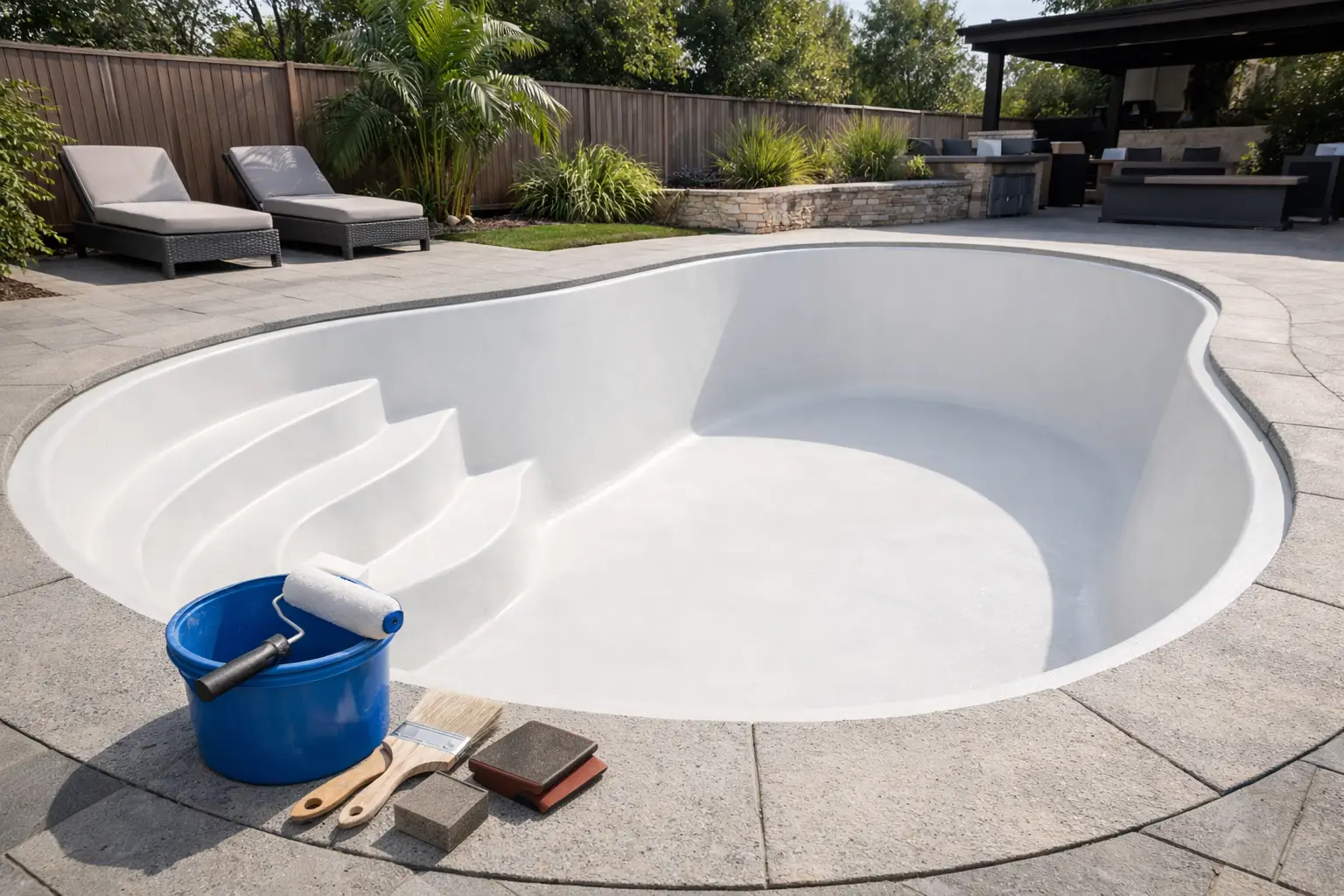
A fibreglass pool can look ready for a fresh coat, but the wrong product can create a peeling problem that is harder to fix than the original faded finish. If you are asking which pool coating suits fiberglass, start with one question: are you coating bare fibreglass gelcoat, or repainting an existing painted surface? That answer determines the compatible system, the preparation required and whether primer is needed.
For most repainting jobs, the existing coating matters at least as much as the fibreglass underneath it. Applying a new coating over an unknown or incompatible paint is one of the most common reasons pool paint lifts, wrinkles or fails early.
Which pool coating suits fibreglass?
Two-pack epoxy pool paint is generally the preferred high-performance option for a properly prepared fibreglass pool where the coating system is known to be compatible. It is also the logical choice when repainting a sound existing epoxy coating, provided the surface has been thoroughly cleaned, sanded and prepared in line with the product instructions.
Chlorinated rubber pool paint has a different role. It is commonly used when repainting an existing chlorinated rubber coating, where compatibility has been confirmed and the old coating is still sound enough to accept a recoat. It is not simply a cheaper substitute for epoxy, nor should it be selected just because the pool shell is fibreglass.
The simple rule is this: match the new coating to the existing coating wherever practical. If you have bare fibreglass, a failed coating that needs full removal, or a surface with an unknown history, confirm the correct compatible primer and coating system before ordering.
Bare fibreglass is different from painted fibreglass
A fibreglass pool has a gelcoat surface beneath any previous paint. Gelcoat can be smooth, aged, chalky or contaminated by old products, and each condition affects adhesion. A coating needs a clean, mechanically prepared surface to grip. A glossy surface with no profile is not ready for paint, even if it looks clean.
Where bare gelcoat is exposed, use the primer specified as compatible with the selected coating system and fibreglass substrate. The primer is not an optional extra added for peace of mind. Its job is to provide the correct bond between the prepared pool surface and the topcoat. Skipping it can leave the coating dependent on marginal adhesion.
Do not assume every primer suits every pool paint. Epoxy and chlorinated rubber systems have their own compatibility requirements. Check the relevant product information and technical guidance before combining products.
First identify what is already on the pool
Before choosing paint, inspect the existing surface. This can save you from buying a system that looks right in the tin but is wrong for the pool.
An existing epoxy coating often feels hard and has a more solid, less rubbery finish. Chlorinated rubber coatings may feel softer by comparison and can react differently to solvents. Appearance alone is not a reliable identification method, especially after years of sun exposure and repeated repainting.
If you know what was previously applied, keep the details. An old invoice, leftover tin or product label can make the decision straightforward. If you do not know, do not guess. A small compatibility test in an inconspicuous area, carried out according to the coating supplier’s advice, can help identify whether the proposed system is suitable.
If the existing coating is peeling, blistering, flaking or soft, it is not a sound base for a new coat. Painting over it only hides the failure briefly. Remove loose and failed material, assess what remains, and establish a stable surface before selecting the new system.
When two-pack epoxy is the right choice
Two-pack epoxy pool paint is suited to pool owners who want to use an epoxy coating system on a properly prepared fibreglass pool. It is particularly relevant where the pool is already coated in compatible epoxy, or where preparation has taken the surface back to a suitable base and the correct primer is being used.
Epoxy is a two-component product. Both parts must be mixed accurately and used within the stated working time. That makes planning important. Do not mix more than you can apply within the product’s pot life, and do not alter mixing ratios to stretch the product.
The preparation must be as careful as the application. Clean the pool surface thoroughly, remove chalking and contamination, abrade the sound coating or prepared substrate to create a suitable key, then remove sanding residue. Pay close attention to steps, corners, waterline areas and patches where loose coating has been removed. These are common failure points because preparation is often inconsistent there.
Epoxy may be the better system where you are completing a full coating change with the correct primer, but it is not automatically suitable over old chlorinated rubber paint. Compatibility comes first.
When chlorinated rubber is the better match
Chlorinated rubber pool paint is usually the practical choice when the existing coating is known to be chlorinated rubber and is still firmly bonded. In that situation, remaining within the same coating family can avoid the risk of one system reacting with or failing to bond to another.
This does not mean you can coat over dirt, chalky paint or loose edges. The existing finish still needs proper cleaning, sanding and removal of all unsound material. A repaint is only as reliable as the coating below it.
Chlorinated rubber may also be considered where the product guidance confirms it is suitable for the prepared surface and planned system. However, if you are moving from a failing, unknown or incompatible coating to a new system, ask for technical advice before choosing. It is often better to solve the substrate issue first than attempt to seal it in with another coat.
Primer decisions that prevent expensive mistakes
Primer requirements depend on the surface condition and the coating system, not on whether the pool is called fibreglass. A painted fibreglass pool with a sound, compatible coating may have different requirements from an exposed gelcoat surface or a pool where old paint has been removed in patches.
Use a compatible primer when the product system calls for it, especially on bare or exposed fibreglass, repaired preparation areas and surfaces being changed to a specified new system. Keep the whole coating build compatible: substrate, primer and topcoat must work together.
Avoid these common shortcuts:
- Applying topcoat straight onto glossy, unabraded gelcoat.
- Using a general-purpose primer not designed for the pool coating system.
- Spot-priming failed areas without removing loose surrounding paint.
- Changing from chlorinated rubber to epoxy without checking compatibility.
- Applying a new coating over an unidentified finish because it appears sound.
These shortcuts are tempting because they reduce preparation time. They can also lead to lifting, poor adhesion and the cost of stripping the pool again.
Calculate the correct quantity before you order
Fibreglass pools often have curved walls, wide steps, benches and ledges that are easy to miss when estimating area. Ordering by pool length and width alone can leave you short of paint partway through the final coat, or short of primer where it is required.
Measure the pool carefully, including the floor, walls, steps, benches and any other coated areas. Then use the Pool Paint Calculator to estimate the quantity for the relevant coating system. Select the system first, because coverage, number of coats and primer requirements can differ.
It is also worth checking your application plan against the product instructions. The specified film build and recoating process matter. Applying too little product to make a tin go further is not a saving if the coating does not achieve the intended coverage.
A practical decision path for fibreglass pools
Start by confirming whether the pool has bare gelcoat, sound epoxy, sound chlorinated rubber or an unidentified or failed coating. If it is sound epoxy, a compatible two-pack epoxy system is usually the starting point. If it is sound chlorinated rubber, look first at a compatible chlorinated rubber recoat. For bare fibreglass or areas stripped back to gelcoat, choose the specified compatible primer and coating system rather than treating it like a simple repaint.
If you are unsure of the existing finish, pause before ordering. Pool Paint Sydney can provide product and preparation guidance to help you identify the appropriate system, primer requirement and quantity. That is a much better point to ask questions than after the first coat starts lifting.
A durable fibreglass pool repaint begins with compatibility, not colour selection. Identify the surface, prepare it properly, use the matching primer where required, then calculate enough product for the complete system. That approach gives you the best chance of buying the correct pool coating the first time.