
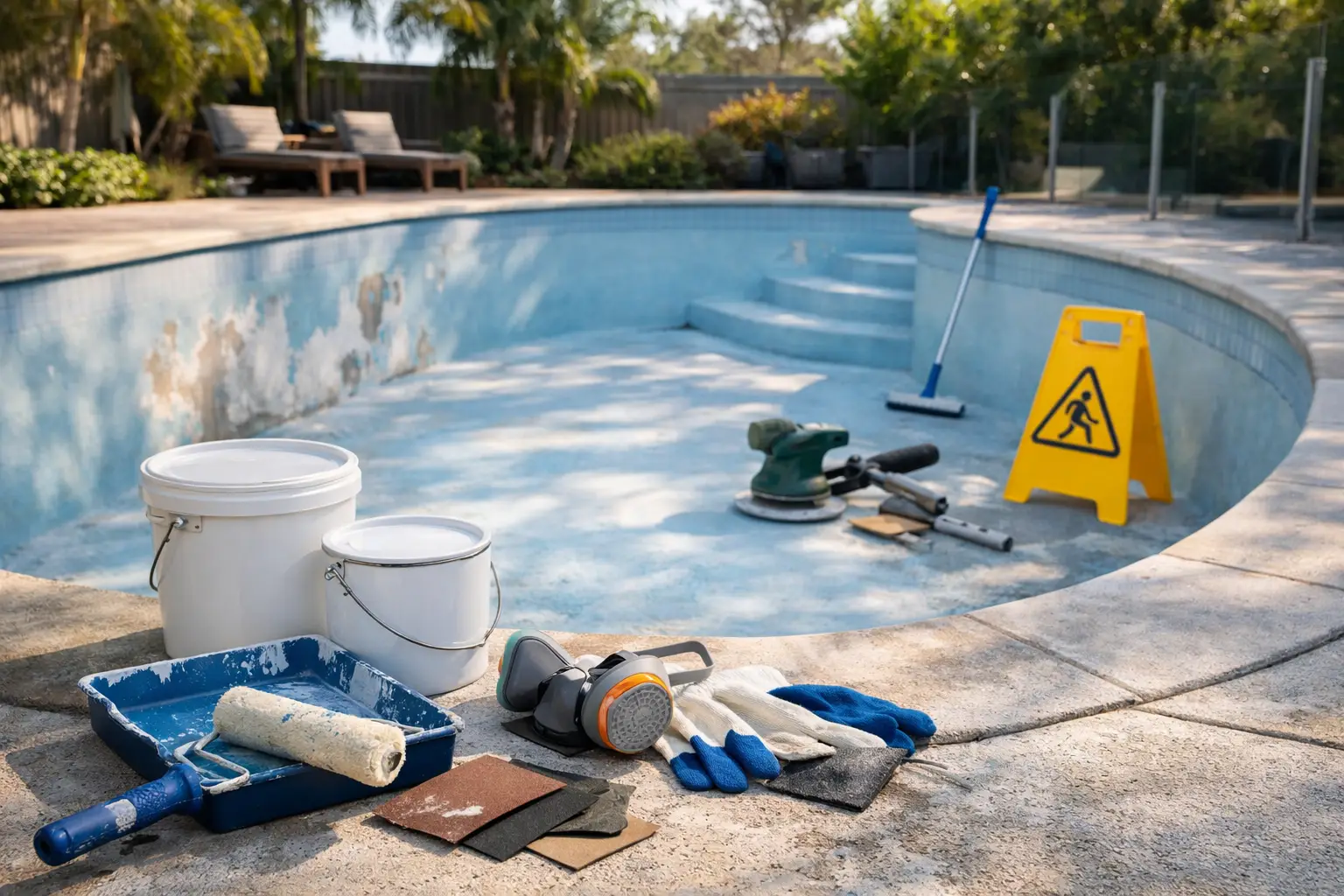
A pool can look ready for paint once it is empty and the old coating has faded, but that is where expensive decisions often begin. The top pool paint buying mistakes usually happen before a tin is opened: ordering a coating that does not suit the existing surface, skipping primer decisions, or underestimating how much material the job needs.
A new pool coating relies on the condition and compatibility of what is underneath it. Buying on colour, price or a general claim that a paint is suitable for pools can leave you with peeling, patchiness or a job that must be stripped back far sooner than expected. Start by identifying the pool surface, assessing the existing coating and choosing the complete system around those facts.
1. Buying paint before identifying the existing coating
The first question is not “Which pool paint is best?” It is “What is already on the pool?” Concrete, rendered concrete and fibreglass pools can all have different coating histories. An older pool may have epoxy, chlorinated rubber, acrylic paint, a failed coating system, or sections that have been repaired at different times.
Applying a new coating over an incompatible old coating is one of the most common causes of adhesion failure. The fresh paint may appear sound at first, then soften, wrinkle, blister or peel as it cures or after the pool returns to service.
Do not guess based on colour or age alone. Check any old paint records if they are available and inspect the pool carefully for exposed bare areas, previous patch repairs and loose coating. If the coating cannot be confidently identified, get technical guidance before ordering. Clear photos of the surface and information about previous products can help determine the most suitable preparation and coating path.
For many repainting projects, the choice will come down to a two-pack epoxy pool paint system or a chlorinated rubber pool paint system. These are not interchangeable simply because both are made for swimming pools. Choose the system that is compatible with the substrate and existing coating, then follow the relevant product information for preparation and recoating.
2. Treating preparation as an optional extra
Paint does not fix a weak, chalky or poorly bonded surface. If old coating is peeling, flaking or blistering, painting straight over it only hides the problem temporarily. The new film is still attached to the failed layer beneath it.
Remove loose and unsound material until you reach a stable surface. Areas with sound existing paint may need a thorough clean and mechanical abrasion to provide a suitable key. Bare concrete, previously coated concrete and fibreglass each require their own preparation approach, so do not apply one set of instructions to every pool.
Preparation also has to be complete, not just focused on the obvious damaged patches. Check steps, corners, waterline areas, around fittings and any places where old paint has lifted at an edge. These are common failure points because they are easy to miss during sanding and cleaning.
A surface must also be dry and free from contamination before coating. Rushing because a Sydney weather window looks favourable can be costly if the substrate has not properly dried or dust remains after preparation. Follow the coating system’s documented requirements for cleaning, drying and application conditions rather than relying on a general rule of thumb.
3. Assuming primer is always unnecessary – or always required
Primer is not a universal add-on, but it is not something to dismiss to save a few dollars either. Whether primer is needed depends on the pool surface, the condition of the existing coating, the chosen topcoat system and how much bare substrate is exposed.
For example, bare or repaired sections can need a compatible primer to create the correct base for the topcoat. A previously coated surface that is sound and properly prepared may have different requirements. Using the wrong primer can create another compatibility issue, while leaving out a required primer can affect the coating system’s bond and finish.
Buy primer and topcoat as a matched system. Do not substitute a general-purpose primer from the shed or assume that a primer used on a different painting job will suit an immersed pool surface. Check the official product information for the particular BG Coatings pool paint system you intend to use, especially where concrete and fibreglass surfaces are involved.
4. Choosing epoxy or chlorinated rubber on a vague recommendation
“Use epoxy” or “use chlorinated rubber” is not enough advice without context. Two-pack epoxy pool paint and chlorinated rubber pool paint are different systems with different preparation, compatibility and application requirements.
Epoxy is often selected where the substrate and existing coating are suitable for an epoxy system and the preparation can be completed correctly. Chlorinated rubber may be the appropriate choice for certain repainting situations, particularly where the existing coating and specified preparation support that system. The right answer depends on what is already on the pool, not on which product sounds tougher.
This is why a product decision should be made before calculating quantity or choosing a colour. First confirm the pool material and old coating. Next, select the compatible coating system and any required primer. Then read the product directions for mixing, application and recoating. That order prevents a common problem: buying a product first and trying to make the surface fit it later.
5. Ordering paint by pool size alone
A pool’s length and width do not tell you the whole paint quantity. Walls, steps, deep ends, ledges, benches and freeform curves all add surface area. So does the number of coats required by the selected system.
Ordering too little paint can interrupt the project and make it harder to maintain a consistent application plan. Ordering a large surplus is unnecessary expense, particularly for two-pack materials where mixing must be managed carefully. Do not estimate from water volume either. Water capacity is not the same as paintable surface area.
Use the Pool Paint Calculator before placing an order. Measure the internal length, width and average depth accurately, then account for steps, ledges and other features that increase the area. Use the calculator result alongside the product’s stated coverage and coat requirements. If the pool shape is irregular, break it into simple sections and measure each one rather than guessing from the largest dimensions.
Calculate primer separately where it is required. The topcoat quantity does not automatically cover primer needs, and primer coverage can differ from the finish coating.
6. Applying fewer coats to stretch the product
Trying to make paint go further by applying it too thinly or skipping a specified coat is false economy. A pool coating system is designed around particular coverage rates and application instructions. Spreading product beyond those rates can compromise the uniformity and protection the system is intended to provide.
The opposite mistake also causes issues. Applying excessively heavy coats in an effort to finish faster can affect how the coating dries and cures. Use the application method, spread rate and recoating guidance supplied for the product. If you are unsure whether the calculated quantity is adequate, resolve it before starting rather than trying to stretch material mid-job.
For two-pack epoxy products, pay particular attention to mix ratios, pot life and batch planning. Only mix what can be applied within the documented working time. Do not alter ratios to make a kit last longer or use leftover mixed material after its workable period has passed.
7. Buying without planning the full job window
Pool repainting is not a one-afternoon purchase. The job needs time for preparation, cleaning, drying, primer where required, topcoats and the specified curing period before the pool is returned to use. Poor timing is a frequent reason people rush surface preparation or apply coating in unsuitable conditions.
Plan around stable weather and the product instructions, particularly in NSW where summer heat, sudden rain and cool overnight conditions can affect a project. Avoid assuming that a warm day alone means conditions are suitable. Surface temperature, moisture and the forecast throughout the coating and curing period all matter.
Before ordering, have a clear plan for access, surface preparation, tools, waste handling and measuring the pool. Read the selected product page and technical directions before the pool is empty and ready for work. That gives you time to confirm whether you need primer, additional preparation materials or a different coating system.
Buy the system, not just the paint
The best way to avoid top pool paint buying mistakes is to treat the purchase as a coating system decision. Identify the existing surface and coating, remove unsound material, select a compatible epoxy or chlorinated rubber system, include primer where specified and calculate enough product for the complete job.
If there is any doubt about an old coating or a failed surface, pause before ordering. A few clear details about the pool now can help you choose the correct system the first time and give your repainting project a far better start.