
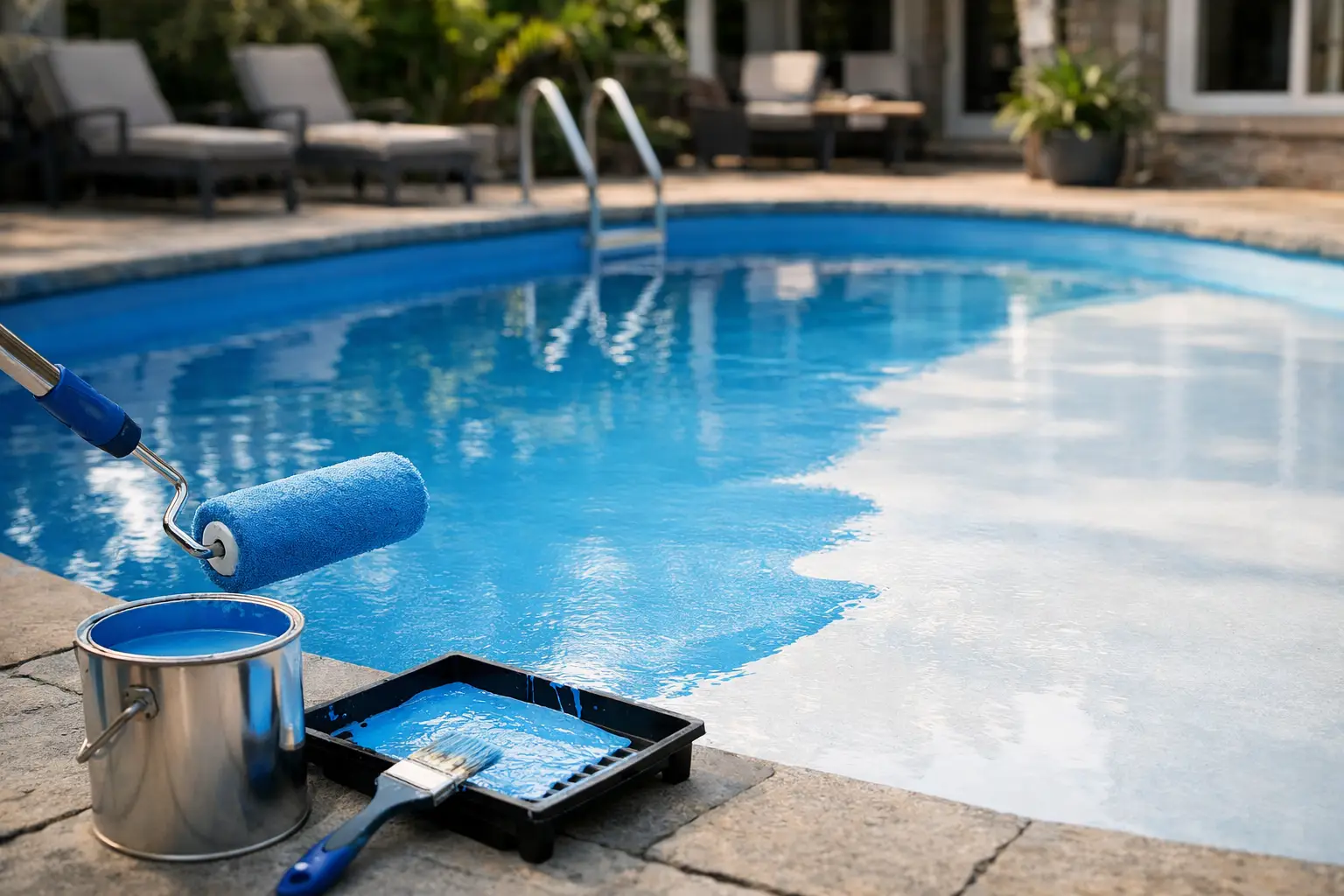
A fibreglass pool can look tired long before the shell itself has reached the end of its life. Fading, staining, rough patches and small areas of worn gelcoat often make repainting a sensible option. But is pool paint suitable for fibreglass? Yes – provided you use a pool-specific epoxy system and prepare the surface properly. Using a general exterior paint or applying coating over contamination is where expensive failures begin.
For most fibreglass pool repaints, a two-pack epoxy pool coating is the practical choice. It provides a hard, chemical-resistant finish designed to stay underwater, rather than a decorative coating that merely looks good on day one. The condition of the existing surface, however, determines whether paint will bond and last.
Is pool paint suitable for fibreglass in every case?
No. Epoxy pool paint is suitable for sound fibreglass shells, including pools with faded gelcoat, cosmetic staining and a previous compatible epoxy coating. It can restore the colour and give the surface a clean, consistent finish without the cost of resurfacing the entire shell.
Ready to Repaint Your Pool?
Buy premium epoxy pool paint in Sydney with fast delivery and local pickup available.
Buy Pool Paint NowIt is not a fix for structural movement, major osmosis damage or a shell that is flexing and cracking. If there are widespread blisters below the gelcoat, deep cracks that reopen, or soft areas in the fibreglass, resolve those repairs before painting. Coating over the problem only hides it temporarily.
The key distinction is simple: paint can protect and renew a stable surface. It cannot stabilise a failing one.
Bare gelcoat versus an already painted pool
A bare fibreglass pool usually has a gelcoat surface. Although it may look smooth and non-porous, it can carry years of sunscreen, body oils, calcium deposits and pool chemicals. It also needs a mechanical profile so the epoxy can grip. Cleaning alone is not enough.
An already painted fibreglass pool needs more investigation. Find out, where possible, what product is currently on it. A sound epoxy coating can often be cleaned, sanded and recoated with the right epoxy system. An old acrylic, rubber-based or unknown coating may not be compatible. Applying epoxy over a weak or incompatible layer can cause lifting, blistering or peeling, even when the new paint itself is high quality.
If you cannot identify the old coating, inspect it carefully. Scrape and sand a small test area. If it softens, flakes easily, or comes away from the shell, remove the failed coating rather than painting over it. This is slower at the start but far cheaper than stripping a newly painted pool later.
Why fibreglass pool paint peels
Most peeling is blamed on the paint. In real repainting jobs, the cause is usually surface preparation or an unsuitable coating system.
Fibreglass is particularly unforgiving because its surface is smooth and can retain contaminants. Even a thin film of sunscreen or oily residue can prevent adhesion. Glossy gelcoat gives epoxy very little to bite into, while chalky, oxidised surfaces can break down beneath a fresh coat.
Common causes of failure include:
- painting over silicone, oils, sunscreen residue or mineral scale
- insufficient sanding of glossy gelcoat or old paint
- coating over loose, cracked or incompatible paint
- mixing the epoxy at the wrong ratio or failing to mix it thoroughly
- painting outside the recommended temperature, humidity or recoat window
- filling the pool before the coating has fully cured
A good epoxy coating from a specialist range, including BG Coatings systems supplied by Pool Paint Sydney, is built for pool water, treatment chemicals and regular wear. It still needs the right surface underneath it. No coating can compensate for poor preparation.
Prepare a fibreglass pool properly before painting
Preparation is the job. The painting stage is comparatively quick once the shell is clean, dry and properly sanded.
Start by draining the pool and removing leaves, dirt and loose material. Inspect the empty shell in good light. Mark cracks, chips, blisters and any areas where old paint is lifting. Repair small chips and stable cracks with a compatible fibreglass repair product, then allow repairs to cure fully before sanding.
Next, clean the entire pool with a suitable pool-surface cleaner or degreaser. Pay close attention to the waterline, steps, ledges and around skimmer openings, where oils and grime build up. Rinse thoroughly. If calcium scale or mineral deposits are present, use the correct treatment for the surface and rinse again. Do not assume the pool is clean because it looks clean.
Once dry, sand the gelcoat or sound existing coating to remove gloss and create an even profile. Follow the epoxy product instructions for the required abrasive grade. The aim is a uniformly dull finish, not deep scratches or damage to the fibreglass. Vacuum all sanding dust, then wipe down as directed by the coating system.
Moisture matters as well. The shell must be dry before coating, especially after rain, washing or pressure cleaning. Water trapped in cracks, around fittings or beneath a compromised surface can cause adhesion problems. In Sydney and other humid parts of Australia, allow extra drying time where conditions are cool or damp.
Choosing the right epoxy pool paint system
Do not choose based on colour alone. The correct system depends on whether you are coating bare gelcoat, recoating an existing epoxy surface, or dealing with a pool that has old unknown paint.
For a stable fibreglass surface, choose a two-pack epoxy pool paint specifically stated as suitable for fibreglass. Two-pack products combine a base component with a hardener at a set ratio. Once mixed, the material has a limited working time, so organise rollers, brushes, extension poles and mixing equipment before you open the tins.
Check these details before ordering:
- compatibility with fibreglass and the existing coating, if there is one
- the recommended preparation method and primer requirements
- coverage rate per litre for the specified number of coats
- minimum and maximum application temperatures
- recoat times, full cure time and when the pool can be refilled
A technical data sheet is not filler. It tells you how the coating was designed to be applied. Ignoring it can void the benefit of buying a premium epoxy system in the first place.
How much paint do you need?
Measure the pool rather than estimating from its water capacity. Calculate the floor area, then add the wall area and steps. For a rectangular pool, wall area is roughly the perimeter multiplied by the average depth. Curved pools can be measured in sections, then added together.
Use the coverage rate stated for the specific epoxy product, then divide the total surface area by that rate. Multiply the result by the number of coats required. Allow a small margin for steps, deep ends, rough areas and roller wastage, but do not buy only enough for a thin single coat when the system requires two.
For example, a pool with 70 square metres of paintable surface and a coverage rate of 7 square metres per litre per coat requires 10 litres for one coat. If two coats are required, plan on at least 20 litres, plus a sensible allowance. Applying paint too thinly is a common way to reduce durability and create an uneven finish.
Applying epoxy to a fibreglass pool
Choose a dry weather window and avoid painting when the shell is hot from direct sun. Early morning can bring condensation, while a hot afternoon can make epoxy cure too quickly. Follow the product temperature limits, not just the weather forecast.
Mix the base and hardener exactly to the stated ratio. Mix slowly and thoroughly, scraping the sides and bottom of the mixing vessel. If the instructions specify an induction time, allow it. Do not add extra solvent, hardener or water to make the paint easier to roll.
Apply the coating evenly with the recommended roller and use a brush for edges, fittings and tight corners. Keep a wet edge where possible. The first coat should cover consistently, but it should not be overloaded. Apply the second coat within the stated recoat window, then let the completed system cure for the full period before refilling.
Rushing the refill is one of the easiest mistakes to avoid. Pool water, salt and chemicals should not touch epoxy that has not fully cured. A coating may feel dry underfoot while still needing more time to develop its final hardness.
When repainting is not the best answer
A fibreglass repaint is good value when the shell is structurally sound and the surface is simply worn. It may not be the right first step if there are extensive osmosis blisters, major delamination, repeated cracking or poor repairs throughout the pool.
Likewise, if old paint is failing across large areas, budget for removal and preparation rather than a quick topcoat. The correct decision may feel more involved, but it prevents you from paying twice for the same job.
Before you buy, confirm the existing surface, measure the pool accurately and choose a fibreglass-compatible epoxy system with enough product for the complete specified build. A properly prepared pool is what gives the new coating its chance to last – and that is the result worth paying for.
Ready to Repaint Your Pool?
Buy premium epoxy pool paint in Sydney with fast delivery and local pickup available.
Buy Pool Paint Now