
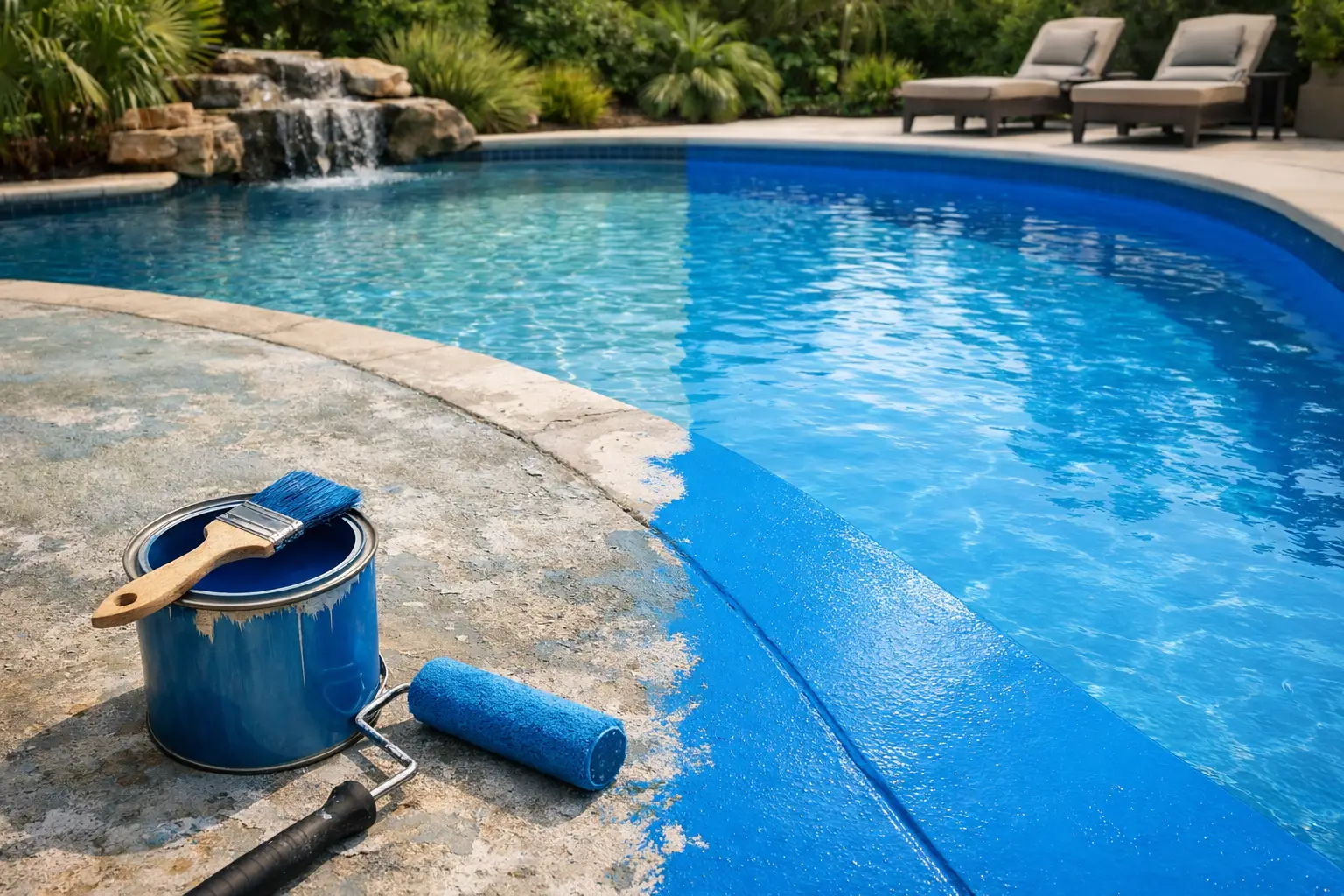
A concrete pool can fade from a strong blue to a washed-out, chalky surface surprisingly quickly under Australian sun. But faded colour is not just a cosmetic issue. It can be the first sign that the existing coating is breaking down, which is why choosing the right pool paint for faded concrete matters before you spend time and money repainting it.
For most concrete pools with a sound, properly prepared surface, a two-pack epoxy pool coating is the long-term option worth considering. It provides a hard, chemical-resistant finish designed to handle pool water, routine cleaning and surface wear. The key is working out whether you are dealing with simple fading or a failed coating underneath it.
Is the concrete paint faded or actually failing?
A faded pool does not always need the same repair. Some surfaces have lost colour but remain firmly bonded to the concrete. Others look faded because the old paint is chalking, blistering or wearing away. Painting straight over the second type is how a new coating ends up peeling within months.
Start by looking closely at the surface once the pool is empty and clean. Run your hand across the walls and floor. If it leaves a dusty residue on your palm, the coating may be chalking. If you can lift paint with a scraper, see flaking around fittings, or find bare patches spreading across the floor, the old coating has failed.
Pay particular attention to the waterline, steps, shallow end and areas around returns. These are common wear points because they receive more sunlight, cleaning, foot traffic and chemical exposure.
Fading on its own can usually be addressed with a compatible epoxy repaint system. Peeling, bubbling or loose paint requires more preparation. The new coating is only as reliable as the surface holding it.
Why epoxy pool paint suits faded concrete pools
Concrete is porous, and a pool coating needs to bond properly while standing up to chlorinated water and regular use. A quality epoxy pool paint is built for that job. It creates a tougher film than many general-purpose paints and gives a clean, consistent colour that can bring an ageing pool back into shape.
Epoxy is a practical choice when the concrete is structurally sound, dry enough for coating and correctly prepared. It is also a good option when an existing epoxy finish has faded but is still well bonded after cleaning and sanding.
That does not mean epoxy can be applied over every old painted pool without question. Older pools may have acrylic, rubber-based or unknown coatings. If the existing paint is incompatible, soft, loose or in poor condition, applying epoxy on top can cause adhesion problems. In that case, remove the failed coating or confirm compatibility with a test area before committing to the full job.
A proper epoxy system costs more than a quick cosmetic repaint, but it is usually cheaper than draining the pool again to deal with early peeling. For pool owners who want a durable finish rather than a temporary colour change, that trade-off makes sense.
Surface preparation decides whether the repaint lasts
The most common cause of pool paint failure is not the paint itself. It is poor preparation. Faded concrete often has a layer of chalk, sunscreen residue, mineral deposits or loose old paint that stops the new coating from bonding.
Before ordering paint, be realistic about the condition of the pool. A sound surface can be cleaned, sanded and recoated. A heavily peeling surface needs more extensive removal and repair first.
Remove anything the epoxy cannot bond to
Drain the pool fully, then clear leaves, dirt and loose debris. Use a suitable pool-surface cleaner and degreaser to remove body oils, sunscreen and grime, especially around the waterline. Rinse thoroughly so cleaning residues are not left behind.
Scrape every loose, blistered or flaking edge until you reach firmly bonded paint or bare concrete. Do not assume a small loose patch will be held down by a new coat. It will keep lifting and take the new coating with it.
If the surface is chalky, sanding is essential. The aim is to remove the weak powdery layer and create a clean profile for the epoxy to grip. On large pools, mechanical sanding may be quicker and more consistent than hand sanding. Always vacuum and wash away dust before moving to the next stage.
Repair cracks and rough areas first
Small cracks, chips and hollow patches do not disappear under paint. Repair them with a suitable pool repair compound, allow repairs to cure, then sand them flush. Check the bond beam, steps, corners and around fittings carefully.
Paint is a protective coating, not a structural repair product. If cracks are moving, the concrete is deteriorating or there are signs of water pressure behind the coating, solve that issue before repainting. Otherwise, the finish may crack or blister again regardless of which paint you use.
Make sure the concrete is dry
Moisture is a major risk with epoxy. Even when a pool looks dry, moisture can remain in porous concrete, particularly after rain, pressure washing or a recent drain. Coating over damp concrete can lead to blistering or loss of adhesion.
Choose a dry weather window and allow enough drying time after washing. Sydney humidity and sudden rain can slow the process, so do not plan the job around an optimistic forecast. Follow the epoxy product instructions for acceptable surface and weather conditions, including minimum and maximum application temperatures.
Choosing the correct epoxy system
The correct product depends on the pool substrate and what is already on it. For a concrete pool, choose an epoxy pool coating specifically made for swimming pool immersion. Do not use exterior house paint, paving paint or a general concrete epoxy. They are not designed for constant exposure to treated pool water.
Before buying, confirm three things: the pool is concrete, the existing coating is compatible or has been removed, and the surface is stable enough to coat. If you are unsure what paint was used previously, take clear photos of the empty pool and describe whether the old finish is hard, soft, chalky or peeling when asking for technical advice.
Pool Paint Sydney supplies epoxy pool coatings backed by BG Coatings for concrete and fibreglass pool repainting. For faded concrete, select the system recommended for your existing surface condition, not simply the colour you prefer. A good coating system starts with the right foundation.
Calculate enough paint for two coats
Under-ordering pool paint is a common and avoidable mistake. Concrete texture, repairs and uneven old coatings can all use more paint than expected. Most epoxy pool painting jobs require two full coats for proper colour depth and film build.
Work out the approximate internal area of the pool by adding the floor area to the wall area. For a basic rectangular pool, multiply length by width for the floor, then multiply the pool perimeter by the average depth for the walls. Add steps, ledges and benches separately, then allow at least 10 per cent extra for texture and waste.
For example, an 8 m by 4 m pool with an average depth of 1.5 m has a 32 m² floor. Its perimeter is 24 m, giving about 36 m² of wall area. Before steps, that is roughly 68 m² per coat. With a sensible allowance, calculate around 75 m² per coat, or 150 m² across two coats.
Use the coverage rate stated for the specific epoxy product, not a generic paint estimate. Coverage changes with concrete profile, application method and how much old coating has been removed. Ordering enough material from the same batch also helps keep colour consistent across the pool.
Apply epoxy carefully, not quickly
Two-pack epoxy is mixed from separate components, so timing matters. Mix only the quantity you can apply within the product’s stated pot life. Once mixed, epoxy will start curing in the tin whether you are ready or not.
Use the recommended roller and application method, keep a wet edge, and apply even coats rather than trying to make one heavy coat cover everything. Heavy application can create runs, slow curing and uneven finish. Allow the first coat to cure for the specified recoat period, then apply the second coat within the recommended window.
Do not refill the pool early. Epoxy may feel dry to touch before it has cured enough for immersion. Rushing this final stage can damage a coating that was otherwise applied correctly. Give it the full cure time listed for the product and the current conditions.
A faded concrete pool can look new again, but long-lasting colour comes from preparation, enough epoxy and patience at every stage. If the old paint is peeling or the previous coating is unknown, get the surface condition sorted before purchasing – that is the decision that protects the repaint.